
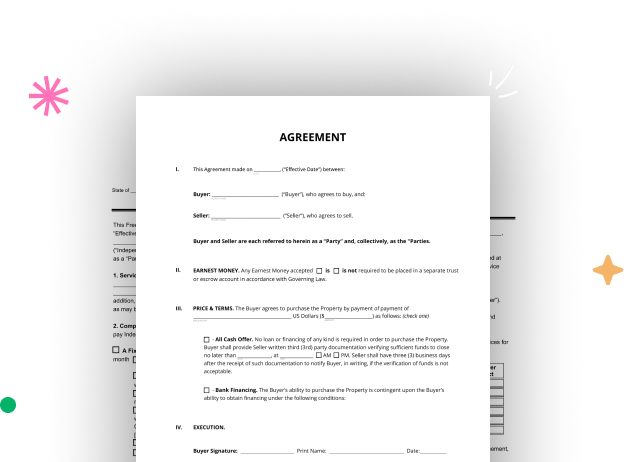
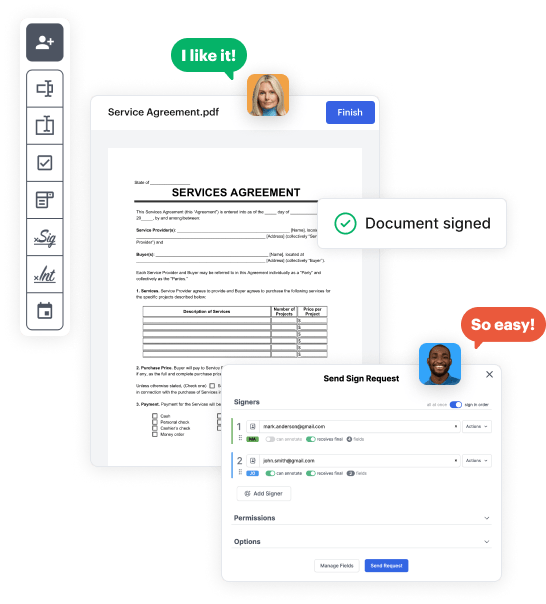
Create your Tax-Free Exchange Form from scratch

Start Building Now
Title decoration

Here's how it works

01. Start with a blank Tax-Free Exchange Form
Open the blank document in the editor, set the document view, and add extra pages if applicable.
02. Add and configure fillable fields
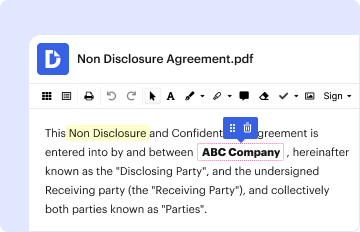
Use the top toolbar to insert fields like text and signature boxes, radio buttons, checkboxes, and more. Assign users to fields.
03. Distribute your form
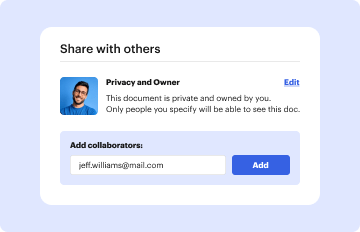
Share your Tax-Free Exchange Form in seconds via email or a link. You can also download it, export it, or print it out.

A brief guide on how to set up a professional-looking Tax-Free Exchange Form

Form edit decoration

Step 1: Sign in to DocHub to begin creating your Tax-Free Exchange Form.

First, sign in to your DocHub account. If you don't have one, you can simply register for free.

Step 2: Go to the dashboard.

Once you’re in, access your dashboard. This is your main hub for all document-focused processes.

Step 3: Initiate new document creation.

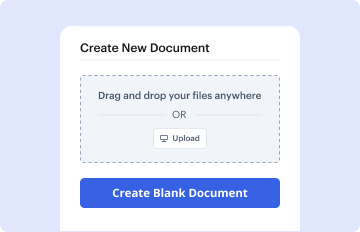
In your dashboard, click on New Document in the upper left corner. Opt for Create Blank Document to craft the Tax-Free Exchange Form from a blank slate.

Step 4: Add form elements.

Place various elements like text boxes, photos, signature fields, and other elements to your form and assign these fields to specific users as required.

Step 5: Customize your document.

Personalize your template by adding instructions or any other vital tips using the text feature.

Step 6: Review and correct the form.

Meticulously check your created Tax-Free Exchange Form for any mistakes or required adjustments. Utilize DocHub's editing tools to polish your document.

Step 7: Send out or download the document.

After finalizing, save your work. You can choose to save it within DocHub, export it to various storage platforms, or send it via a link or email.


be ready to get more

Build your Tax-Free Exchange Form in minutes

Start creating now

Got questions?

We have answers to the most popular questions from our customers. If you can't find an answer to your question, please contact us.
Contact us
Taxpayers report exchanges on Form 8824, like-kind exchanges, attaching it to their returns. The form asks for: Descriptions of properties sold and purchased. Key dates including when the sold property was originally acquired and when the replacement property was identified and acquired.
Get federal tax forms for current and prior years Download them from IRS.gov. Order online and have them delivered by U.S. mail. Order by phone at 1-800-TAX-FORM (1-800-829-3676)
A third party intermediary is required. May not have actual or constructive receipt of sales proceeds from the relinquished property (all funds must be deposited with the exchange-accommodator). 180 days to replace the relinquished exchange property.
Your 1031 exchange must be reported by completing Form 8824 and filing it along with your federal income tax return. If you completed more than one exchange, a different form must be completed for each exchange.
How do you report Section 1031 Like-Kind Exchanges to the IRS? You must report an exchange to the IRS on Form 8824, Like-Kind Exchanges and file it with your tax return for the year in which the exchange occurred.
be ready to get more

Build your Tax-Free Exchange Form in minutes

Start creating now

Related Q&A to Tax-Free Exchange Form

While a 1031 exchange does defer taxes, it does not waive them (i.e., not tax-free). Once the exchanger sells the property, taxes on deferred gains will be owed. The settlement agent must file Form 1099-S for the exchange transaction since it is not exempt. So yes, a 1031 exchange does require filing Form 1099-S.
To amend a return, file Form 1040-X, Amended U.S. Individual Income Tax Return. You can use tax software to electronically file your 1040-X online. Submit all the same forms and schedules as you did when you filed your original Form 1040 even if you dont have adjustments on them.
1031 Exchange Forms Taxpayers report exchanges on Form 8824, like-kind exchanges, attaching it to their returns. The form asks for: Descriptions of properties sold and purchased. Key dates including when the sold property was originally acquired and when the replacement property was identified and acquired.

Additional resources on building your forms


