
Create your Spousal Property Transfer Deed from scratch

Start Building Now
Title decoration

Here's how it works

01. Start with a blank Spousal Property Transfer Deed
Open the blank document in the editor, set the document view, and add extra pages if applicable.
02. Add and configure fillable fields
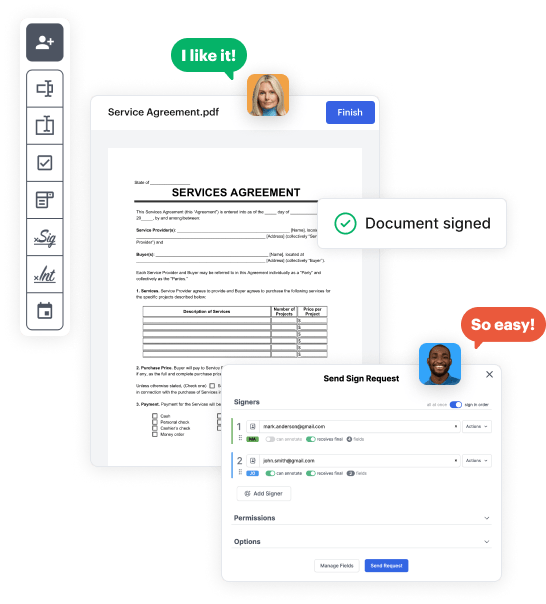
Use the top toolbar to insert fields like text and signature boxes, radio buttons, checkboxes, and more. Assign users to fields.
03. Distribute your form
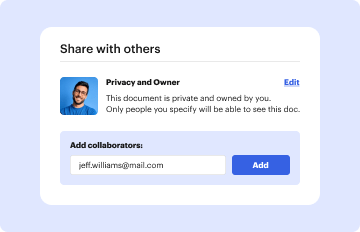
Share your Spousal Property Transfer Deed in seconds via email or a link. You can also download it, export it, or print it out.

Design your Spousal Property Transfer Deed in a matter of minutes

Form edit decoration

Step 1: Access DocHub to build your Spousal Property Transfer Deed.

Start by logging into your DocHub account. Try out the advanced DocHub functionality free for 30 days.

Step 2: Navigate to the dashboard.

Once signed in, go to the DocHub dashboard. This is where you'll build your forms and handle your document workflow.

Step 3: Design the Spousal Property Transfer Deed.

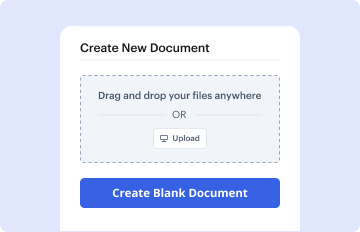
Click on New Document and choose Create Blank Document to be taken to the form builder.

Step 4: Set up the form layout.

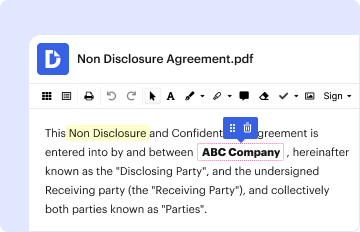
Use the DocHub tools to insert and configure form fields like text areas, signature boxes, images, and others to your form.

Step 5: Insert text and titles.

Add necessary text, such as questions or instructions, using the text field to assist the users in your form.

Step 6: Configure field settings.

Adjust the properties of each field, such as making them required or arranging them according to the data you expect to collect. Designate recipients if applicable.

Step 7: Review and save.

After you’ve managed to design the Spousal Property Transfer Deed, make a final review of your form. Then, save the form within DocHub, send it to your preferred location, or distribute it via a link or email.


be ready to get more

Build your Spousal Property Transfer Deed in minutes

Start creating now

Got questions?

We have answers to the most popular questions from our customers. If you can't find an answer to your question, please contact us.
Contact us
No. State law excludes from reassessment property transferred between husband and wife, and registered domestic partners. Registered Domestic Partners are two people who have filed a Declaration of Domestic Partnership with the California Secretary of the State.
Adding a family member to the deed as a joint owner for no consideration is considered a gift of 50% of the propertys fair market value for tax purposes. If the value of the gift exceeds the annual exclusion limit ($16,000 for 2022) the donor will need to file a gift tax return (via Form 709) to report the transfer.
Community property: Most assets acquired during a marriage are considered community property in California. This includes a house purchased during the marriage, regardless of whose name is on the deed. This presumption of community ownership can be rebutted, but convincing evidence is required to prove it.
An interspousal transfer deed is a legal instrument used to provide sole ownership to a property that is jointly owned. For instance, the deed can be used to provide the title to a house to one person in a marriage. Note that the technical term for interspousal transfer deed is interspousal transfer grant deed.
You will need to have the quitclaim deed docHubd with the signatures of you and your spouse. Once this is done, the quitclaim deed replaces your former deed and the property officially is in both of your names. You must record the deed at your county office.
be ready to get more

Build your Spousal Property Transfer Deed in minutes

Start creating now

Related Q&A to Spousal Property Transfer Deed

A person may be added to a property deed as a result of inheritance, marriage or partnership. Its crucial to understand that adding someone to a deed typically involves a transfer of ownership interest in the property. With that transfer comes potential tax consequences.
You would need to prepare and sign the grant deed, then have it docHubd and recorded with the county recorders office where the property is located. You can use an Interspousal Grant Deed. A Quitclaim Deed may also be used, but in California, the preferred method is an interspousal Grant Deed.
Adding your spouses name to the title of your house can provide shared ownership and equal rights, but it also comes with financial and legal implications. Ultimately, the decision should be based on your individual circumstances and whats best for you and your spouse in the long run.

Additional resources on building your forms


