
Create your South Carolina Estate Planning from scratch

Start Building Now
Title decoration

Here's how it works

01. Start with a blank South Carolina Estate Planning
Open the blank document in the editor, set the document view, and add extra pages if applicable.
02. Add and configure fillable fields
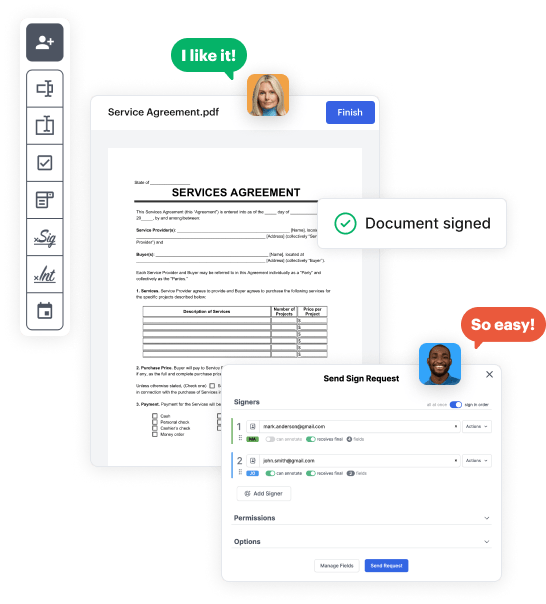
Use the top toolbar to insert fields like text and signature boxes, radio buttons, checkboxes, and more. Assign users to fields.
03. Distribute your form
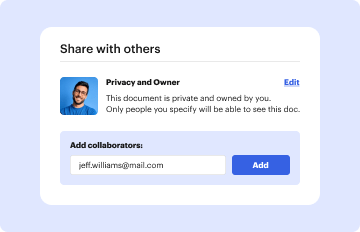
Share your South Carolina Estate Planning in seconds via email or a link. You can also download it, export it, or print it out.

Create your South Carolina Estate Planning in a matter of minutes

Form edit decoration

Step 1: Access DocHub to build your South Carolina Estate Planning.

Begin by accessing your DocHub account. Utilize the pro DocHub functionality free for 30 days.

Step 2: Navigate to the dashboard.

Once signed in, go to the DocHub dashboard. This is where you'll build your forms and handle your document workflow.

Step 3: Create the South Carolina Estate Planning.

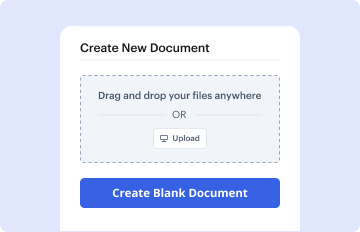
Hit New Document and choose Create Blank Document to be taken to the form builder.

Step 4: Set up the form layout.

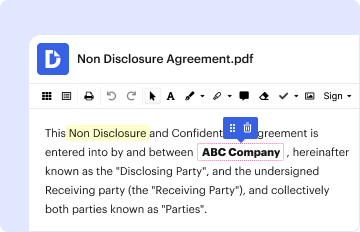
Use the DocHub toolset to insert and arrange form fields like text areas, signature boxes, images, and others to your document.

Step 5: Add text and titles.

Add necessary text, such as questions or instructions, using the text field to assist the users in your document.

Step 6: Configure field settings.

Modify the properties of each field, such as making them required or arranging them according to the data you plan to collect. Designate recipients if applicable.

Step 7: Review and save.

After you’ve managed to design the South Carolina Estate Planning, make a final review of your document. Then, save the form within DocHub, send it to your selected location, or distribute it via a link or email.


be ready to get more

Build your South Carolina Estate Planning in minutes

Start creating now

Got questions?

We have answers to the most popular questions from our customers. If you can't find an answer to your question, please contact us.
Contact us
Succession planning is the process of identifying the critical positions within your organization and developing action plans for individuals to assume those positions.
Career planning identifies skill gaps and learning needs and directly influences training strategies. Succession planning ensures the availability of trained successors by tailoring development programs to their needs.
Handwritten wills in SC Even though they may be antiquated, the South Carolina Probate Code states that a handwritten will is valid but certain conditions and procedures must be followed. Such procedures include: The will shall be in writing.
Even though organizations are often dissatisfied with the manner of its implementation, they cannot operate successfully without a well-developed succession plan. The key to a successful leadership management approach is to continuously engage and implement corporate succession planning and talent management.
So, to clear up the confusion, estate planning has to do with your business interests and how those interests contribute to your estates value, while succession planning has to do with creating an official document that outlines how your business will run and who will take over once youre gone or incapable of
be ready to get more

Build your South Carolina Estate Planning in minutes

Start creating now

Related Q&A to South Carolina Estate Planning

Legacy planning is the process of preparing how you are going leave your assets and property to your loved ones following your passing. Its practically a synonym of estate planning, but the terminology has undergone popularity with financial advisors recently.
Do I Need to Have My Will docHubd? No, in South Carolina, you do not need to docHub your will to make it legal. However, South Carolina allows you to make your will self-proving and youll need to go to a notary if you want to do that.
Key Takeaways Common estate planning documents are wills, trusts, powers of attorney, and living wills.

Additional resources on building your forms


