
Create your Single Person Will from scratch

Start Building Now
Title decoration

Here's how it works

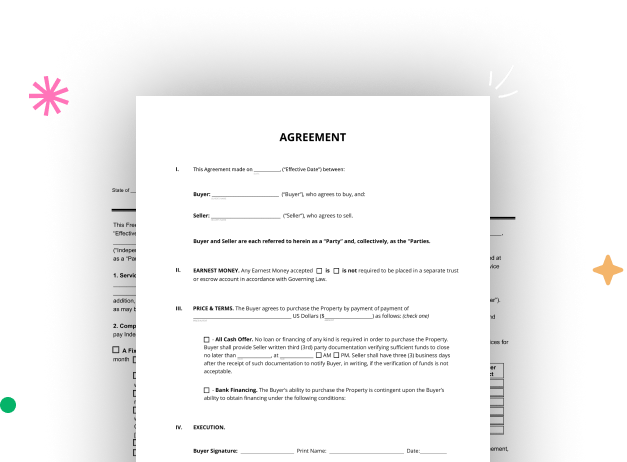
01. Start with a blank Single Person Will
Open the blank document in the editor, set the document view, and add extra pages if applicable.
02. Add and configure fillable fields
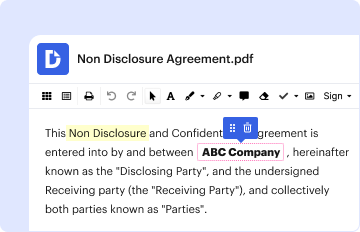
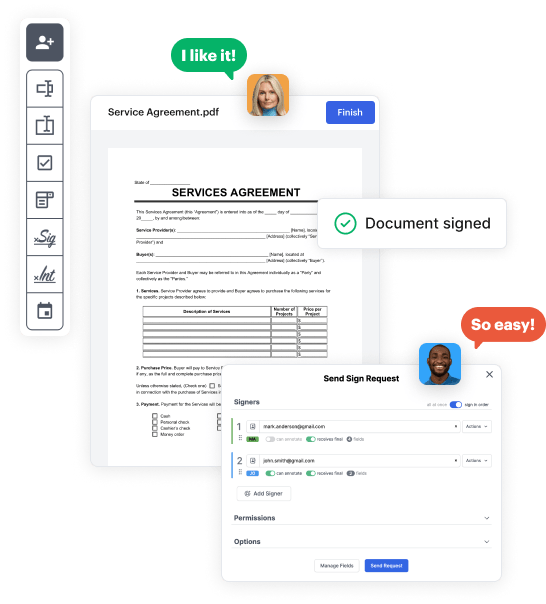
Use the top toolbar to insert fields like text and signature boxes, radio buttons, checkboxes, and more. Assign users to fields.
03. Distribute your form
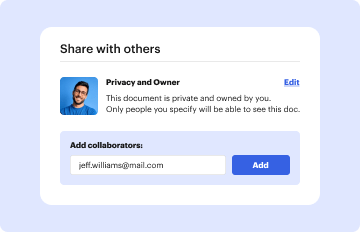
Share your Single Person Will in seconds via email or a link. You can also download it, export it, or print it out.

Craft Single Person Will from scratch with these comprehensive guidelines

Form edit decoration

Step 1: Start off by launching DocHub.

Start by creating a free DocHub account using any available sign-up method. Simply log in if you already have one.

Step 2: Sign up for a 30-day free trial.

Try out the whole set of DocHub's pro tools by registering for a free 30-day trial of the Pro plan and proceed to craft your Single Person Will.

Step 3: Add a new blank form.

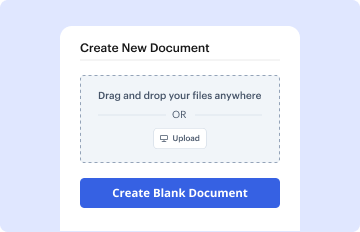
In your dashboard, choose the New Document button > scroll down and choose to Create Blank Document. You will be taken to the editor.

Step 4: Arrange the view of the document.

Use the Page Controls icon marked by the arrow to toggle between different page views and layouts for more flexibility.

Step 5: Begin by inserting fields to create the dynamic Single Person Will.

Use the top toolbar to add document fields. Insert and configure text boxes, the signature block (if applicable), insert images, etc.

Step 6: Prepare and customize the incorporated fields.

Organize the fields you incorporated based on your preferred layout. Personalize each field's size, font, and alignment to make sure the form is easy to use and polished.

Step 7: Finalize and share your document.

Save the completed copy in DocHub or in platforms like Google Drive or Dropbox, or design a new Single Person Will. Distribute your form via email or use a public link to engage with more people.


be ready to get more

Build your Single Person Will in minutes

Start creating now

Got questions?

We have answers to the most popular questions from our customers. If you can't find an answer to your question, please contact us.
Contact us
Leaving Your Entire Estate If you choose to leave all the property you own as a whole, you wont need to list each item separately when making your will. You can name any combination of people to receive your entire estate--one person or a group of people (or organizations).
Even if you are single, a will can help determine who will get your assets (home, business, pets, etc.), name a guardian for your child, and designate an executor. Having a will before you pass is important to establish your wishes in writing so that there is no confusion about your intentions.
If you leave money to your children through an irrevocable trust, technically the trust owns the money not the beneficiary. An irrevocable trust can protect your assets and require the trust executor to follow your exact wishes for the distribution of your assets, even if your child dies or becomes divorced.
Create a title and intros. A straightforward yet important detail to start your will is with a title and introduction. Appoint an executor. Determine guardianship/care of dependents. Assign distribution of assets. List your beneficiaries. Specify funeral and burial instructions. Add residuary clauses. Sign and docHub.
An example of a simple will is: I give all my residences to my husband, Tex. If he does not survive me, I give that property to . This serves as a straightforward illustration of a basic will.
be ready to get more

Build your Single Person Will in minutes

Start creating now

Related Q&A to Single Person Will

Bequeath. To leave property at ones death; another word for give.
A will is a document that approves you to designate how your property and property are allotted upon your death. The easiest structure of a will is a holographic or handwritten will, which does not require witnesses or lawyers. A holographic will be written absolutely in the testators personal handwriting.
Since one never knows which spouse will survive the other, it is important that both have a Will. In addition, a plan that provides that everything go to the surviving spouse may be inefficient for purposes of ultimate distribution to other family members.

Additional resources on building your forms