Handle Sexual Assault Legal Forms quickly online

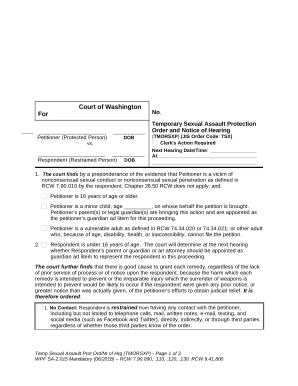
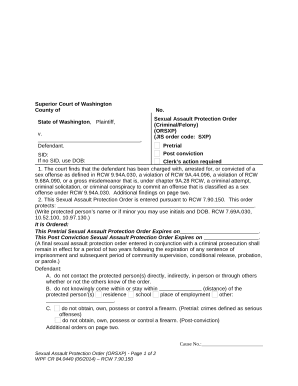
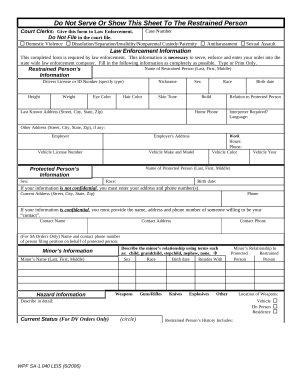
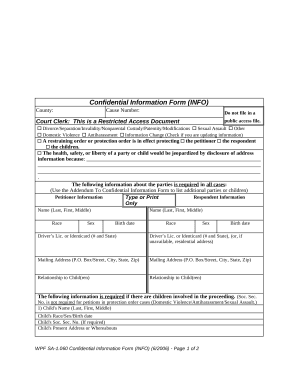
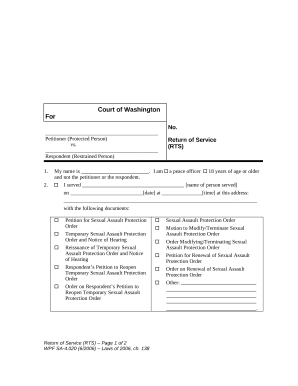
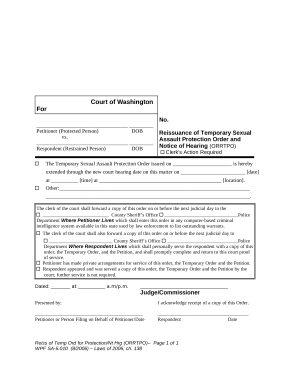
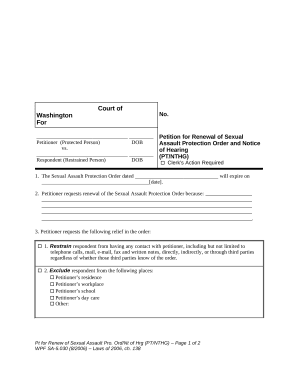
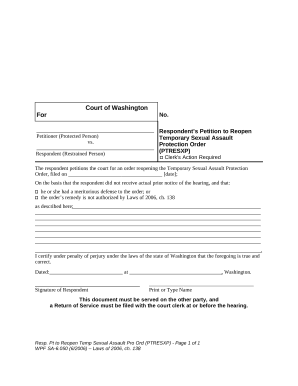
Document management can overwhelm you when you can’t find all the documents you require. Fortunately, with DocHub's vast form library, you can get all you need and quickly take care of it without the need of switching between apps. Get our Sexual Assault Legal Forms and start utilizing them.

Using our Sexual Assault Legal Forms using these basic steps:

  1. Examine Sexual Assault Legal Forms and select the form you require.
  2. Preview the template and click Get Form.
  3. Wait for it to open in the online editor.
  4. Change your template: include new information and images, and fillable fields or blackout certain parts if necessary.
  5. Prepare your template, preserve changes, and prepare it for sending.
  6. When ready, download your form or share it with other contributors.

Try out DocHub and browse our Sexual Assault Legal Forms category without trouble. Get a free profile today!


Video Guide on Sexual Assault Legal Forms management

video background

Commonly Asked Questions about Sexual Assault Legal Forms

Sexual assault is an act in which one intentionally sexually touches another person without that persons consent, or coerces or physically forces a person to engage in a sexual act against their will.
On the other hand, accusers sometimes lie or lack enough evidence from the scene, witness testimony, DNA evidence, or medical records to back up their claims. The main pieces of evidence in a sexual assault or rape case are: Biological evidence collected from the alleged victims person. Medical records.
The evidence most often encountered in sexual assault cases includes not only biological evidence (e.g., semen) but also fingerprints, impression evidence (e.g., shoeprints), and trace evidence (e.g., hairs/fibers). Collect as much sample as possible from a single source.
Medical Examination and Physical Evidence Physical evidence includes the findings from a medical examination, such as physical injuries or signs of trauma. Forensic evidence, such as DNA or semen samples, can also provide critical evidence used to determine guilt in child molestation cases.
DNA Collection Oral, , vaginal, and skin swabs are the most common samples taken for DNA analysis following a sexual assault. Samples of hair, blood, skin, cells, saliva and sweat can also be collected from the victim.
The Elements of Sex Crimes This often requires the testimony of the victim and any available physical or forensic evidence. Lack of Consent: In many sex crimes, such as sexual assault or rape, the prosecution must demonstrate that the act occurred without the victims consent or against their will.
These three elements are force, lack of consent, and age. Knowing these three elements can help survivors of sexual violence understand their rights and seek justice. By understanding each element in detail, victims can know what they need to prove if they wish to pursue criminal charges against an offender.