
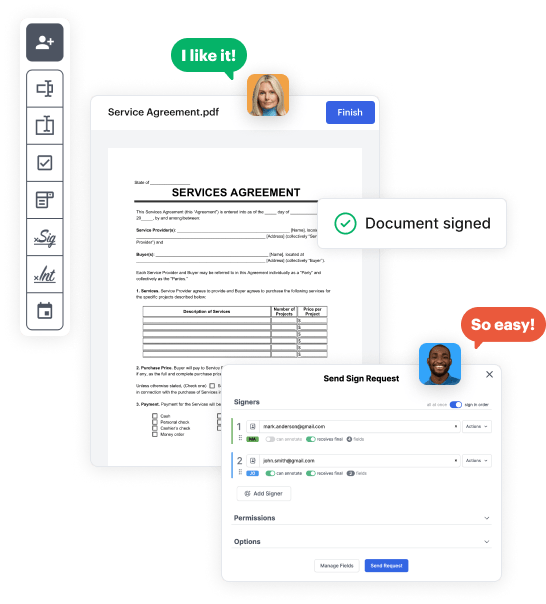
Create your Seller Real Estate Legal Form from scratch

Start Building Now
Title decoration

Here's how it works

01. Start with a blank Seller Real Estate Legal Form
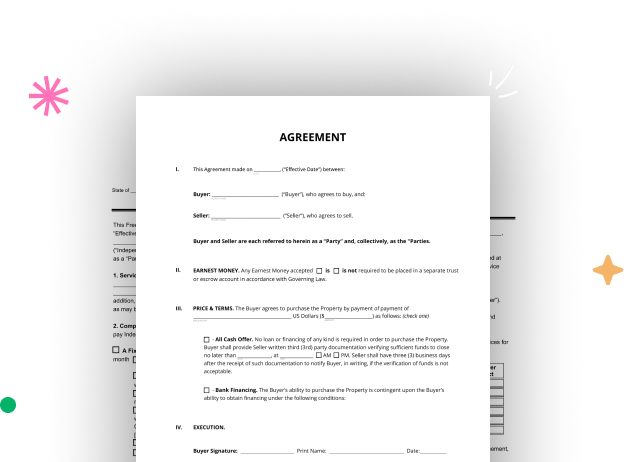
Open the blank document in the editor, set the document view, and add extra pages if applicable.
02. Add and configure fillable fields
Use the top toolbar to insert fields like text and signature boxes, radio buttons, checkboxes, and more. Assign users to fields.
03. Distribute your form
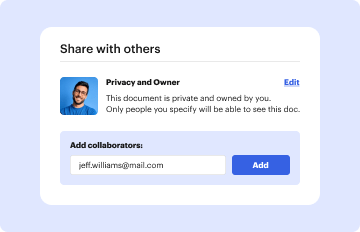
Share your Seller Real Estate Legal Form in seconds via email or a link. You can also download it, export it, or print it out.

Design your Seller Real Estate Legal Form in a matter of minutes

Form edit decoration

Step 1: Access DocHub to set up your Seller Real Estate Legal Form.

Begin by logging into your DocHub account. Explore the advanced DocHub functionality free for 30 days.

Step 2: Navigate to the dashboard.

Once logged in, go to the DocHub dashboard. This is where you'll build your forms and handle your document workflow.

Step 3: Create the Seller Real Estate Legal Form.

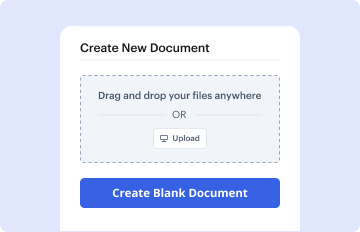
Hit New Document and choose Create Blank Document to be redirected to the form builder.

Step 4: Design the form layout.

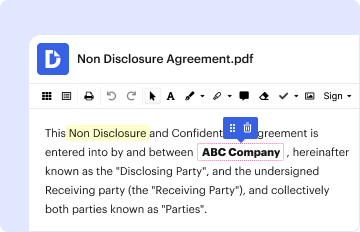
Use the DocHub toolset to insert and configure form fields like text areas, signature boxes, images, and others to your document.

Step 5: Add text and titles.

Add necessary text, such as questions or instructions, using the text field to lead the users in your document.

Step 6: Customize field properties.

Alter the properties of each field, such as making them compulsory or arranging them according to the data you plan to collect. Assign recipients if applicable.

Step 7: Review and save.

After you’ve managed to design the Seller Real Estate Legal Form, make a final review of your document. Then, save the form within DocHub, send it to your selected location, or share it via a link or email.


be ready to get more

Build your Seller Real Estate Legal Form in minutes

Start creating now

Got questions?

We have answers to the most popular questions from our customers. If you can't find an answer to your question, please contact us.
Contact us
This disclosure will help you to make informed choices about your relationship with the real estate broker and its sales agents. Throughout the transaction you may receive more than one disclosure form. The law may require each agent assisting in the transaction to present you with this disclosure form.
Heres a quick checklist of the seven things that you should do when creating a simple sales contract: Determine Customer Needs. Agree on a Solution. Indicate the Scope of Work. Set the Timeline. Establish Pricing Payment Requirements. Create Service Terms. Send the Sales Contract for Review Signature.
If you are buying or selling a home in the state of New York, it is required that you work with an attorney to process all contracts and represent you at the closing.
In the contract, you need to include elements such as: Purchase Price and Closing Details. A simple For Sale By Owner contract has the purchase price, down payment, and closing date. Financing of the Deal. Home Inspection Contingency. Deed for Title Transfer. Default Provisions. Seller Disclosures. Dispute Resolutions.
A strong purchase agreement will include: Buyer and seller names and contact information. Description of goods, services, or property being purchased. Payment amount, dates, and method. Liability of each party in the case of loss, damage, or delivery failure.
be ready to get more

Build your Seller Real Estate Legal Form in minutes

Start creating now

Related Q&A to Seller Real Estate Legal Form

Beyond the condition of the property and environmental hazards, New York law requires sellers to disclose other pertinent information. This includes any zoning violations, restrictions, and whether the property is in a flood zone.
Its key elements include: Buyer and seller names and contact details. A description of the goods and/or services being sold. Delivery specifications. Details of the inspection period. Payment details. Contingencies, including any guarantees, warranties, and conditions for termination.
Either the seller or the buyer can prepare a purchase agreement. Like any contract, it can be a standard document that one party uses in the normal course of business or it can be the end result of back-and-forth negotiations.

Additional resources on building your forms


