
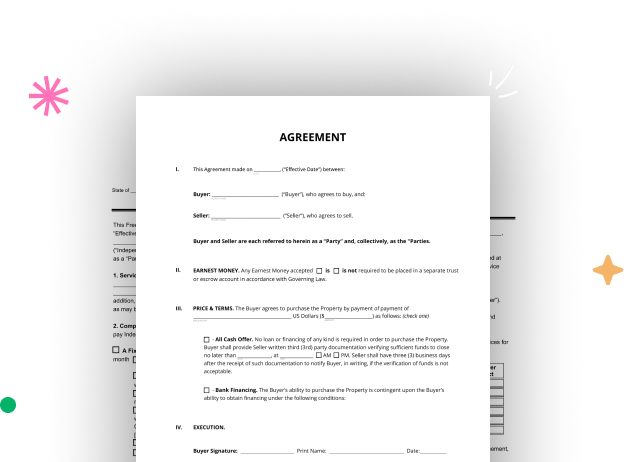


Create your Secured by Real Estate Legal Form from scratch

Start Building Now
Title decoration

Here's how it works

01. Start with a blank Secured by Real Estate Legal Form
Open the blank document in the editor, set the document view, and add extra pages if applicable.
02. Add and configure fillable fields
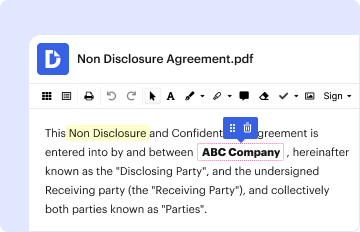
Use the top toolbar to insert fields like text and signature boxes, radio buttons, checkboxes, and more. Assign users to fields.
03. Distribute your form
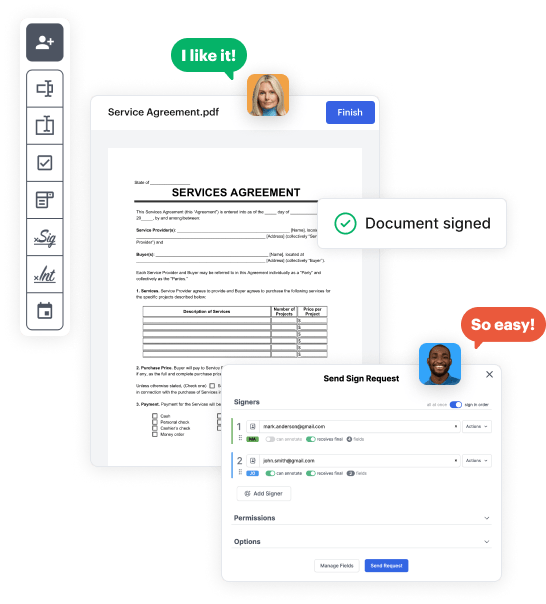
Share your Secured by Real Estate Legal Form in seconds via email or a link. You can also download it, export it, or print it out.

Craft Secured by Real Estate Legal Form from scratch with these step-by-step instructions

Form edit decoration

Step 1: Start off by launching DocHub.

Begin by setting up a free DocHub account using any available sign-up method. Simply log in if you already have one.

Step 2: Sign up for a free 30-day trial.

Try out the complete set of DocHub's advanced tools by signing up for a free 30-day trial of the Pro plan and proceed to craft your Secured by Real Estate Legal Form.

Step 3: Build a new blank document.

In your dashboard, click the New Document button > scroll down and hit Create Blank Document. You’ll be redirected to the editor.

Step 4: Arrange the view of the document.

Utilize the Page Controls icon marked by the arrow to switch between different page views and layouts for more flexibility.

Step 5: Begin by inserting fields to design the dynamic Secured by Real Estate Legal Form.

Explore the top toolbar to place document fields. Add and arrange text boxes, the signature block (if applicable), add photos, and other elements.

Step 6: Prepare and configure the incorporated fields.

Organize the fillable areas you incorporated per your preferred layout. Adjust each field's size, font, and alignment to ensure the form is easy to use and polished.

Step 7: Finalize and share your template.

Save the ready-to-go copy in DocHub or in platforms like Google Drive or Dropbox, or design a new Secured by Real Estate Legal Form. Send out your form via email or get a public link to reach more people.


be ready to get more

Build your Secured by Real Estate Legal Form in minutes

Start creating now

Got questions?

We have answers to the most popular questions from our customers. If you can't find an answer to your question, please contact us.
Contact us
You can prepare your own security agreement using an online form, or you can consult an attorney to create one for you. Some key provisions in a security agreement include: Describing the collateral as accurately and as detailed as possible, so both the borrower and the lender agree upon the secured property.
Identify the type of security measures needed to be taken and include them in the security contract. Specify the duration of the contract, including when it starts and ends. Specify the jurisdiction in which the contract should be enforced. Write the contract in a concise and easy to understand manner.
Important points to include in a legal document. Party details. List the names, numbers, addresses (email or physical), and any other relevant information of all parties involved. Background information. Motion. Roles and responsibilities. BdocHubes or contingencies. Dates and signatures.
Key Takeaways. A security agreement is a document that provides a lender a security interest in a specified asset or property that is pledged as collateral. Security agreements often contain covenants that outline provisions for the advancement of funds, a repayment schedule, or insurance requirements.
At a minimum, a valid security agreement consists of a description of the collateral, a statement of the intention of providing security interest, and signatures from all parties involved. Most security agreements, however, go beyond these basic requirements.
be ready to get more

Build your Secured by Real Estate Legal Form in minutes

Start creating now

Related Q&A to Secured by Real Estate Legal Form

A security agreement is a document that provides a lender a security interest in a specified asset or property that is pledged as collateral. Security agreements often contain covenants that outline provisions for the advancement of funds, a repayment schedule, or insurance requirements.
Mortgages are secured loans because the house is used as collateral. This means if youre unable to repay the loan, the lender may put the home into foreclosure. In contrast, an unsecured loan isnt protected by collateral and is a higher risk to the lender.
Just like real estate deeds, security agreements should be recorded at state offices and made available to the public.

Additional resources on building your forms


