



Create your Rhode Island Property Law from scratch

Start Building Now
Title decoration

Here's how it works

01. Start with a blank Rhode Island Property Law
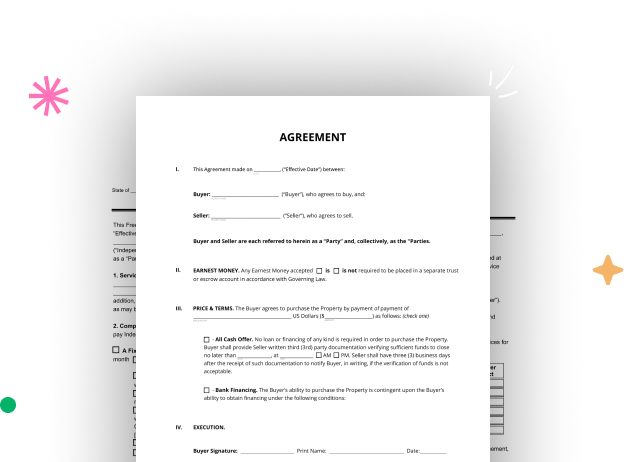
Open the blank document in the editor, set the document view, and add extra pages if applicable.
02. Add and configure fillable fields
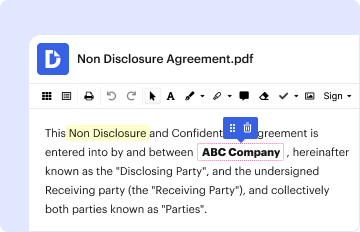
Use the top toolbar to insert fields like text and signature boxes, radio buttons, checkboxes, and more. Assign users to fields.
03. Distribute your form
Share your Rhode Island Property Law in seconds via email or a link. You can also download it, export it, or print it out.

Craft Rhode Island Property Law from scratch with these step-by-step instructions

Form edit decoration

Step 1: Get started with DocHub.

Start by signing up for a free DocHub account using any available sign-up method. Just log in if you already have one.

Step 2: Sign up for a free 30-day trial.

Try out the whole collection of DocHub's advanced features by signing up for a free 30-day trial of the Pro plan and proceed to build your Rhode Island Property Law.

Step 3: Build a new empty doc.

In your dashboard, click the New Document button > scroll down and hit Create Blank Document. You will be redirected to the editor.

Step 4: Organize the document’s view.

Use the Page Controls icon indicated by the arrow to switch between different page views and layouts for more convenience.

Step 5: Begin by inserting fields to design the dynamic Rhode Island Property Law.

Use the top toolbar to place document fields. Insert and configure text boxes, the signature block (if applicable), insert images, etc.

Step 6: Prepare and configure the added fields.

Arrange the fields you added per your desired layout. Customize each field's size, font, and alignment to make sure the form is user-friendly and professional.

Step 7: Finalize and share your form.

Save the finalized copy in DocHub or in platforms like Google Drive or Dropbox, or craft a new Rhode Island Property Law. Distribute your form via email or utilize a public link to reach more people.


be ready to get more

Build your Rhode Island Property Law in minutes

Start creating now

Got questions?

We have answers to the most popular questions from our customers. If you can't find an answer to your question, please contact us.
Contact us
Handwritten Will: A holographic will is a will written in the testators handwriting and signed by them without any witnesses. This is not valid in Rhode Island, with exceptions for military service members in active service.
Rhode Island allows bankrupt homeowners to claim up to $500,000 worth of their property (based on equity) as a homestead, which means it may not be seized by creditors.
The Create Homes Act will allow the Department of Housing to address the housing crisis by: Authorizing the Department of Housing to fund, contract, and build mixed-income housing. Creating a land bank to recapture and develop housing on underutilized public property.
Yes, you can build your own house in Rhode Island, if you have land in an area of your choice. You have to budget for the time and the cost of building your home though. You will also need permits to build your house. Permit fees depend on the home value or the construction area.
The law, signed by Democratic Gov. Dan McKee on June 25, lets homeowners create a single accessory dwelling unit, or ADU, on an owner-occupied property to encourage rental units that are likely to be more affordable than many other apartments.
be ready to get more

Build your Rhode Island Property Law in minutes

Start creating now

Related Q&A to Rhode Island Property Law

2023 Income Limits Number of PersonsModerately Low IncomeExtremely Low Income Providence-Fall River, RI-MA One $57,350 $21,500 Two $65,550 $24,600 Three $73,750 $27,65027 more rows
Rhode Island law allows for the construction of ADUs in certain zoning districts and under conditions. Some of the requirements for building an Accessory Dwelling Unit include: the property must be zoned for single-family residential or multi-family use.
Credit Score Requirement: To secure better interest rates, aim for a credit score of 670 or higher. The average credit score required in Rhode Island is 713. Down Payment and Closing Cost Requirement: Allocate 20% of the homes sale price towards a down payment, and budget 2% to 5% for closing costs.


