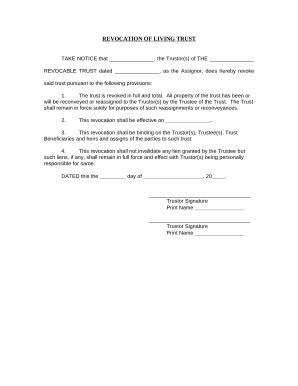
Enhance your form managing with Revoking a Living Trust

Your workflows always benefit when you can get all the forms and files you will need on hand. DocHub gives a wide array of documents to alleviate your everyday pains. Get hold of Revoking a Living Trust category and quickly browse for your document.

Begin working with Revoking a Living Trust in several clicks:

  1. Gain access to Revoking a Living Trust and get the document you need.
  2. Click Get Form to open it in our online editor.
  3. Begin changing your document: add more fillable fields, highlight paragraphs, or blackout sensitive information.
  4. The application saves your modifications automatically, and after you are all set, you are able to download or share your file with other contributors.

Enjoy fast and easy record managing with DocHub. Check out our Revoking a Living Trust collection and look for your form right now!


Video Guide on Revoking a Living Trust management

video background

Commonly Asked Questions about Revoking a Living Trust

The views of the trustees are not paramount. If the beneficiaries wish to terminate a trust and are all over 18 years with full capacity, then they can unanimously end the trust and distribute the assets, even if the trustees disagree with this.
This involves distributing the trusts assets to the beneficiaries, settling any outstanding obligations, preparing final accounts and obtaining releases from beneficiaries. It requires careful administration, documentation and compliance with legal requirements to ensure a proper and fair conclusion of the trust.
Under the right circumstances, you can terminate, dissolve, or modify an irrevocable trust in California.
Can a Beneficiary Remove Themselves From a Trust? A beneficiary could ask to be removed from a trust of their own free will. For example, a beneficiary might waive their right to inherit if they dont need the assets theyd otherwise be entitled to or if inheriting would impose too great of a tax burden on them.
Revoking is the same as cancelling so yes, you can revoke your deed of trust by getting a deed of surrender in place, which will cancel (surrender) any terms stated in your pre-existing deed. Your solicitor will help with this and you can subsequently get a new deed of trust drafted.
In a revocable trust, the grantor (the person who creates and funds the trust) can remove a trustee without permission from anyone else. To do so, they should formally notify the trustee that their services are no longer needed. The grantor can then name a new trustee.
Revocable trusts, as their name implies, can be altered or completely revoked at any time by their grantorthe person who established them. The first step in dissolving a revocable trust is to remove all the assets that have been transferred into it.
Can a Trustee Change the Beneficiary? Trustees generally do not have the power to change the beneficiary of a trust. The right to add and remove beneficiaries is a power reserved for the settlor of the trust; when the grantor dies, their trust will usually become irrevocable.