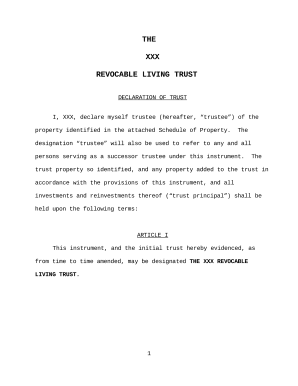
Raise your output with Revocable Living Trusts

Document management takes up to half of your office hours. With DocHub, it is simple to reclaim your time and increase your team's productivity. Get Revocable Living Trusts online library and check out all document templates related to your daily workflows.

The best way to use Revocable Living Trusts:

  1. Open Revocable Living Trusts and employ Preview to find the suitable form.
  2. Click on Get Form to start working on it.
  3. Wait for your form to upload in the online editor and begin modifying it.
  4. Add new fillable fields, icons, and images, change pages order, and many more.
  5. Complete your document or prepare it for other contributors.
  6. Download or deliver the form by link, email attachment, or invite.

Boost your daily file management with our Revocable Living Trusts. Get your free DocHub profile right now to discover all templates.


Video Guide on Revocable Living Trusts management

video background

Commonly Asked Questions about Revocable Living Trusts

People use trusts to keep control of their money and property and to designate who receives money and property once they die. One reason to set up a revocable living trust is to avoid the probate process after death. Probate is a public process, and it can be expensive and lengthy.
The main disadvantage of a revocable living trust is that it does not protect you from creditors or lawsuits. Because you have control of everything in your trust and have access to the assets, you can still be sued for liability.
Put more simply, a revocable living trust is a document that allows individuals to continue to own and control their property while they are alive, then transfer it to whoever they want after they die, all while avoiding probate.
A revocable trust and living trust are separate terms that describe the same thing: a trust in which the terms can be changed at any time. An irrevocable trust describes a trust that cannot be modified after it is created without the beneficiaries consent or court approval, and possibly both.
The assets you cannot put into a trust include the following: Medical savings accounts (MSAs) Health savings accounts (HSAs) Retirement assets: 403(b)s, 401(k)s, IRAs. Any assets that are held outside of the United States. Cash. Vehicles.
Arguably, the single greatest advantage of choosing a revocable living trust is the simple fact that it avoids probate court. With a last will and testament, the named beneficiaries must go through a lengthy court hearing before they are able to legally obtain the estate and/or assets specified in the grantors will.