


Create your Retaliatory Eviction Letter from scratch

Start Building Now
Title decoration

Here's how it works

01. Start with a blank Retaliatory Eviction Letter
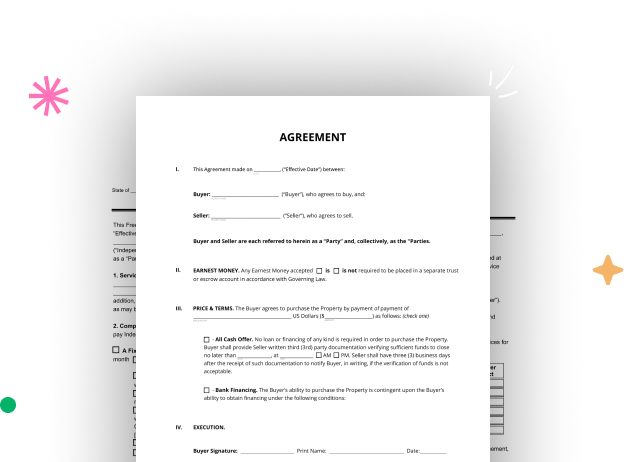
Open the blank document in the editor, set the document view, and add extra pages if applicable.
02. Add and configure fillable fields
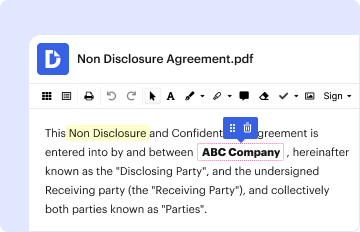
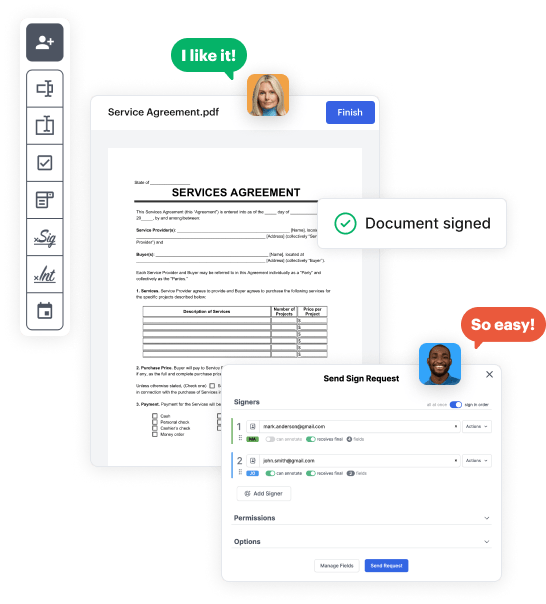
Use the top toolbar to insert fields like text and signature boxes, radio buttons, checkboxes, and more. Assign users to fields.
03. Distribute your form
Share your Retaliatory Eviction Letter in seconds via email or a link. You can also download it, export it, or print it out.

A detailed walkthrough of how to design your Retaliatory Eviction Letter online

Form edit decoration

Step 1: Start with DocHub's free trial.

Go to the DocHub website and register for the free trial. This provides access to every feature you’ll require to create your Retaliatory Eviction Letter with no upfront cost.

Step 2: Navigate to your dashboard.

Sign in to your DocHub account and go to the dashboard.

Step 3: Initiate a new document.

Click New Document in your dashboard, and choose Create Blank Document to design your Retaliatory Eviction Letter from the ground up.

Step 4: Use editing tools.

Add various elements such as text boxes, radio buttons, icons, signatures, etc. Arrange these elements to match the layout of your document and designate them to recipients if needed.

Step 5: Organize the form layout.

Rearrange your document effortlessly by adding, moving, deleting, or combining pages with just a few clicks.

Step 6: Set up the Retaliatory Eviction Letter template.

Convert your freshly crafted form into a template if you need to send many copies of the same document repeatedly.

Step 7: Save, export, or distribute the form.

Send the form via email, distribute a public link, or even publish it online if you wish to collect responses from a broader audience.


be ready to get more

Build your Retaliatory Eviction Letter in minutes

Start creating now

Got questions?

We have answers to the most popular questions from our customers. If you can't find an answer to your question, please contact us.
Contact us
If you comply with the eviction notice by paying all the rent due and owing, then, in New York, the landlord must not proceed with the eviction (see N.Y. Real Prop. Acts 711(2)). If you are not able to comply with the eviction notice within the time period stated in the notice, then you should talk to your landlord.
New York Eviction Process Timeline Notice Received by TenantsAverage Timeline Initial Notice Period 14-90 days Issuance and Posting of Summons and Complaint AND Court Hearing and Ruling on the Eviction 10-17 days Posting of Writ of Execution A few hours to a few days Return of Possession 10 days to 1 year1 more row Aug 8, 2024
Gather Necessary Information. Collect all pertinent information related to your eviction. This includes your lease agreement, documentation of rent payments, communication with the landlord, and any other relevant records. The more evidence you have to support your case, the stronger your letter will be.
A Notice of Eviction is a paper given to you by a Marshal, Sheriff or Constable after the landlord/owner wins the court case. This can happen even if you missed your court date. The 14-day Notice of Eviction tells you that you will be evicted from your home.
Florida law states that landlords cannot take part in any one of the following retaliatory acts: Terminating your lease without appropriate reason. Refusing to renew your lease without appropriate reason.
be ready to get more

Build your Retaliatory Eviction Letter in minutes

Start creating now

Related Q&A to Retaliatory Eviction Letter

A retaliatory eviction occurs when a landlord attempts or succeeds at removing a renter, or refuses to renew a lease in response to a complaint or action that is within a tenants legal rights. Retaliatory evictions are generally illegal, as they take place following a tenants exercise of one or more legal rights.
Under the new Good Cause Eviction law, New Yorkers have the right to continue living in their homes without fear of unreasonable eviction or extreme rent increases. In many situations, tenants of market rate housing will now be covered by more expansive protections. Read below for details.
Overview. In New York State, an eviction of a tenant is lawful only if an owner has brought a court proceeding and obtained a judgment of possession from the court. A sheriff, marshal or constable can carry out a court ordered eviction. An owner may not evict a tenant by use of force or unlawful means.

Additional resources on building your forms


