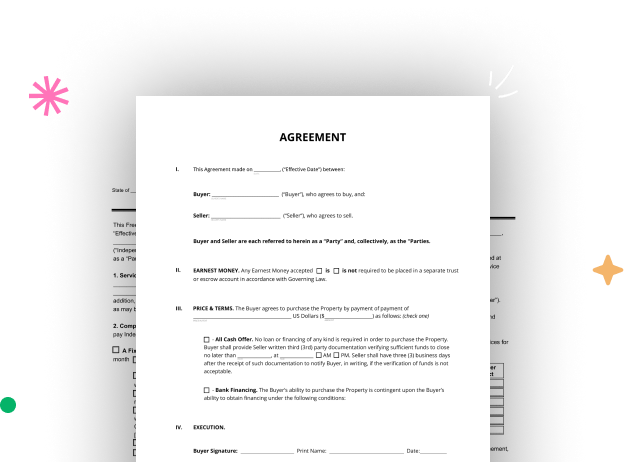
Create your Residential Tenancy Agreement Form from scratch

Start Building Now
Title decoration

Here's how it works

01. Start with a blank Residential Tenancy Agreement Form
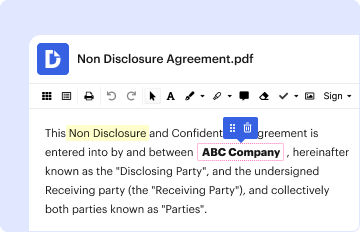
Open the blank document in the editor, set the document view, and add extra pages if applicable.
02. Add and configure fillable fields
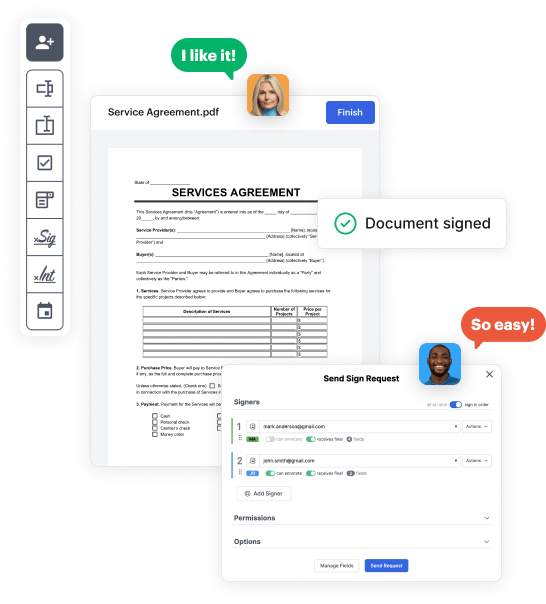
Use the top toolbar to insert fields like text and signature boxes, radio buttons, checkboxes, and more. Assign users to fields.
03. Distribute your form
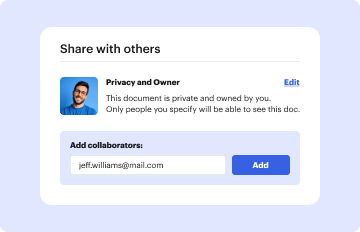
Share your Residential Tenancy Agreement Form in seconds via email or a link. You can also download it, export it, or print it out.

A quick tutorial on how to create a professional-looking Residential Tenancy Agreement Form

Form edit decoration

Step 1: Sign in to DocHub to create your Residential Tenancy Agreement Form.

First, sign in to your DocHub account. If you don't have one, you can easily register for free.

Step 2: Go to the dashboard.

Once you’re in, navigate to your dashboard. This is your main hub for all document-related activities.

Step 3: Kick off new document creation.

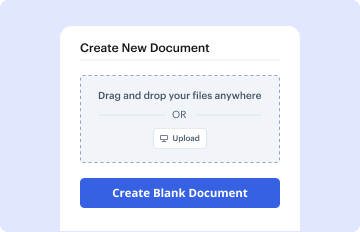
In your dashboard, select New Document in the upper left corner. Select Create Blank Document to design the Residential Tenancy Agreement Form from the ground up.

Step 4: Insert form elements.

Place various elements like text boxes, images, signature fields, and other elements to your form and assign these fields to particular users as needed.

Step 5: Configure your document.

Customize your template by adding walkthroughs or any other crucial details using the text tool.

Step 6: Double-check and refine the content of the form.

Meticulously go over your created Residential Tenancy Agreement Form for any errors or essential adjustments. Take advantage of DocHub's editing tools to fine-tune your document.

Step 7: Send out or download the document.

After completing, save your copy. You can select to save it within DocHub, transfer it to various storage options, or forward it via a link or email.


be ready to get more

Build your Residential Tenancy Agreement Form in minutes

Start creating now

Got questions?

We have answers to the most popular questions from our customers. If you can't find an answer to your question, please contact us.
Contact us
To create a new tenant Sign in to the Azure portal. From the Azure portal menu, select Microsoft Entra ID. Navigate to Identity Overview Manage tenants. Select Create. On the Basics tab, select the type of tenant you want to create, either Microsoft Entra ID or Microsoft Entra ID (B2C).
Steps to Add a Tenant to an Existing Lease Acquire a Written Request to Add a Tenant. Check the Units Occupancy Limit. Require a Completed Rental Application. Screen and Approve/Deny the New Tenant. Review the Details With Each Tenant.
Fill out the tenancy details: Name: Enter a name for the new tenancy. Description: Optionally, enter a description for the new tenancy. Service Namespace: Set a unique namespace for all resources created within this tenancy. Authentication Credentials: Set a user name and password for the primary tenancy administrator.
In a tenancy in common, the property owners have unequal shares of ownership of the property. For example, if one owns 50%, another person may own 25% and another person may own the remaining 25% of the property.
Yes, Microsoft Word has a free lease agreement template that you can customize to create your own contract and minimize any potential problems between tenant and landlord.
be ready to get more

Build your Residential Tenancy Agreement Form in minutes

Start creating now

Related Q&A to Residential Tenancy Agreement Form

Changing the tenancy agreement A tenancy agreement can normally only be changed if both you and your landlord agree. If you both agree, the change should be recorded in writing, either by drawing up a new written document setting out the terms of the tenancy or by amending the existing written tenancy agreement.
The tenancy agreement should include: the names of all people involved. the rental price and how its paid. information on how and when the rent will be reviewed. the deposit amount and how it will be protected. when the deposit can be fully or partly withheld, for example to repair damage caused by tenants.

Additional resources on building your forms