

Create your Residential Leasing Legal Form from scratch

Start Building Now
Title decoration

Here's how it works

01. Start with a blank Residential Leasing Legal Form
Open the blank document in the editor, set the document view, and add extra pages if applicable.
02. Add and configure fillable fields
Use the top toolbar to insert fields like text and signature boxes, radio buttons, checkboxes, and more. Assign users to fields.
03. Distribute your form
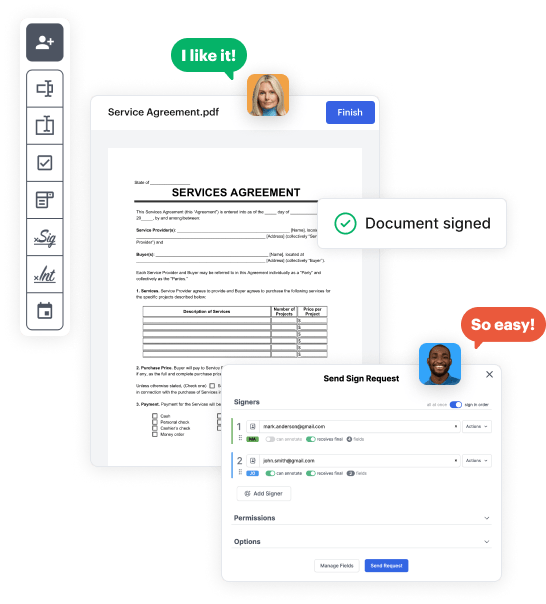
Share your Residential Leasing Legal Form in seconds via email or a link. You can also download it, export it, or print it out.

A detailed guide on how to craft your Residential Leasing Legal Form online

Form edit decoration

Step 1: Start with DocHub's free trial.

Go to the DocHub website and register for the free trial. This gives you access to every feature you’ll require to build your Residential Leasing Legal Form without any upfront cost.

Step 2: Navigate to your dashboard.

Sign in to your DocHub account and navigate to the dashboard.

Step 3: Initiate a new document.

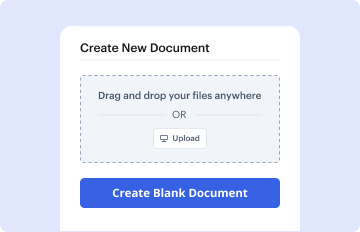
Click New Document in your dashboard, and select Create Blank Document to craft your Residential Leasing Legal Form from the ground up.

Step 4: Utilize editing tools.

Add various fields such as text boxes, radio buttons, icons, signatures, etc. Arrange these fields to match the layout of your form and designate them to recipients if needed.

Step 5: Modify the form layout.

Organize your form effortlessly by adding, moving, deleting, or combining pages with just a few clicks.

Step 6: Craft the Residential Leasing Legal Form template.

Convert your newly crafted form into a template if you need to send multiple copies of the same document numerous times.

Step 7: Save, export, or distribute the form.

Send the form via email, distribute a public link, or even publish it online if you wish to collect responses from a broader audience.


be ready to get more

Build your Residential Leasing Legal Form in minutes

Start creating now

Got questions?

We have answers to the most popular questions from our customers. If you can't find an answer to your question, please contact us.
Contact us
Tenants without a lease agreement also have the right to privacy. The landlord cannot enter your rental property without your consent, except in emergencies or other legally allowed circumstances. The landlord must provide reasonable notice before entering the rental property for repairs, inspections, or other reasons.
In New York 5 Page 9 City, 30 days notice is required, rather than one month. Landlords do not need to explain why the tenancy is being terminated, they only need to provide notice that it is, and that refusal to vacate will lead to eviction proceedings.
Every LOI should include: the property address. the names of the tenant and the landlord. the size of the space you wish to lease and the suite number if applicable. the length of the lease term and move-in date. the rental rate and what itll include (whether utilities, janitorial services, and the like will be included)
Your Rights as a Renter Renters have the right to safe, livable, and sanitary homes. Renters have the right to make a housing complaint - without experiencing retaliation. Renters have the right to live free from discrimination in their housing. Renters cannot be required to give up their rights when they sign a lease.
A New York standard residential lease agreement is a form that allows a landlord and tenant to enter into a legally binding arrangement for leasing residential space. The term standard means a fixed term that usually lasts for a one (1) year period but can be for any time period agreed by the parties.
be ready to get more

Build your Residential Leasing Legal Form in minutes

Start creating now

Related Q&A to Residential Leasing Legal Form

How to Evict a Tenant in NYC With No Lease You must give a 30-Day Notice The tenant must either a). The notice must be provided in writing (i.e. Notice to Quit). You must let the tenant know they can contest the eviction in housing court. You must make three good faith efforts to hand-deliver the notice.
Waiving the Warranty of Habitability (Real Property Law 235-b); and. Restricting a tenant from living with their immediate family members and/or one additional occupant and the occupants dependent children (Real Property Law 235-f).

Additional resources on building your forms


