
Get and handle Residential Lease Extension Form online

Improve your form administration using our Residential Lease Extension Form category with ready-made document templates that meet your needs. Access your document, edit it, complete it, and share it with your contributors without breaking a sweat. Begin working more efficiently with your forms.

How to use our Residential Lease Extension Form:

  1. Open our Residential Lease Extension Form and look for the form you require.
  2. Preview your document to ensure it’s what you want, and click Get Form to start working on it.
  3. Alter, add new text, or highlight important information with DocHub tools.
  4. Complete your form and save the adjustments.
  5. Download or share your form template with other recipients.

Explore all of the possibilities for your online file administration with our Residential Lease Extension Form. Get your free free DocHub profile right now!


Video Guide on Residential Lease Extension Form management

video background

Commonly Asked Questions about Residential Lease Extension Form

If the tenant does not vacate after the expiration of the thirty days, the landlords counsel can proceed with a holdover eviction action in the appropriate local forum. At this point, the parties, through their attorneys, may attempt to negotiate a resolution to the situation.
The cost of a lease extension is directly tied to the value of the property. Once the lease falls below 80 years, the landlord is entitled to receive 50% of the increase in property value when an extension iss granted; this Marriage Value is what makes it so costly to extend a shorter lease.
If you have been living in your home for over a year, your landlord must give at least 60 days notice. If you have been living in your home for more than 2 years, your landlord must give at least 90 days notice. rent as a security deposit. When you move out, they must return the security deposit within 14 days.
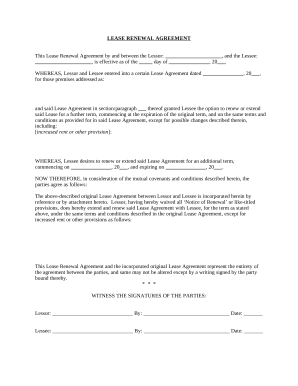
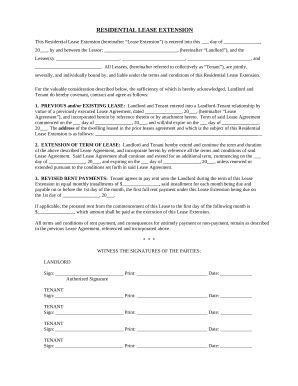
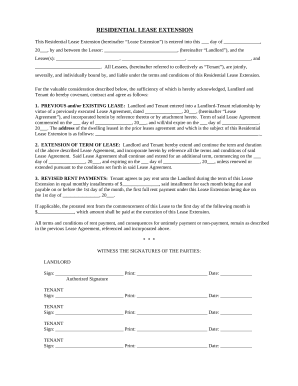
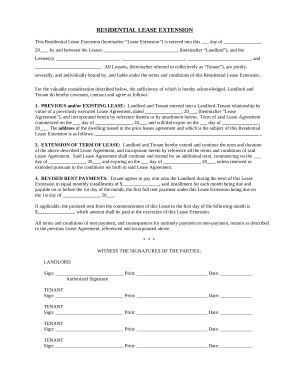
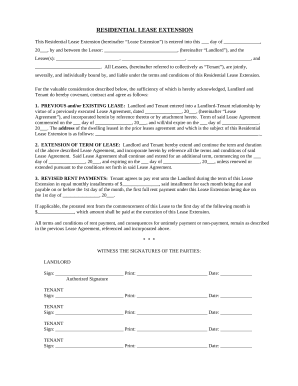
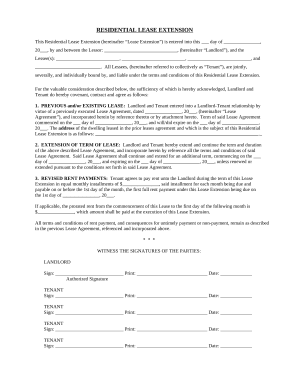
A lease extension addendum is a legal document used to extend a lease, typically between a landlord and tenant. It can modify certain lease conditions like rent, security deposit, and utilities, but the rest of the original lease terms remain unchanged.
the landlord of an intention not to renew the lease. (General Obligations Law 5-905). If you have lived in your apartment for less than one year, or have a lease for less than one year, your landlord must provide you with 30 days advanced notice before raising your rent or not renewing your lease.
The letter should include: Your name, current address and contact information. Date the lease extension request is submitted. Length of the lease extension, including the proposed end date. Reasons for extension. Date by which you need a decision, usually 10 days to two weeks.
They must also notify tenants in writing if they do not intend to renew a lease. Specifically: If a tenant has occupied the unit for less than one year, or does not have a lease term of at least one year, a 30-day notice is now mandatory.
Landlords may refuse to renew a lease only under certain enumerated circumstances, such as when the tenant is not using the premises as a primary residence.
