
Create your Residential Lease Amendment from scratch

Start Building Now
Title decoration

Here's how it works

01. Start with a blank Residential Lease Amendment
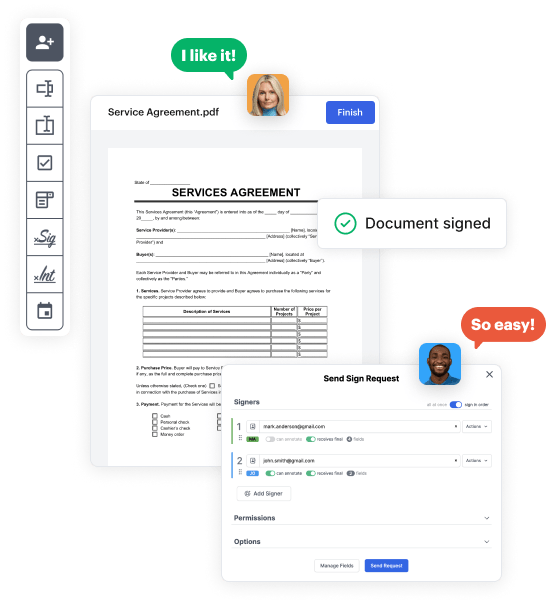
Open the blank document in the editor, set the document view, and add extra pages if applicable.
02. Add and configure fillable fields
Use the top toolbar to insert fields like text and signature boxes, radio buttons, checkboxes, and more. Assign users to fields.
03. Distribute your form
Share your Residential Lease Amendment in seconds via email or a link. You can also download it, export it, or print it out.

A brief guide on how to set up a polished Residential Lease Amendment

Form edit decoration

Step 1: Sign in to DocHub to create your Residential Lease Amendment.

First, log in to your DocHub account. If you don't have one, you can simply sign up for free.

Step 2: Head to the dashboard.

Once you’re in, access your dashboard. This is your central hub for all document-centric operations.

Step 3: Initiate new document creation.

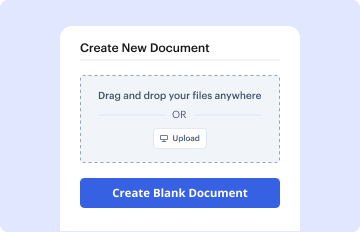
In your dashboard, choose New Document in the upper left corner. Hit Create Blank Document to craft the Residential Lease Amendment from a blank slate.

Step 4: Add form elements.

Add numerous fields like text boxes, photos, signature fields, and other elements to your form and designate these fields to specific individuals as needed.

Step 5: Fine-tune your template.

Personalize your template by inserting walkthroughs or any other essential information using the text tool.

Step 6: Go over and tweak the document.

Thoroughly go over your created Residential Lease Amendment for any discrepancies or needed adjustments. Make use of DocHub's editing tools to enhance your template.

Step 7: Share or download the template.

After finalizing, save your copy. You may select to retain it within DocHub, export it to various storage platforms, or send it via a link or email.


be ready to get more

Build your Residential Lease Amendment in minutes

Start creating now

Got questions?

We have answers to the most popular questions from our customers. If you can't find an answer to your question, please contact us.
Contact us
Editing a tenant Click the Configure tab. On the Views pane, select Access Control, then select the Tenants tab. Select the tenant to edit by clicking in the row containing the tenant name. Click Edit . Update the Tenant Name, Tenant Admin Name, and resource pools associated with the tenant. Click Finish.
Definition: Any amendment to a lease contract is a lease modification unless the lessees right to use the underlying asset has been diminished.
California tenants have strong protections, like rent caps where you cant raise the rent more than 5% plus inflation each year. Landlords must give a good reason to evict someone who has lived in a place for over a year, under Just-Cause Eviction laws. If somethings broken at home, landlords need to fix it fast.
A lease obligates both you and your landlord for a set period of time, usually a year. Under a typical lease, a landlord cant raise the rent or change other terms, until the lease runs out (unless the lease itself provides for a change, such as a rent increase mid-lease).
Key elements of a lease amendment form Identifying information. Reference to the original lease. Description of amendments. Effective date. Signatures. Notarization (if required).
be ready to get more

Build your Residential Lease Amendment in minutes

Start creating now

Related Q&A to Residential Lease Amendment

A modification of a lease, referred to as a lease amendment or lease modification, is a formal agreement that alters the initial terms and conditions of a lease. It provides a means for the involved parties to mutually agree on modifications without the need to create an entirely new lease agreement.
In California, an initial fixed-term lease automatically converts to a monthly rental when: The original rental contract expires and no lease renewal is signed. The tenant continues paying rent after the prior fixed-term ends. The terms roll over into an indefinite month-to-month agreement.
For month-to-month tenancies, you must provide a 30-day written notice of the change in the terms of the tenancy. If the change involves a rent increase of more than 10%, a 90-day notice is required. However, if the increase is due to income or household size recertification, you only need to provide 30 days notice.

Additional resources on building your forms