
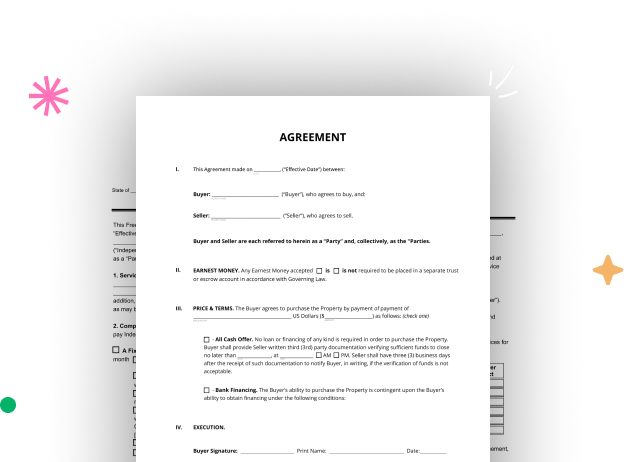

Create your Residential Landlord Tenant Legal Form from scratch

Start Building Now
Title decoration

Here's how it works

01. Start with a blank Residential Landlord Tenant Legal Form
Open the blank document in the editor, set the document view, and add extra pages if applicable.
02. Add and configure fillable fields
Use the top toolbar to insert fields like text and signature boxes, radio buttons, checkboxes, and more. Assign users to fields.
03. Distribute your form
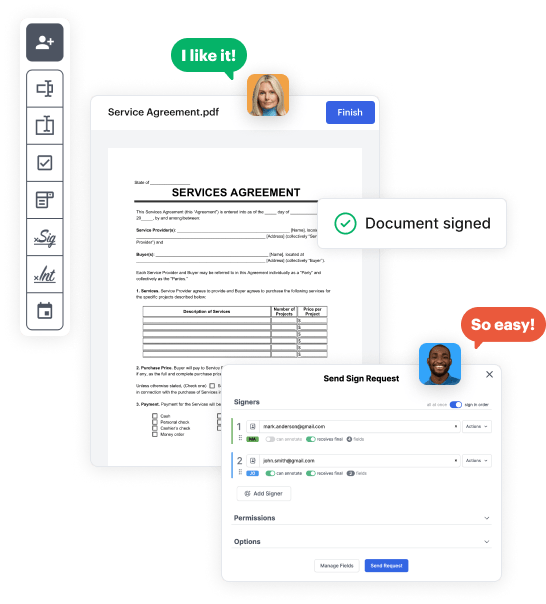
Share your Residential Landlord Tenant Legal Form in seconds via email or a link. You can also download it, export it, or print it out.

Design your Residential Landlord Tenant Legal Form in a matter of minutes

Form edit decoration

Step 1: Access DocHub to build your Residential Landlord Tenant Legal Form.

Begin by accessing your DocHub account. Utilize the advanced DocHub functionality at no cost for 30 days.

Step 2: Go to the dashboard.

Once logged in, head to the DocHub dashboard. This is where you'll build your forms and manage your document workflow.

Step 3: Create the Residential Landlord Tenant Legal Form.

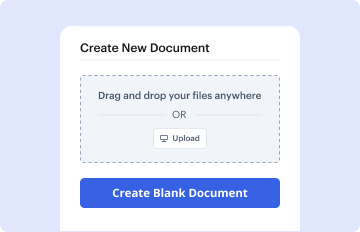
Click on New Document and choose Create Blank Document to be redirected to the form builder.

Step 4: Set up the form layout.

Use the DocHub features to insert and configure form fields like text areas, signature boxes, images, and others to your form.

Step 5: Insert text and titles.

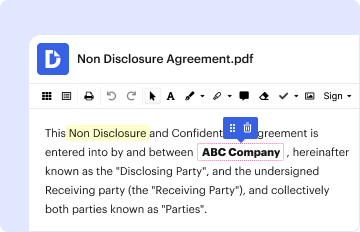
Include necessary text, such as questions or instructions, using the text field to assist the users in your document.

Step 6: Customize field settings.

Alter the properties of each field, such as making them mandatory or arranging them according to the data you plan to collect. Designate recipients if applicable.

Step 7: Review and save.

After you’ve managed to design the Residential Landlord Tenant Legal Form, make a final review of your form. Then, save the form within DocHub, send it to your selected location, or distribute it via a link or email.


be ready to get more

Build your Residential Landlord Tenant Legal Form in minutes

Start creating now

Got questions?

We have answers to the most popular questions from our customers. If you can't find an answer to your question, please contact us.
Contact us
Go to the Landlord-Tenant Clerks office and fill out a court form called a Petition in Support of an Order to Show Cause. If you can, bring your lease, rent receipts, utility bills and mail addressed to you at your home. If the Judge signs the Order to Show Cause, you will get a court date a day or two away.
Waiving the Warranty of Habitability (Real Property Law 235-b); and. Restricting a tenant from living with their immediate family members and/or one additional occupant and the occupants dependent children (Real Property Law 235-f).
For more information, or if you need more help, please call 311 and ask for the Department of Housing Preservation and Development (HPD). Outside of New York City, call 212-NEW-YORK. You may also visit portal.311.nyc.gov to find an answer to your question or determine the proper course of action.
Tenants without a lease agreement also have the right to privacy. The landlord cannot enter your rental property without your consent, except in emergencies or other legally allowed circumstances. The landlord must provide reasonable notice before entering the rental property for repairs, inspections, or other reasons.
Overview. In New York State, an eviction of a tenant is lawful only if an owner has brought a court proceeding and obtained a judgment of possession from the court. A sheriff, marshal or constable can carry out a court ordered eviction. An owner may not evict a tenant by use of force or unlawful means.
be ready to get more

Build your Residential Landlord Tenant Legal Form in minutes

Start creating now

Related Q&A to Residential Landlord Tenant Legal Form

A tenant can bring a case against a property owner in Housing Court to force them to make repairs and provide essential services, like heat and hot water. This case is called an HP action. Tenants can also initiate claims of harassment in Housing Court.
There is often no lease in a month-to-month tenancy, which may be ended by the landlord or the tenant. However, notice must be given at least one month before your next rent payment is due. Public housing authority leases have their own regulations and specific lease conditions.
You can stay in a New York City apartment for 90 days without paying rent before the landlord can initiate eviction proceedings against you. This does not mean that that the landlord will take no action prior to the 90-day mark; there are several steps leading up to the eviction notice.

Additional resources on building your forms


