
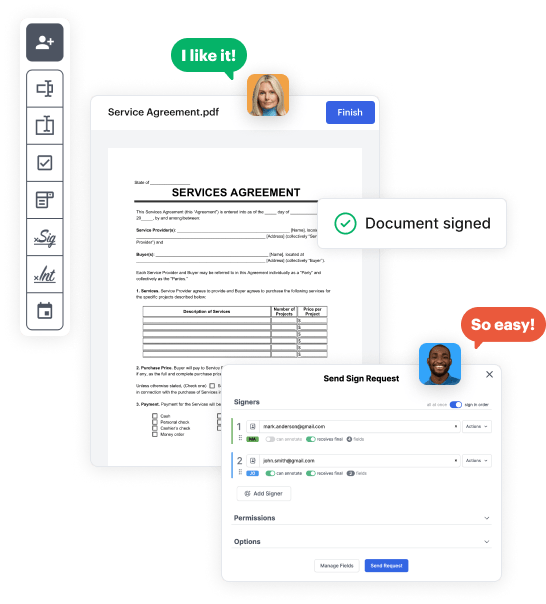
Create your Rental Property Closing Document from scratch

Start Building Now
Title decoration

Here's how it works

01. Start with a blank Rental Property Closing Document
Open the blank document in the editor, set the document view, and add extra pages if applicable.
02. Add and configure fillable fields
Use the top toolbar to insert fields like text and signature boxes, radio buttons, checkboxes, and more. Assign users to fields.
03. Distribute your form
Share your Rental Property Closing Document in seconds via email or a link. You can also download it, export it, or print it out.

A brief tutorial on how to set up a polished Rental Property Closing Document

Form edit decoration

Step 1: Sign in to DocHub to begin creating your Rental Property Closing Document.

First, log in to your DocHub account. If you don't have one, you can easily register for free.

Step 2: Go to the dashboard.

Once signed in, go to your dashboard. This is your primary hub for all document-based activities.

Step 3: Start new document creation.

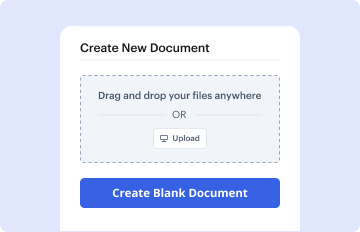
In your dashboard, choose New Document in the upper left corner. Select Create Blank Document to craft the Rental Property Closing Document from the ground up.

Step 4: Add template elements.

Add numerous fields like text boxes, images, signature fields, and other elements to your template and designate these fields to intended individuals as required.

Step 5: Configure your template.

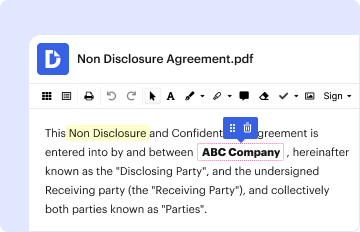
Personalize your template by incorporating walkthroughs or any other necessary tips using the text tool.

Step 6: Go over and tweak the document.

Attentively go over your created Rental Property Closing Document for any typos or required adjustments. Make use of DocHub's editing capabilities to enhance your template.

Step 7: Distribute or export the template.

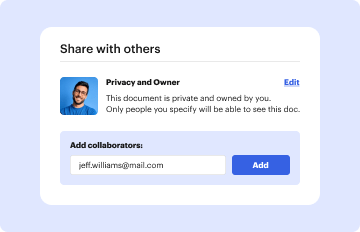
After completing, save your file. You can choose to save it within DocHub, export it to various storage services, or send it via a link or email.


be ready to get more

Build your Rental Property Closing Document in minutes

Start creating now

Got questions?

We have answers to the most popular questions from our customers. If you can't find an answer to your question, please contact us.
Contact us
The closing statement, also called a closing disclosure or settlement statement, is essentially a comprehensive list of every expense that the buyer and/or seller must pay to complete the purchase of a home.
Final Settlement (or Closing) Statement: A financial disclosure giving an accounting of all funds received and disbursed at loan closing. Also known as HUD 1 Closing Statement.
A closing statement or credit agreement is provided with any type of loan, often with the application itself. A sellers Closing Disclosure is prepared by a settlement agent and lists all commissions and costs in addition to the net total to be paid to the seller.
When the closing is completed, the file goes to the post-closing department. The first step is to prepare the recording package and send it to the Land Records Office for recording. Most files are recorded without trouble, but occasionally recordings are rejected and need to be corrected and resubmitted.
List of closing documents Closing disclosure. The closing disclosure contains all of the details of your mortgage, including an itemized list of closing costs. Proof of homeowners insurance. Loan application. Mortgage or deed of trust. Note. Deed. Affidavit of title. Title insurance policy.
be ready to get more

Build your Rental Property Closing Document in minutes

Start creating now

Related Q&A to Rental Property Closing Document

Only loan interest and real estate taxes are deductible closing costs for a rental property. Other settlement fees and closing costs for buying the property become additions to your basis in the property.
While each closing document serves a specific purpose, one of the most important documents at closing is the deed. The deed is a legal document that transfers ownership of the property from the seller to the buyer. It is essential because it establishes the buyers legal right to the property.
ing to the Internal Revenue Service, allowable tax deductions on the sale of rental properties typically include many standard settlement and common closing costs, as well as title transfer taxes, which can be added to your basis in the property.

Additional resources on building your forms


