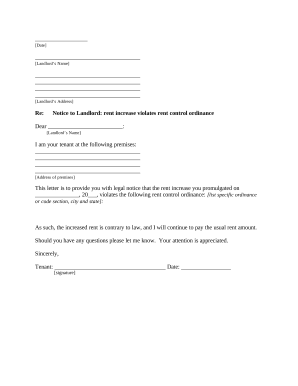
Boost your productivity with Rent Control Ordinance Letters

Form administration occupies to half of your business hours. With DocHub, you can reclaim your time and effort and boost your team's productivity. Access Rent Control Ordinance Letters category and explore all form templates related to your everyday workflows.

Effortlessly use Rent Control Ordinance Letters:

  1. Open Rent Control Ordinance Letters and apply Preview to find the relevant form.
  2. Click Get Form to begin working on it.
  3. Wait for your form to open in our online editor and begin modifying it.
  4. Add new fillable fields, symbols, and pictures, modify pages order, and many more.
  5. Fill out your document or set it for other contributors.
  6. Download or deliver the form by link, email attachment, or invite.

Accelerate your everyday document administration using our Rent Control Ordinance Letters. Get your free DocHub account today to discover all templates.


Video Guide on Rent Control Ordinance Letters management

video background

Commonly Asked Questions about Rent Control Ordinance Letters

For a two-year lease beginning on or after October 1, 2023, and on or before September 30, 2024: For the first year of the lease: 2.75% For the second year of the lease: 3.20% of the amount lawfully charged in the first year, excluding any increases other than the first-year guideline increase.
Key Takeaways. A new law affecting renewals of rent-stabilized housing will benefit NYC landlords in 2024, allowing property owners to increase the rent up to 3% upon renewal for a one-year lease. For a two-year lease, landlords can raise the rent up to 2.75% after the first year and 3.20% for the second year.
Tenants Rights and Responsibilities. In New York City, tenants have many rights relating to the safety and quality of their housing. Tenants should expect to live in safe, well-maintained buildings that are free from vermin, leaks, and hazardous conditions. Laws protect tenants from harassment and discrimination.
Landlords cannot raise rent more than 10% total or 5% plus the percentage change in the cost of living whichever is lower over a 12-month period. If the tenants of a unit move out and new tenants move in, the landlord may establish the initial rent to charge. (Civ. Code 1947.12.)
no limit on how much your landlord can increase your rent. However, your landlord must give you advanced written notice before they can raise your rent 5% or more. advance written notice. This applies to month-to-month tenants without a lease as well.
No, the state of New Jersey does not provide a limit to rent increases. However the local municipalities do and the rent increase limits can range anywhere between 2 - 6% per year. Many cities in New Jersey follows the Consumer Price Index (CPI) to set that range.
If you have been living in your home for over a year, your landlord must give at least 60 days notice. If you have been living in your home for more than 2 years, your landlord must give at least 90 days notice. rent as a security deposit. When you move out, they must return the security deposit within 14 days.