

Create your Rent Control Legal Form from scratch

Start Building Now
Title decoration

Here's how it works

01. Start with a blank Rent Control Legal Form
Open the blank document in the editor, set the document view, and add extra pages if applicable.
02. Add and configure fillable fields
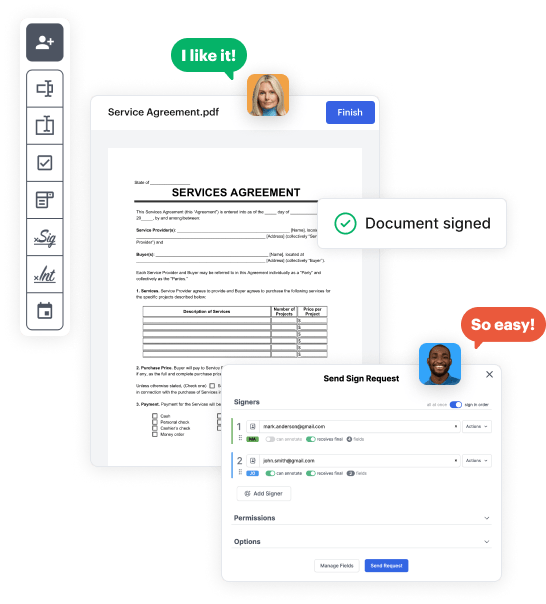
Use the top toolbar to insert fields like text and signature boxes, radio buttons, checkboxes, and more. Assign users to fields.
03. Distribute your form
Share your Rent Control Legal Form in seconds via email or a link. You can also download it, export it, or print it out.

Create Rent Control Legal Form from scratch by following these step-by-step guidelines

Form edit decoration

Step 1: Get started with DocHub.

Begin by setting up a free DocHub account using any available sign-up method. If you already have one, simply log in.

Step 2: Register for a free 30-day trial.

Try out the whole set of DocHub's pro tools by signing up for a free 30-day trial of the Pro plan and proceed to build your Rent Control Legal Form.

Step 3: Add a new blank form.

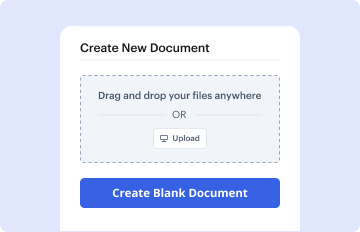
In your dashboard, hit the New Document button > scroll down and hit Create Blank Document. You’ll be redirected to the editor.

Step 4: Organize the document’s view.

Use the Page Controls icon indicated by the arrow to toggle between two page views and layouts for more convenience.

Step 5: Begin by inserting fields to design the dynamic Rent Control Legal Form.

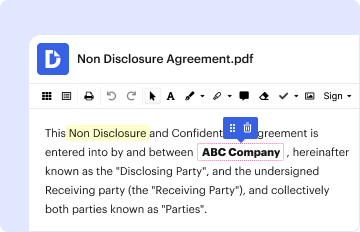
Use the top toolbar to add document fields. Insert and format text boxes, the signature block (if applicable), embed images, etc.

Step 6: Prepare and configure the incorporated fields.

Configure the fields you incorporated per your desired layout. Adjust each field's size, font, and alignment to ensure the form is straightforward and neat-looking.

Step 7: Finalize and share your form.

Save the completed copy in DocHub or in platforms like Google Drive or Dropbox, or design a new Rent Control Legal Form. Share your form via email or get a public link to reach more people.


be ready to get more

Build your Rent Control Legal Form in minutes

Start creating now

Got questions?

We have answers to the most popular questions from our customers. If you can't find an answer to your question, please contact us.
Contact us
In New York City, Rent Control tenants are generally in buildings built before February 1, 1947, where the tenant is in continuous occupancy prior to July 1, 1971. Tenants who took occupancy after June 30, 1971, in buildings of six or more units built before January 1, 1974, are generally Rent Stabilized.
The state of Florida currently lacks rent control regulations that place limits on rent hikes. This means that a landlord can raise the rent to any amount and does not have to give notice to their tenants.
Rent control in Florida is essentially non-existent after a 2023 legislative bill prohibited the practice. Florida rent increase laws in Miami-Dade County and West Palm Beach require 60 days notice to be given to tenants if youre raising the rent in excess of 5% year-over-year.
Allowable Rent Increases Based on CPI-W For most tenants, the most that their rent can increase is the CPI-W percentage plus 2%, but not more than 10%. For tenants who are elderly or disabled, the maximum increase in rent charged is the CPI percentage only, but not more than 5%.
Landlords must give a written 3-Day Notice to Pay for late rent. This means tenants have three days to pay overdue rent. If tenants are without a lease, a landlord can end the tenancy with a 30-day notice. The Florida Residential Landlord and Tenant Act requires landlords to keep security deposits separate.
be ready to get more

Build your Rent Control Legal Form in minutes

Start creating now

Related Q&A to Rent Control Legal Form

There is no rent control and no caps on the maximum allowable rent increase percentage in Florida. The lack of rent control applies statewide, even in larger cities like Miami, Tampa, Orlando, and Jacksonville. Landlords operate under free market principles and can raise rents to match demand and local market rates.
In New York City, rent control is based on the Maximum Base Rent system. A maximum allowable rent is established for each unit. Every two years, the landlord may increase the rent up to 7.5% (as of 2012) until the Maximum Base Rent is docHubed.
Landlords cannot raise rent more than 10% total or 5% plus the percentage change in the cost of living whichever is lower over a 12-month period. If the tenants of a unit move out and new tenants move in, the landlord may establish the initial rent to charge. (Civ. Code 1947.12.)

Additional resources on building your forms


