

Create your Real Estate Trust Deed Form from scratch

Start Building Now
Title decoration

Here's how it works

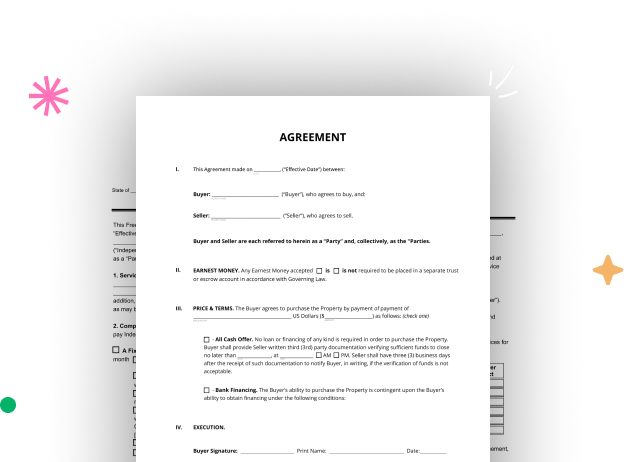
01. Start with a blank Real Estate Trust Deed Form
Open the blank document in the editor, set the document view, and add extra pages if applicable.
02. Add and configure fillable fields
Use the top toolbar to insert fields like text and signature boxes, radio buttons, checkboxes, and more. Assign users to fields.
03. Distribute your form
Share your Real Estate Trust Deed Form in seconds via email or a link. You can also download it, export it, or print it out.

A detailed walkthrough of how to craft your Real Estate Trust Deed Form online

Form edit decoration

Step 1: Start with DocHub's free trial.

Go to the DocHub website and sign up for the free trial. This provides access to every feature you’ll require to build your Real Estate Trust Deed Form with no upfront cost.

Step 2: Navigate to your dashboard.

Sign in to your DocHub account and proceed to the dashboard.

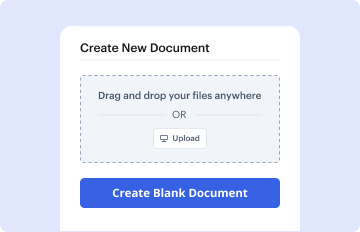
Step 3: Craft a new document.

Click New Document in your dashboard, and choose Create Blank Document to create your Real Estate Trust Deed Form from the ground up.

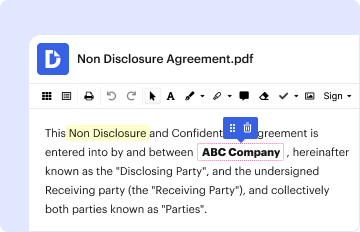
Step 4: Use editing tools.

Insert different elements such as text boxes, radio buttons, icons, signatures, etc. Arrange these fields to match the layout of your form and assign them to recipients if needed.

Step 5: Organize the form layout.

Organize your form quickly by adding, moving, deleting, or combining pages with just a few clicks.

Step 6: Craft the Real Estate Trust Deed Form template.

Transform your newly crafted form into a template if you need to send many copies of the same document multiple times.

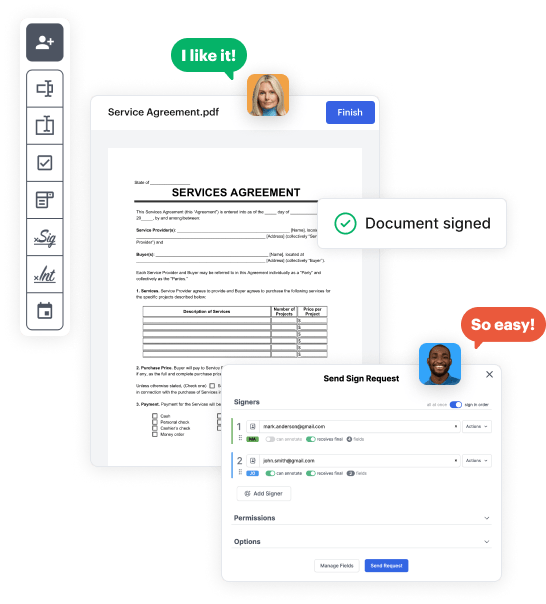
Step 7: Save, export, or share the form.

Send the form via email, share a public link, or even publish it online if you aim to collect responses from a broader audience.


be ready to get more

Build your Real Estate Trust Deed Form in minutes

Start creating now

Got questions?

We have answers to the most popular questions from our customers. If you can't find an answer to your question, please contact us.
Contact us
To change the trust deed itself, you must execute a deed of variation. This is a document that updates the relevant section of the original trust deed. The deed of variation forms part of the documentation of your discretionary trust and details how the trust deed has been changed over time.
You are able to enter into more than one trust deed, but you must have been discharged from the first before you enter into a second arrangement.
A deed of trust, also known as a trust deed, is a document sometimes used in financed real estate transactions, generally instead of a mortgage. A deed is a signed legal document that transfers the title of an asset to a new holder, granting them the privilege of ownership.
How to get a Deed of Trust The borrower, lender, and trustees names and addresses. The property address. The amount being borrowed. The interest rate. The interest adjustment date. The frequency of principal and interest payments. The payment amounts and due dates. The due date of the final payment.
The Deed of Trust must be in writing, signed by the property owner, and filed in the County Clerk property records. The Deed of Trust should describe the loan amount, name a Trustee, and describe the collateral securing the loan. A correct legal description of the property is essential for a valid Deed of Trust.
be ready to get more

Build your Real Estate Trust Deed Form in minutes

Start creating now

Related Q&A to Real Estate Trust Deed Form

Revising the terms of a trust is known as amending the trust. An amendment is generally appropriate when there are only a few minor changes to make, like rewording a certain paragraph, changing the successor trustee, or modifying beneficiaries.
Typically, the beneficiaries in a discretionary trust can be changed by preparing a Deed of Amendment. However, many older discretionary trust deeds fail to make it clear whether a specific person can be removed and/or appointed as a beneficiary.
A good rule of thumb is to update your Trust every 3-5 years to accurately reflect your current assets. Keeping your Living Trust up to date is a crucial step in preventing your loved ones from dealing with a lengthy probate process.

Additional resources on building your forms

