
Create your Real Estate Sales Document from scratch

Start Building Now
Title decoration

Here's how it works

01. Start with a blank Real Estate Sales Document
Open the blank document in the editor, set the document view, and add extra pages if applicable.
02. Add and configure fillable fields
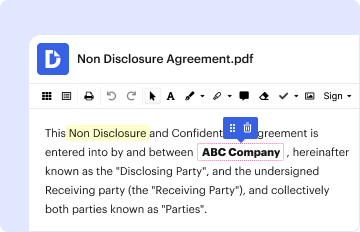
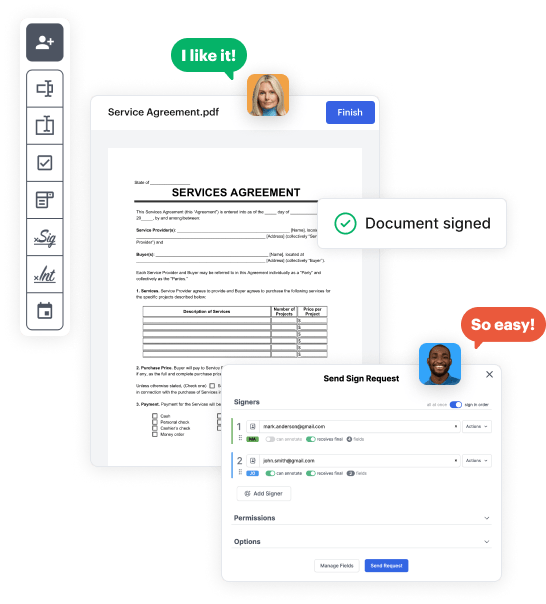
Use the top toolbar to insert fields like text and signature boxes, radio buttons, checkboxes, and more. Assign users to fields.
03. Distribute your form
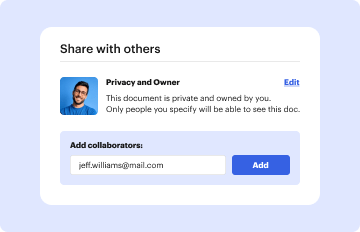
Share your Real Estate Sales Document in seconds via email or a link. You can also download it, export it, or print it out.

A simple tutorial on how to build a polished Real Estate Sales Document

Form edit decoration

Step 1: Log in to DocHub to create your Real Estate Sales Document.

First, log in to your DocHub account. If you don't have one, you can simply register for free.

Step 2: Head to the dashboard.

Once logged in, navigate to your dashboard. This is your primary hub for all document-based activities.

Step 3: Kick off new document creation.

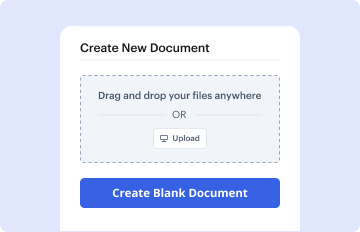
In your dashboard, choose New Document in the upper left corner. Choose Create Blank Document to build the Real Estate Sales Document from a blank slate.

Step 4: Add template elements.

Place different fields like text boxes, images, signature fields, and other options to your template and assign these fields to particular users as necessary.

Step 5: Fine-tune your template.

Personalize your document by adding walkthroughs or any other essential information utilizing the text tool.

Step 6: Go over and correct the form.

Carefully examine your created Real Estate Sales Document for any mistakes or needed adjustments. Utilize DocHub's editing tools to polish your template.

Step 7: Send out or export the template.

After finalizing, save your file. You may select to save it within DocHub, transfer it to various storage solutions, or forward it via a link or email.


be ready to get more

Build your Real Estate Sales Document in minutes

Start creating now

Got questions?

We have answers to the most popular questions from our customers. If you can't find an answer to your question, please contact us.
Contact us
Sales agreement contracts generally consist of the following sections: Buyer and seller contact information. A description of the item being sold. The price of the item being sold. The terms of payment. The frequency of payments and maturity date, if applicable. The date the item will transfer to the buyer. Disclosures.
At its most basic, a purchase agreement should include the following: Name and contact information for buyer and seller. The address of the property being sold. The price to be paid for the property. The date of transfer. Disclosures. Contingencies. Signatures.
The main difference between purchase agreements and sales contracts is the order and timing of the offer and acceptance process. In a purchase agreement, the buyer makes the first offer and the seller responds, while in a sales contract, the seller makes the first offer and the buyer responds.
The memorandum of sale is drawn up by the estate agent and sent to all parties involved; the buyer, the seller and both solicitors. As the document has to include solicitors details, as well as sent on to them once completed, it cannot be drawn up until these details have been provided.
To define a Sales Document Enter T-Code: VOV8 or SPRO IMG Sales and Distribution Sales Sales Document Sales Document Header Define Sales Document Type. A new window will open, go to New entries. Then you can enter the mandatory fields in this new window. Click the save icon at the top.
be ready to get more

Build your Real Estate Sales Document in minutes

Start creating now

Related Q&A to Real Estate Sales Document

Most often, the buyers real estate agent will write up and prepare the purchase agreement for a house. Note that agents (not being practicing attorneys themselves) cant create their own contracts.
What Are the Key Components of a Purchase Agreement? Buyer and Seller Names and Information. Date of the Transaction. Asset Details. Purchase Price and Terms. Inclusions and Exclusions. Contingencies. Disclosures. Representations and Warranties.

Additional resources on building your forms


