Enhance your work productivity with Real Estate Ownership Transfers

Document managing occupies to half of your business hours. With DocHub, it is easy to reclaim your time and effort and increase your team's productivity. Access Real Estate Ownership Transfers category and discover all templates relevant to your day-to-day workflows.

Effortlessly use Real Estate Ownership Transfers:

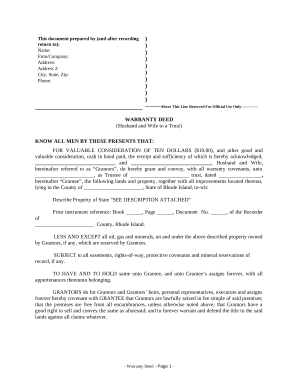
  1. Open Real Estate Ownership Transfers and use Preview to find the appropriate form.
  2. Click Get Form to begin working on it.
  3. Wait for your form to upload in our online editor and start modifying it.
  4. Add new fillable fields, icons, and pictures, adjust pages, etc.
  5. Complete your document or set it for other contributors.
  6. Download or deliver the form by link, email attachment, or invite.

Speed up your day-to-day file managing with the Real Estate Ownership Transfers. Get your free DocHub account today to explore all templates.


Video Guide on Real Estate Ownership Transfers management

video background

Commonly Asked Questions about Real Estate Ownership Transfers

Family members can transfer property to one another without estate tax penalties by putting the property into a trust. When placed into an irrevocable trust, the property is no longer considered part of your estate after you die.
Answer and Explanation: Corporation. In the Corporation form of business organization, the ownership can be transferred easily.
Today, Californians most often transfer title to real property by a simple written instrument, the grant deed. The word grant is expressly designated by statute as a word of conveyance. (Civil Code Section 1092) A second form of deed is the quitclaim deed.
A general warranty deed is often considered the most common way to transfer real property. It is used when you are aware and confident that the title to your property is good and marketable. It is most commonly used for residential real estate transactions.
Sole Proprietorship. This is the simplest and most common form used when starting a new business. Sole proprietorships are set up to allow individuals to own and operate a business by themselves. A sole proprietor has total control, receives all profits from, and is responsible for taxes and liabilities of the business
The most common way to transfer property is through a general warranty deed (sometimes called a grant deed). A general warranty deed guarantees good title from the beginning of time.