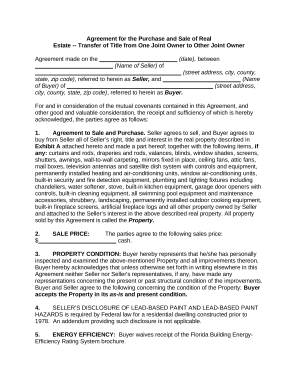
Increase your productiveness with Real Estate Ownership Transfer Documents

Form managing consumes to half of your office hours. With DocHub, it is possible to reclaim your office time and increase your team's efficiency. Get Real Estate Ownership Transfer Documents collection and explore all document templates related to your daily workflows.

The best way to use Real Estate Ownership Transfer Documents:

  1. Open Real Estate Ownership Transfer Documents and employ Preview to get the suitable form.
  2. Click on Get Form to start working on it.
  3. Wait for your form to upload in the online editor and start modifying it.
  4. Add new fillable fields, icons, and images, modify pages, etc.
  5. Fill out your document or prepare it for other contributors.
  6. Download or deliver the form by link, email attachment, or invite.

Improve your daily document managing with the Real Estate Ownership Transfer Documents. Get your free DocHub account right now to explore all forms.


Video Guide on Real Estate Ownership Transfer Documents management

video background

Commonly Asked Questions about Real Estate Ownership Transfer Documents

A property deed is a legal document that transfers the ownership of real estate from a seller to a buyer. For a deed to be legal it must state the name of the buyer and the seller, describe the property that is being transferred, and include the signature of the party that is transferring the property.
Understanding 4 Common Ways of Holding Title in California Tenancy in Common. Tenancy in common is the default method of ownership amongst co-owners. Joint Tenancies. If co-owners want to create a Joint Tenancy, they must expressly declare so in the deed. Community Property. Tenancies in Partnership.
Today, Californians most often transfer title to real property by a simple written instrument, the grant deed. The word grant is expressly designated by statute as a word of conveyance. (Civil Code Section 1092) A second form of deed is the quitclaim deed.
The filing fee is generally $125 for residential and farm properties and $250 for all other properties. The county clerks office collects the RP-5217 filing fee. The county clerks office should be reviewing the RP-5217 forms for completeness, not for accuracy.
Check List for Recording Documents Avoiding Rejections: Grantor/Transferor/Seller is the same. Grantee/Transferee/Buyer is the same. Deed must be completed with names and address of Grantor(s) Grantee(s) Grantor(s) must be properly acknowledged by a notary public. All signatures must be original.
Conveyance - Transfer of title to land. Includes most instruments by which an interest in real estate is created, mortgaged or assigned. Deed - A written instrument that, when executed and delivered, conveys title to or an interest in real estate.
The most common way to transfer property is through a general warranty deed (sometimes called a grant deed). A general warranty deed guarantees good title from the beginning of time.