
Create your Real Estate Foreclosure Form from scratch

Start Building Now
Title decoration

Here's how it works

01. Start with a blank Real Estate Foreclosure Form
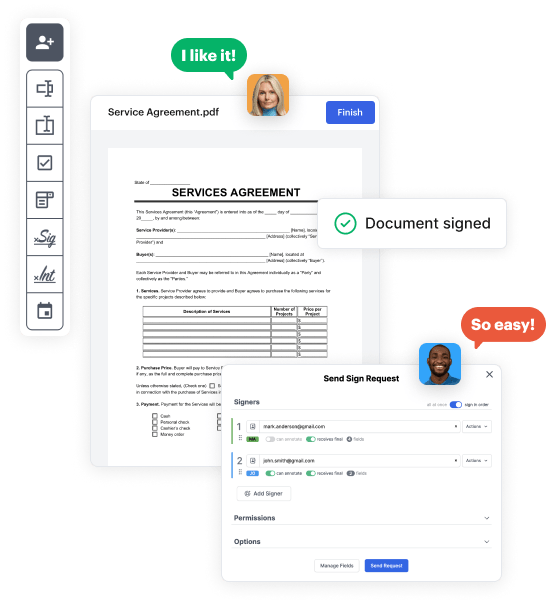
Open the blank document in the editor, set the document view, and add extra pages if applicable.
02. Add and configure fillable fields
Use the top toolbar to insert fields like text and signature boxes, radio buttons, checkboxes, and more. Assign users to fields.
03. Distribute your form
Share your Real Estate Foreclosure Form in seconds via email or a link. You can also download it, export it, or print it out.

A quick guide on how to set up a polished Real Estate Foreclosure Form

Form edit decoration

Step 1: Sign in to DocHub to create your Real Estate Foreclosure Form.

First, sign in to your DocHub account. If you don't have one, you can simply sign up for free.

Step 2: Head to the dashboard.

Once you’re in, go to your dashboard. This is your primary hub for all document-based tasks.

Step 3: Initiate new document creation.

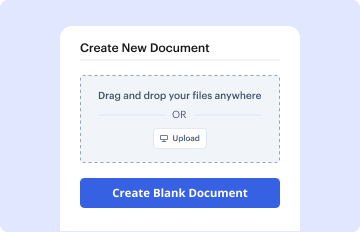
In your dashboard, select New Document in the upper left corner. Hit Create Blank Document to create the Real Estate Foreclosure Form from scratch.

Step 4: Insert template elements.

Add various items like text boxes, images, signature fields, and other elements to your template and designate these fields to particular recipients as necessary.

Step 5: Fine-tune your form.

Customize your document by inserting guidelines or any other crucial tips utilizing the text feature.

Step 6: Double-check and refine the content of the document.

Carefully examine your created Real Estate Foreclosure Form for any discrepancies or essential adjustments. Leverage DocHub's editing capabilities to perfect your form.

Step 7: Send out or export the form.

After finalizing, save your file. You can select to save it within DocHub, export it to various storage services, or send it via a link or email.


be ready to get more

Build your Real Estate Foreclosure Form in minutes

Start creating now

Got questions?

We have answers to the most popular questions from our customers. If you can't find an answer to your question, please contact us.
Contact us
Put your name, address, phone number, loan number, and date on the top of the letter. List the name and address of your lender. information about any money you have saved for a workout agreement. Tell the lender you are working with a foreclosure counselor and include their name and agency.
Foreclosure Statement contains the details of outstanding dues for closure of Loan Account. If you have provided your mobile number or email, we will inform you about the closure of your request by SMS or email respectively.
Dear Madam, I am Nisha Mittal, and I currently have a home loan against my account number (mention your account number). I want to foreclose my home loan this month by paying the outstanding amount in a single payment. I have paid 8 EMIs as of now, and there are 5 EMIs pending until this year.
Dear Sir/Maam, I am Sudharshana Karthik, and I have a personal loan in my account in your bank. I am writing this letter to request you to close my personal loan account with the number 1526xx4656. I have paid all my EMIs, and the loan tenure is complete.
In New York, a lender must bring a mortgage f oreclosure action forward within six years of the maturity date, or more commonly, when it accelerates the loan by filing a foreclosure action.
be ready to get more

Build your Real Estate Foreclosure Form in minutes

Start creating now

Related Q&A to Real Estate Foreclosure Form

Nonjudicial foreclosure is the most common type of foreclosure in California.
While the content of the letter will change depending on your situation, there are a few important aspects to include: Provide all details the best you can, including correct dates and dollar amounts. Explain how and when all situations were resolved. Detail why problems wont happen again.
New York law provides that a lender has six years to commence a mortgage foreclosure action from the earlier of (i) the date that the lender accelerates the loan based on a borrower default or (ii) the maturity date. The most common default is, of course, a borrowers failure to make timely loan payments.

Additional resources on building your forms