

Create your Real Estate Financial Form from scratch

Start Building Now
Title decoration

Here's how it works

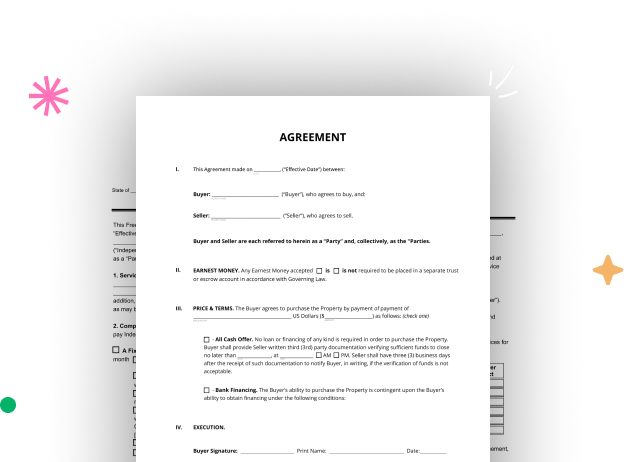
01. Start with a blank Real Estate Financial Form
Open the blank document in the editor, set the document view, and add extra pages if applicable.
02. Add and configure fillable fields
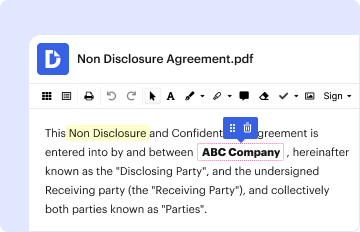
Use the top toolbar to insert fields like text and signature boxes, radio buttons, checkboxes, and more. Assign users to fields.
03. Distribute your form
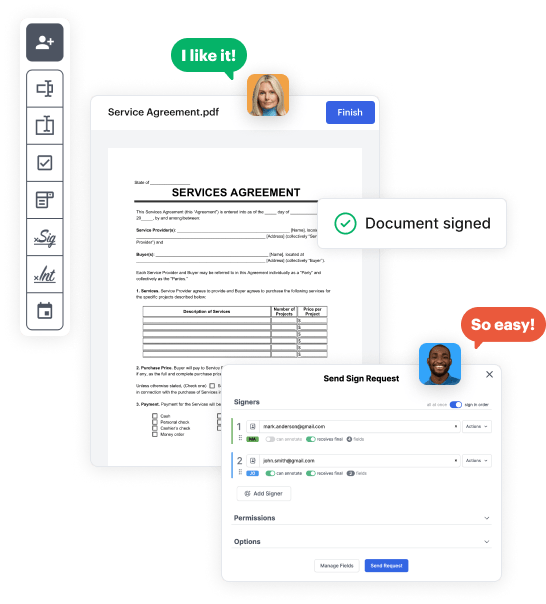
Share your Real Estate Financial Form in seconds via email or a link. You can also download it, export it, or print it out.

Create your Real Estate Financial Form in a matter of minutes

Form edit decoration

Step 1: Access DocHub to set up your Real Estate Financial Form.

Begin by logging into your DocHub account. Utilize the advanced DocHub functionality free for 30 days.

Step 2: Go to the dashboard.

Once logged in, head to the DocHub dashboard. This is where you'll build your forms and handle your document workflow.

Step 3: Design the Real Estate Financial Form.

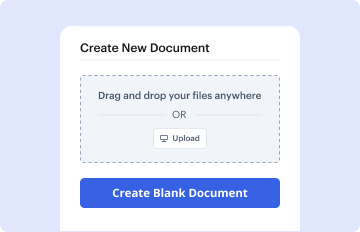
Hit New Document and choose Create Blank Document to be redirected to the form builder.

Step 4: Set up the form layout.

Use the DocHub toolset to insert and configure form fields like text areas, signature boxes, images, and others to your document.

Step 5: Add text and titles.

Add needed text, such as questions or instructions, using the text field to lead the users in your form.

Step 6: Customize field settings.

Modify the properties of each field, such as making them required or arranging them according to the data you plan to collect. Assign recipients if applicable.

Step 7: Review and save.

After you’ve managed to design the Real Estate Financial Form, make a final review of your document. Then, save the form within DocHub, send it to your chosen location, or distribute it via a link or email.


be ready to get more

Build your Real Estate Financial Form in minutes

Start creating now

Got questions?

We have answers to the most popular questions from our customers. If you can't find an answer to your question, please contact us.
Contact us
How to Create a Pro Forma for Real Estate Projected gross rental income = $1,500. Vacancy loss at 5% = $75. Effective gross income = $1,425. Repairs at 5% = $75. Property management fees at 8% = $120. Other expenses (utilities, pro rata property tax, insurance, reserves, etc.) = $300. Projected monthly cash flow or NOI = $930.
The income statement, balance sheet, and statement of cash flows are required financial statements. These three statements are informative tools that traders can use to analyze a companys financial strength and provide a quick picture of a companys financial health and underlying value.
Its important to note that a real estate pro forma is a financial projection of rental income and expenses, not an actual report. A pro forma highlights what a rental property could, should, or would gross in revenue. As such, a pro forma is a tool used to evaluate the risks or benefits of a potential rental property.
Balance Sheet It reports on the assets, liabilities and equity of a rental property. Assets include cash, land, buildings, equipment and furniture. Liabilities are monies you owe, such as mortgages or accounts payable. You can determine equity by subtracting the propertys liabilities from its assets.
Financial statement is a formal record of the financial activities and position of a business, organization, or individual. It summarizes financial transactions, performance, and financial health over a specific period.
be ready to get more

Build your Real Estate Financial Form in minutes

Start creating now

Related Q&A to Real Estate Financial Form

Also known as a profit and loss statement (PL), a real estate income statement lists the income and expenses from a property over a certain period of time, and shows whether the investment is making money over the same time period. Information on a real estate income statement includes: Gross rental income.
Starting with your primary residence be sure to identify it as your primary residence , enter the type of property, address, date of purchase, original cost, present fair market value, name and address of mortgage holder, mortgage account number, mortgage balance, amount of payment, and status of mortgage for all real

Additional resources on building your forms


