

Create your Real Estate Easement Agreement Form from scratch

Start Building Now
Title decoration

Here's how it works

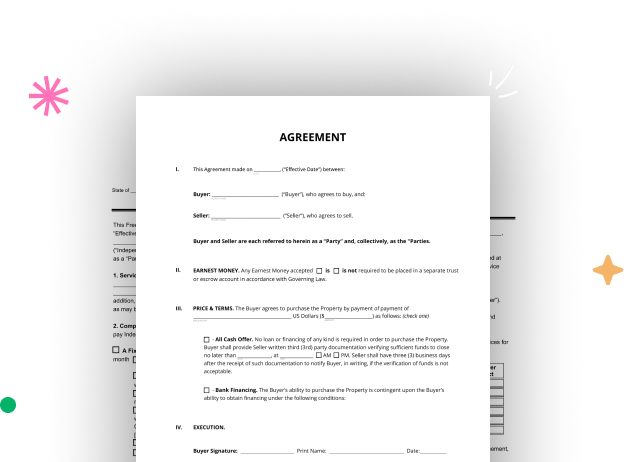
01. Start with a blank Real Estate Easement Agreement Form
Open the blank document in the editor, set the document view, and add extra pages if applicable.
02. Add and configure fillable fields
Use the top toolbar to insert fields like text and signature boxes, radio buttons, checkboxes, and more. Assign users to fields.
03. Distribute your form
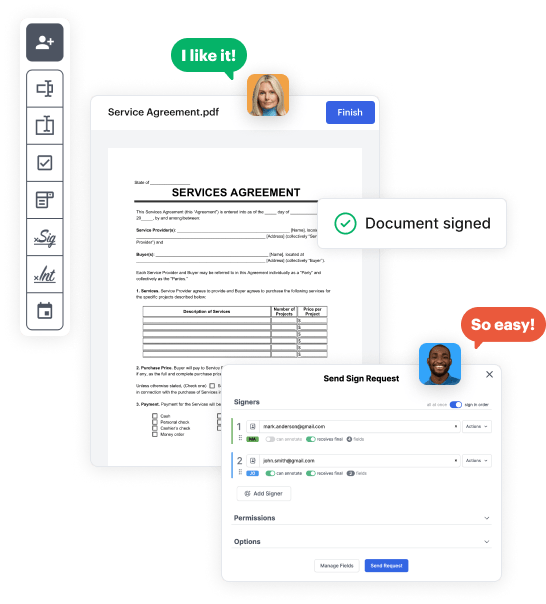
Share your Real Estate Easement Agreement Form in seconds via email or a link. You can also download it, export it, or print it out.

A simple guide on how to create a polished Real Estate Easement Agreement Form

Form edit decoration

Step 1: Log in to DocHub to create your Real Estate Easement Agreement Form.

First, log in to your DocHub account. If you don't have one, you can simply register for free.

Step 2: Go to the dashboard.

Once logged in, access your dashboard. This is your primary hub for all document-centric activities.

Step 3: Start new document creation.

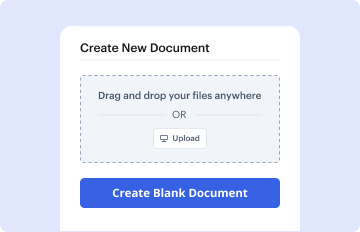
In your dashboard, click on New Document in the upper left corner. Select Create Blank Document to craft the Real Estate Easement Agreement Form from scratch.

Step 4: Add form elements.

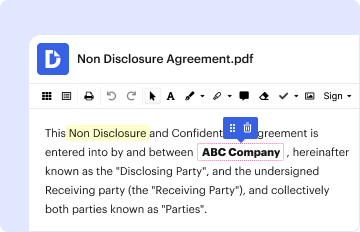
Add various elements like text boxes, photos, signature fields, and other interactive areas to your form and assign these fields to specific users as required.

Step 5: Configure your template.

Customize your document by adding guidelines or any other essential tips leveraging the text feature.

Step 6: Review and correct the document.

Thoroughly check your created Real Estate Easement Agreement Form for any errors or required adjustments. Take advantage of DocHub's editing features to fine-tune your template.

Step 7: Distribute or export the template.

After completing, save your work. You can choose to save it within DocHub, export it to various storage platforms, or forward it via a link or email.


be ready to get more

Build your Real Estate Easement Agreement Form in minutes

Start creating now

Got questions?

We have answers to the most popular questions from our customers. If you can't find an answer to your question, please contact us.
Contact us
The first requirement that there must be two distinct plots of land affected is central to the definition of an easement. A right of way granted to an individual is granted in their capacity as a land owner; if a right of way is granted to an individual who is not a land owner, it is merely a license.
If the easement is not registered it will exist as an equitable easement. In some circumstances an easement will only exist as an equitable right. An example being where a contract was entered into to grant an easement, but it was never completed.
The servient owner can maintain and repair the way, if he chooses. The dominant owner (in whose interest it is that the way be kept in good repair) is entitled to maintain and repair the way and, if he wants the way to be kept in repair, must himself bear the cost.
On average, it is expected to range from 450-500 but in some cases it could cost as much as 689. Using a solicitor - If you hire a solicitor to create a deed of easement, costs can range from a few hundred to over a thousand pounds.
An easement appurtenant will transfer to new owners. A handy way to conceptualize an appurtenance is that it is attached to the title ownership of the land itself, and thus is transferred to the new title owner upon sale. For example, Alice may grant Bill and his successors and assigns an easement across her land.
be ready to get more

Build your Real Estate Easement Agreement Form in minutes

Start creating now

Related Q&A to Real Estate Easement Agreement Form

Easements created by deed cannot generally be revoked other than by deed, irrespective of how long they may have not been used You may be able to remove an easement on your land if you demonstrate that the purpose no longer exists.
An expressly granted or reserved easement will only be a legal interest in land if it is created by deed and, in respect of registered land, completed by registration. In some cases, an easement may be created by implication.
Easement rights are non-possessory property rights in the UK that allow the holder to use another persons immovable property in a predetermined way. Common easement rights include right of way, right to light, right to support and rights associated with water.

Additional resources on building your forms


