

Create your Real Estate Disclosure Form from scratch

Start Building Now
Title decoration

Here's how it works

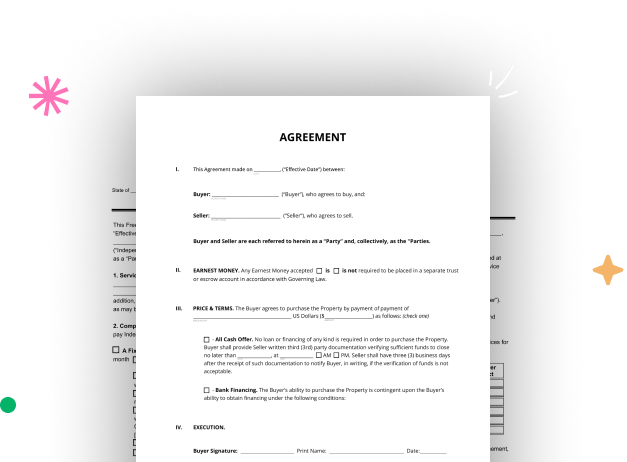
01. Start with a blank Real Estate Disclosure Form
Open the blank document in the editor, set the document view, and add extra pages if applicable.
02. Add and configure fillable fields
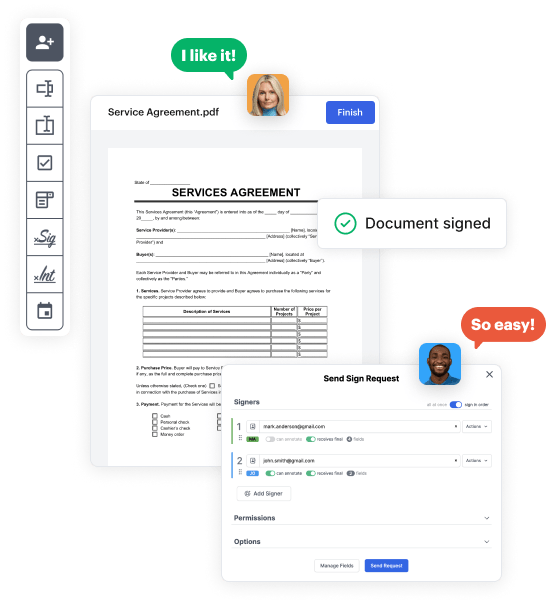
Use the top toolbar to insert fields like text and signature boxes, radio buttons, checkboxes, and more. Assign users to fields.
03. Distribute your form
Share your Real Estate Disclosure Form in seconds via email or a link. You can also download it, export it, or print it out.

Design your Real Estate Disclosure Form in a matter of minutes

Form edit decoration

Step 1: Access DocHub to set up your Real Estate Disclosure Form.

Begin by accessing your DocHub account. Utilize the advanced DocHub functionality free for 30 days.

Step 2: Navigate to the dashboard.

Once signed in, go to the DocHub dashboard. This is where you'll create your forms and manage your document workflow.

Step 3: Design the Real Estate Disclosure Form.

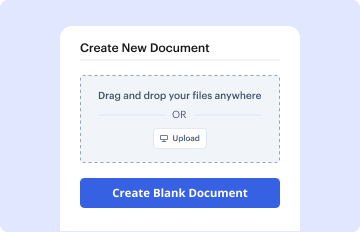
Hit New Document and select Create Blank Document to be redirected to the form builder.

Step 4: Design the form layout.

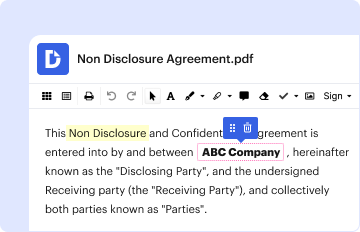
Use the DocHub tools to add and configure form fields like text areas, signature boxes, images, and others to your form.

Step 5: Insert text and titles.

Include needed text, such as questions or instructions, using the text tool to lead the users in your form.

Step 6: Configure field properties.

Modify the properties of each field, such as making them mandatory or formatting them according to the data you plan to collect. Assign recipients if applicable.

Step 7: Review and save.

After you’ve managed to design the Real Estate Disclosure Form, make a final review of your form. Then, save the form within DocHub, send it to your preferred location, or share it via a link or email.


be ready to get more

Build your Real Estate Disclosure Form in minutes

Start creating now

Got questions?

We have answers to the most popular questions from our customers. If you can't find an answer to your question, please contact us.
Contact us
How Should You Write a Disclosure Statement? Identify all relevant parties involved. Determine and state the purpose of the disclosure. Outline and provide the information that needs to be included in the disclosure. Be written using straightforward, non-technical, and easy-to-understand language.
Most Common Disclosures in Real Estate Natural Hazards Disclosure. First on the list is the natural hazards disclosure. Market Conditions Advisory (MCA) Market Conditions Advisory, also known as MCA, covers items more financial in nature. State Transfer Disclosure. Local Transfer Disclosure. Megans Law Disclosures.
Effective March 20, 2024, the amended New York Real Property Law Chapter 50, Article 14 (the Property Condition Disclosure Act) will compel all sellers of residential property to complete and deliver a Property Condition Disclosure Statement (PCDS) to a buyer prior to signing a contract of sale.
Expert-Verified Answer. The most commonly required disclosure in a residential real estate sale is the sellers property disclosure. This is a document that is provided by the seller that discloses any known defects or issues with the property, such as leaky roofs, plumbing problems, or electrical issues.
(TDS) The TDS is the most general disclosure form related to the sale of a home.
be ready to get more

Build your Real Estate Disclosure Form in minutes

Start creating now

Related Q&A to Real Estate Disclosure Form

As set out above, standard disclosure is the most common type of disclosure and will require each party to disclose the following pursuant to CPR Rule 31.6: Documents on which they intend to rely; as well as.
The Residential Property Disclosure Act, codified as North Carolina G.S. 47E, requires the seller of residential real estate (one to four dwelling units) to complete a formknown formally as the Residential Property and Owners Association Disclosure Statementdisclosing conditions and defects with the property.
Final answer: The most commonly used type of disclosure in real estate transactions is the seller disclosure. It provides potential buyers with detailed information about the propertys condition and any known defects, offering transparency and protecting both the seller and buyer.

Additional resources on building your forms