
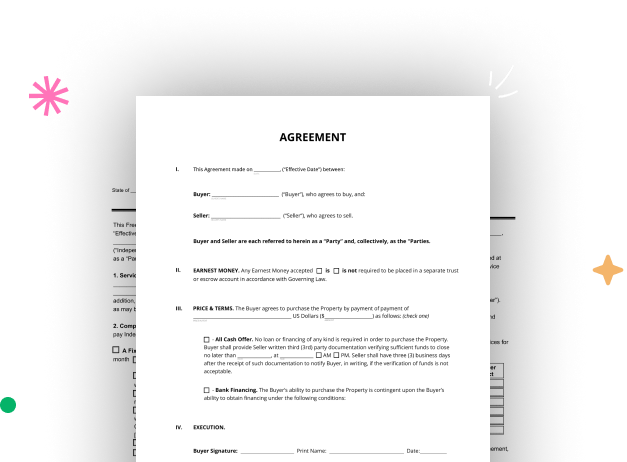


Create your Real Estate Deed from scratch

Start Building Now
Title decoration

Here's how it works

01. Start with a blank Real Estate Deed
Open the blank document in the editor, set the document view, and add extra pages if applicable.
02. Add and configure fillable fields
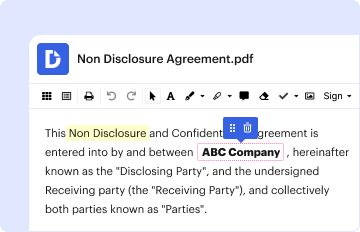
Use the top toolbar to insert fields like text and signature boxes, radio buttons, checkboxes, and more. Assign users to fields.
03. Distribute your form
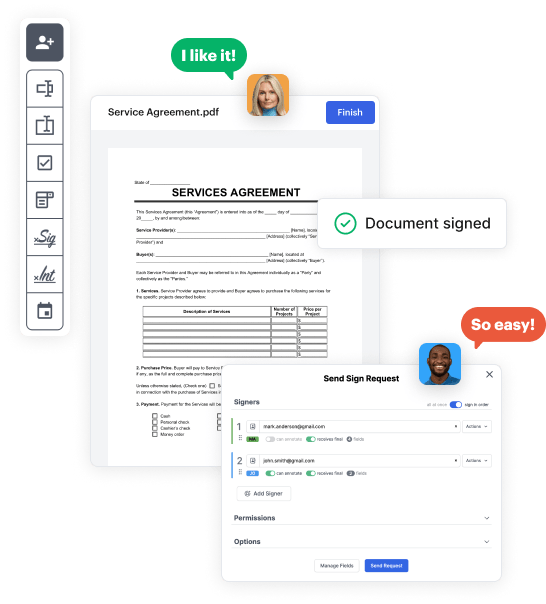
Share your Real Estate Deed in seconds via email or a link. You can also download it, export it, or print it out.

Design your Real Estate Deed in a matter of minutes

Form edit decoration

Step 1: Access DocHub to set up your Real Estate Deed.

Start by accessing your DocHub account. Utilize the pro DocHub functionality at no cost for 30 days.

Step 2: Navigate to the dashboard.

Once logged in, head to the DocHub dashboard. This is where you'll build your forms and handle your document workflow.

Step 3: Create the Real Estate Deed.

Click on New Document and select Create Blank Document to be taken to the form builder.

Step 4: Design the form layout.

Use the DocHub features to add and arrange form fields like text areas, signature boxes, images, and others to your document.

Step 5: Insert text and titles.

Include necessary text, such as questions or instructions, using the text field to lead the users in your document.

Step 6: Customize field settings.

Adjust the properties of each field, such as making them compulsory or arranging them according to the data you expect to collect. Designate recipients if applicable.

Step 7: Review and save.

After you’ve managed to design the Real Estate Deed, make a final review of your document. Then, save the form within DocHub, send it to your chosen location, or share it via a link or email.


be ready to get more

Build your Real Estate Deed in minutes

Start creating now

Got questions?

We have answers to the most popular questions from our customers. If you can't find an answer to your question, please contact us.
Contact us
Requirements of a Virginia land deed Minimally, a deed must include: The identity of the parties to the conveyance. The consideration paid for the conveyance. Language granting the parcel to the grantee.
All deeds must be prepared by the owner of the property or by an attorney licensed to practice in Virginia. The requirements are listed below in the code section. Click here to read about e-Recording.
Legal Requirements in Virginia Writing and Signing: The deed must be written and signed by the donor. Witnesses and Notarization: While not always required, notarization adds legal validity. Recording: Recording the deed with the local countys land records office is advisable.
Once a deed has been recorded by the County Clerks Office, copies of the deed may be requested if the original deed has been misplaced. Plain copies can be found by using the Official Public Records Search and selecting Land Records. A certified copy may be purchased through request either in person or by mail.
In Virginia, only attorneys or property owners can legally prepare a deed. To be legally recognized, a deed in Virginia has to satisfy several key state-specific requirements: It should be an original or a first-generation printout as per Va. Code Ann.
be ready to get more

Build your Real Estate Deed in minutes

Start creating now

Related Q&A to Real Estate Deed

Several easy-to-follow steps are required to create a Virginia deed: Locate the most recent deed to the property. Create the new deed. Sign and docHub the new deed. Record the deed in the land records of the clerks office of the circuit court in the jurisdiction where the property is located.
If you wish to change your name or remove a name on your property record, due to marriage, divorce, death of an owner, etc., a new deed must be filed with the local Land Records office where the property is located. You can not change a deed to a property through the Assessment office.
To add, remove, or change a name on a deed, have a lawyer, title company, or other real estate professional prepare the deed. Then, record the new deed with the Department of Records. Note: We recommend that you do not prepare a deed on your own. We also recommend that you get title insurance.

Additional resources on building your forms

