
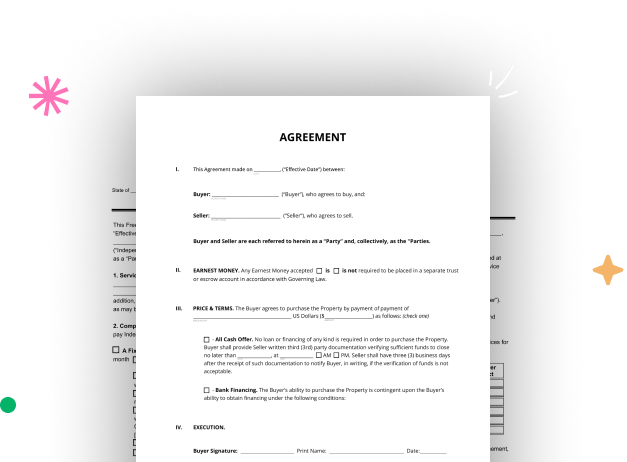
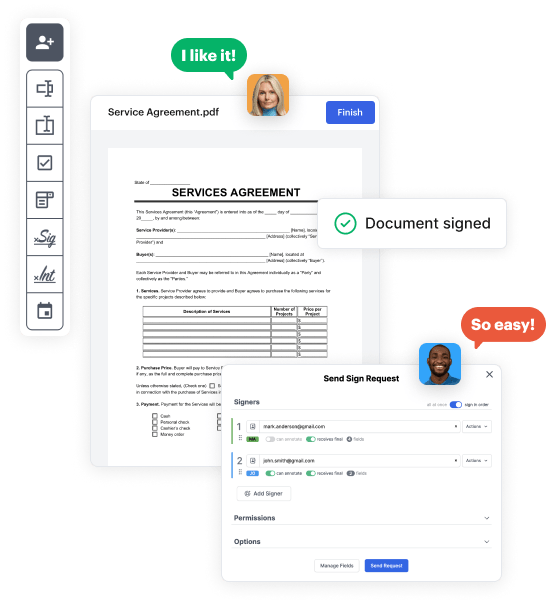
Create your Real Estate Agreement from scratch

Start Building Now
Title decoration

Here's how it works

01. Start with a blank Real Estate Agreement
Open the blank document in the editor, set the document view, and add extra pages if applicable.
02. Add and configure fillable fields
Use the top toolbar to insert fields like text and signature boxes, radio buttons, checkboxes, and more. Assign users to fields.
03. Distribute your form
Share your Real Estate Agreement in seconds via email or a link. You can also download it, export it, or print it out.

Craft Real Estate Agreement from the ground up with these step-by-step guidelines

Form edit decoration

Step 1: Get started with DocHub.

Begin by creating a free DocHub account using any offered sign-up method. If you already have one, simply log in.

Step 2: Register for a free 30-day trial.

Try out the complete collection of DocHub's advanced features by registering for a free 30-day trial of the Pro plan and proceed to build your Real Estate Agreement.

Step 3: Build a new empty form.

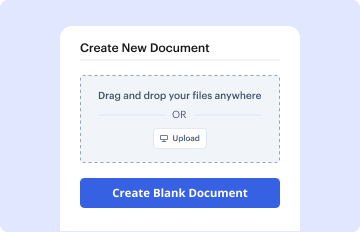
In your dashboard, choose the New Document button > scroll down and hit Create Blank Document. You will be redirected to the editor.

Step 4: Organize the document’s view.

Utilize the Page Controls icon indicated by the arrow to toggle between two page views and layouts for more flexibility.

Step 5: Begin by adding fields to create the dynamic Real Estate Agreement.

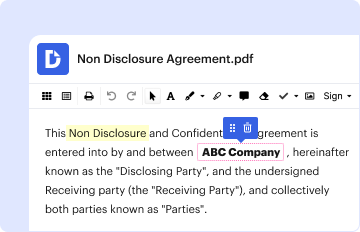
Navigate through the top toolbar to place document fields. Insert and configure text boxes, the signature block (if applicable), embed images, etc.

Step 6: Prepare and configure the incorporated fields.

Organize the fields you incorporated based on your chosen layout. Customize the size, font, and alignment to ensure the form is easy to use and neat-looking.

Step 7: Finalize and share your form.

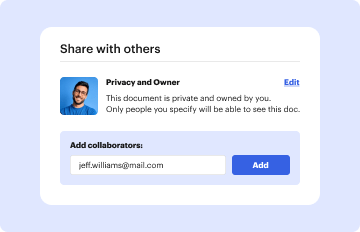
Save the ready-to-go copy in DocHub or in platforms like Google Drive or Dropbox, or design a new Real Estate Agreement. Distribute your form via email or get a public link to reach more people.


be ready to get more

Build your Real Estate Agreement in minutes

Start creating now

Got questions?

We have answers to the most popular questions from our customers. If you can't find an answer to your question, please contact us.
Contact us
How to write a real estate purchase agreement. Identify the address of the property being purchased, including all required legal descriptions. Identify the names and addresses of both the buyer and the seller. Detail the price of the property and the terms of the purchase. Set the closing date and closing costs.
Following this step-by-step checklist will mean that you can write your contract with confidence: Know your parties. Agree on the terms. Set clear boundaries. Spell out the consequences. Specify how you will resolve disputes. Cover confidentiality. Check the legality of the contract. Open it up to negotiation.
Either the seller or the buyer can prepare a purchase agreement. Like any contract, it can be a standard document that one party uses in the normal course of business or it can be the end result of back-and-forth negotiations.
At its most basic, a purchase agreement should include the following: Name and contact information for buyer and seller. The address of the property being sold. The price to be paid for the property. The date of transfer. Disclosures. Contingencies. Signatures.
How to write an agreement letter Title your document. Provide your personal information and the date. Include the recipients information. Address the recipient and write your introductory paragraph. Write a detailed body. Conclude your letter with a paragraph, closing remarks, and a signature. Sign your letter.
be ready to get more

Build your Real Estate Agreement in minutes

Start creating now

Related Q&A to Real Estate Agreement

In the contract, you need to include elements such as: Purchase Price and Closing Details. A simple For Sale By Owner contract has the purchase price, down payment, and closing date. Financing of the Deal. Home Inspection Contingency. Deed for Title Transfer. Default Provisions. Seller Disclosures. Dispute Resolutions.

Additional resources on building your forms