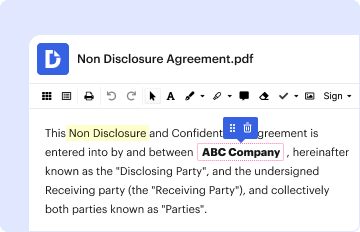
Create your Property Transfer Legal Form from scratch

Start Building Now
Title decoration

Here's how it works

01. Start with a blank Property Transfer Legal Form
Open the blank document in the editor, set the document view, and add extra pages if applicable.
02. Add and configure fillable fields
Use the top toolbar to insert fields like text and signature boxes, radio buttons, checkboxes, and more. Assign users to fields.
03. Distribute your form
Share your Property Transfer Legal Form in seconds via email or a link. You can also download it, export it, or print it out.

A simple guide on how to build a polished Property Transfer Legal Form
Form edit decoration

Step 1: Sign in to DocHub to create your Property Transfer Legal Form.

First, log in to your DocHub account. If you don't have one, you can easily sign up for free.

Step 2: Head to the dashboard.

Once you’re in, head to your dashboard. This is your central hub for all document-related processes.

Step 3: Kick off new document creation.

In your dashboard, hit New Document in the upper left corner. Select Create Blank Document to put together the Property Transfer Legal Form from the ground up.

Step 4: Incorporate template elements.

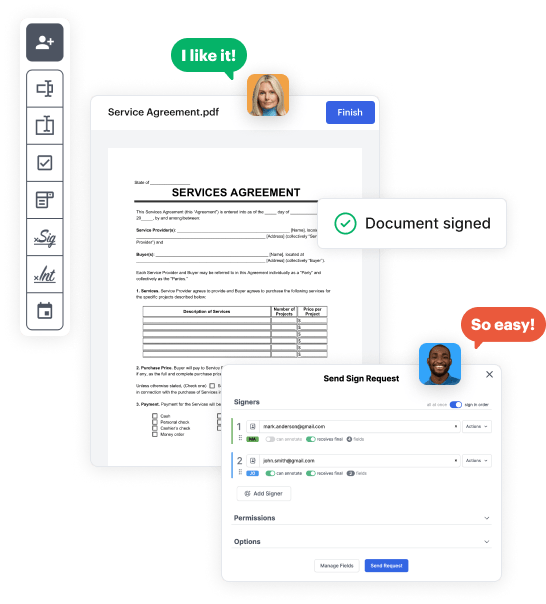
Add various items like text boxes, images, signature fields, and other options to your template and assign these fields to specific individuals as needed.

Step 5: Fine-tune your document.

Refine your template by inserting directions or any other crucial tips leveraging the text tool.

Step 6: Go over and correct the form.

Thoroughly review your created Property Transfer Legal Form for any mistakes or essential adjustments. Utilize DocHub's editing features to fine-tune your document.

Step 7: Send out or download the document.

After completing, save your copy. You can choose to retain it within DocHub, export it to various storage options, or forward it via a link or email.

be ready to get more

Build your Property Transfer Legal Form in minutes

Start creating now

Got questions?

We have answers to the most popular questions from our customers. If you can't find an answer to your question, please contact us.
Contact us
The transferring of Title to property from one ownership to another requires recording a Deed. A Warranty Deed may be done when an owner guarantees, through a title report, that he or she holds clear title to a property.
A general warranty deed is often considered the most common way to transfer real property. It is used when you are aware and confident that the title to your property is good and marketable. It is most commonly used for residential real estate transactions.
The county clerk will charge a recording fee of about $30 to $40, depending on the county. The fee should be paid by a cashiers check or money order. Once a Deed has been recorded by the county clerk, the clerks office will return the Deed to the new owner.
General warranty deeds give the grantee the most legal protection, while special warranty deeds give the grantee more limited protection. A quitclaim deed gives the grantee the least protection under the law.
General warranty deeds: A general warranty deed provides the most protection to the buyer but gives the grantor the highest degree of liability. The grantor of a general warranty deed fully warrants good, clear title to the property. This type of deed is used in most real estate deed transfers.
be ready to get more

Build your Property Transfer Legal Form in minutes

Start creating now

Related Q&A to Property Transfer Legal Form

The most common way to transfer property is through a general warranty deed (sometimes called a grant deed). A general warranty deed guarantees good title from the beginning of time.
Common Methods of Property Transfer in California Grant Deeds. A Grant Deed is a crucial tool in California property transfers. Quitclaim Deeds. Quitclaim Deeds take a different approach to property transfers. Warranty Deeds. Warranty Deeds provide a robust layer of protection for property buyers.
Traditional sale transactions work best using general warranty deeds, and most typical real estate transactions involve a general warranty deed because it confirms the seller has the legal right to sell.

Additional resources on building your forms