Create your Property Sale Legal Form from scratch

Start Building Now
Title decoration

Here's how it works

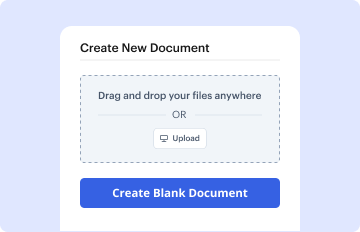
01. Start with a blank Property Sale Legal Form
Open the blank document in the editor, set the document view, and add extra pages if applicable.
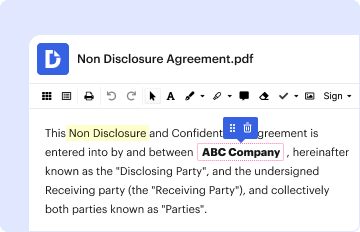
02. Add and configure fillable fields
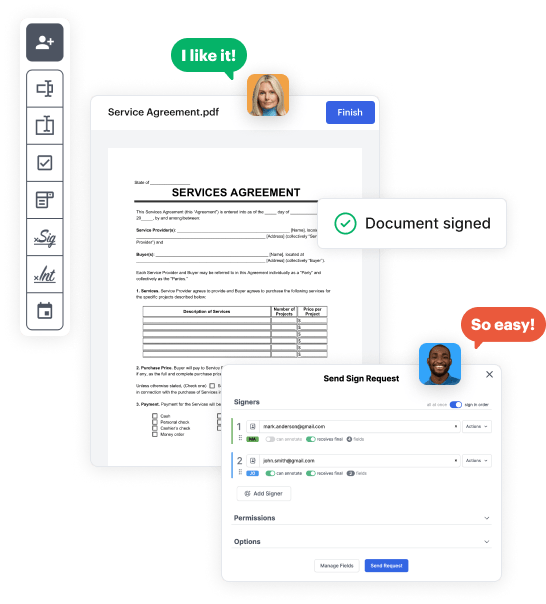
Use the top toolbar to insert fields like text and signature boxes, radio buttons, checkboxes, and more. Assign users to fields.
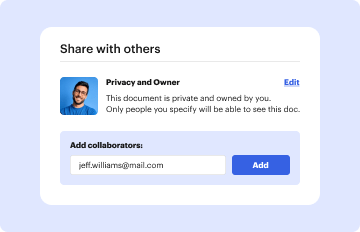
03. Distribute your form
Share your Property Sale Legal Form in seconds via email or a link. You can also download it, export it, or print it out.

A brief tutorial on how to set up a professional-looking Property Sale Legal Form
Form edit decoration

Step 1: Log in to DocHub to begin creating your Property Sale Legal Form.

First, sign in to your DocHub account. If you don't have one, you can simply register for free.

Step 2: Head to the dashboard.

Once you’re in, navigate to your dashboard. This is your primary hub for all document-based activities.

Step 3: Initiate new document creation.

In your dashboard, choose New Document in the upper left corner. Select Create Blank Document to put together the Property Sale Legal Form from the ground up.

Step 4: Insert template fillable areas.

Place various items like text boxes, images, signature fields, and other elements to your template and assign these fields to specific individuals as required.

Step 5: Fine-tune your document.

Refine your form by inserting instructions or any other vital tips leveraging the text tool.

Step 6: Go over and adjust the form.

Carefully review your created Property Sale Legal Form for any inaccuracies or needed adjustments. Make use of DocHub's editing capabilities to polish your document.

Step 7: Send out or export the document.

After finalizing, save your work. You may opt to save it within DocHub, transfer it to various storage services, or send it via a link or email.

be ready to get more

Build your Property Sale Legal Form in minutes

Start creating now

Got questions?

We have answers to the most popular questions from our customers. If you can't find an answer to your question, please contact us.
Contact us
Below are 5 of the most common types of contracts for real estate investing. Purchase Agreement. Purchase agreements are the most common type of contract youll use and encounter. Assignment Contract. Lease Agreement. Power Of Attorney. Subject-To. #1 Financing. #2 Seller Assist. #3 Closing Costs.
Lets break it down together. RERA Form A: Property seller and broker. RERA Form B: Property buyer and broker. RERA Form F: Buyer and seller. RERA Form I: Agent and Agent. RERA Form U: Termination Agreement. Frequently Asked Questions.
As public records, contract forms adopted by the Texas Real Estate Commission are available to any person. Real estate license holders are required to use these forms.
Identify the names and addresses of both the buyer and the seller. Detail the price of the property and the terms of the purchase. Set the closing date and closing costs. Detail any taxes and other related costs, and establish which party is paying those costs.
How to Write an LOI in Commercial Real Estate Structure it like a letter. Write the opening paragraph. State the parties involved. Draft a property description. Outline the terms of the offer. Include disclaimers. Conclude with a closing statement.
be ready to get more

Build your Property Sale Legal Form in minutes

Start creating now

Related Q&A to Property Sale Legal Form

Form A - Agent/Seller Agreement This is perhaps the most common type of form, which serves as a contract between the agent and the seller of the property. This form legally mandates the agent to act on the sellers behalf by marketing the property and managing interested buyers.
1. Land. Land, often referred to as the most basic form of real estate, is a finite resource and a key factor in the development of new properties. It can be classified based on its current use, potential for development, or environmental factors.
A New York bill of sale is a legal document that serves as proof of ownership transfer for various assets, such as vehicles, boats, or personal property. It outlines the details of the transaction, including the buyer, seller, purchase price, and specific terms and conditions.

Additional resources on building your forms