

Create your Property Rental Law from scratch

Start Building Now
Title decoration

Here's how it works

01. Start with a blank Property Rental Law
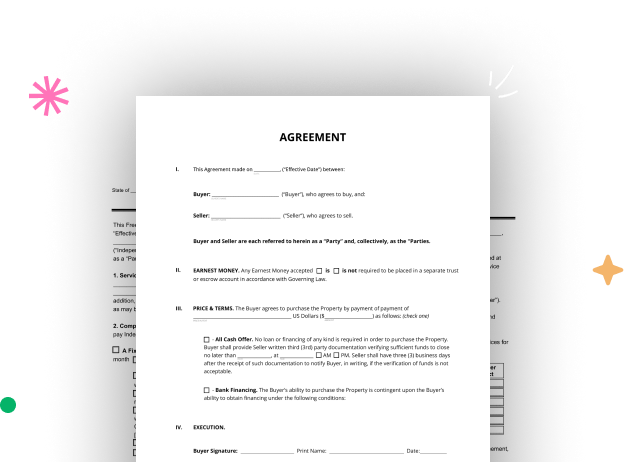
Open the blank document in the editor, set the document view, and add extra pages if applicable.
02. Add and configure fillable fields
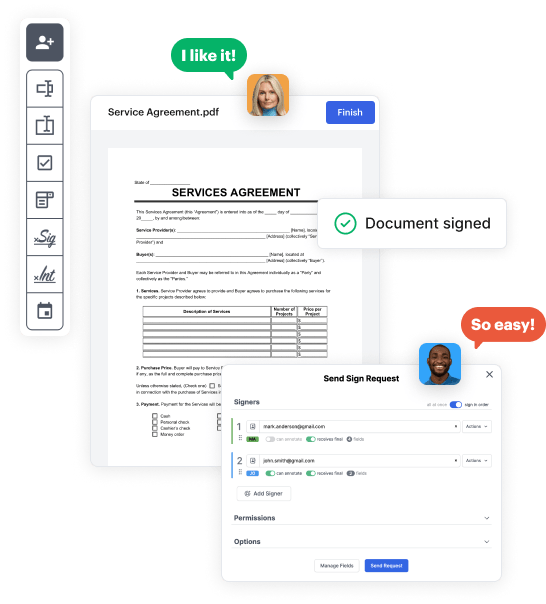
Use the top toolbar to insert fields like text and signature boxes, radio buttons, checkboxes, and more. Assign users to fields.
03. Distribute your form
Share your Property Rental Law in seconds via email or a link. You can also download it, export it, or print it out.

Create your Property Rental Law in a matter of minutes

Form edit decoration

Step 1: Access DocHub to set up your Property Rental Law.

Start by accessing your DocHub account. Explore the advanced DocHub functionality free for 30 days.

Step 2: Navigate to the dashboard.

Once logged in, go to the DocHub dashboard. This is where you'll build your forms and handle your document workflow.

Step 3: Create the Property Rental Law.

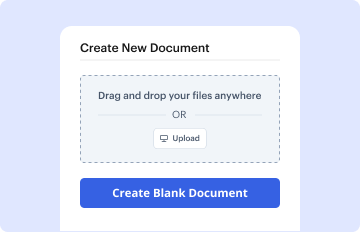
Click on New Document and choose Create Blank Document to be redirected to the form builder.

Step 4: Design the form layout.

Use the DocHub features to insert and configure form fields like text areas, signature boxes, images, and others to your form.

Step 5: Insert text and titles.

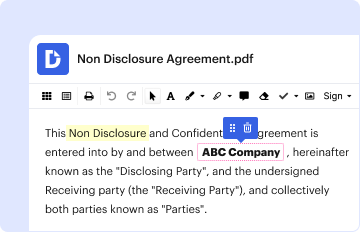
Add needed text, such as questions or instructions, using the text tool to lead the users in your form.

Step 6: Configure field settings.

Alter the properties of each field, such as making them required or formatting them according to the data you expect to collect. Assign recipients if applicable.

Step 7: Review and save.

After you’ve managed to design the Property Rental Law, make a final review of your form. Then, save the form within DocHub, send it to your chosen location, or distribute it via a link or email.


be ready to get more

Build your Property Rental Law in minutes

Start creating now

Got questions?

We have answers to the most popular questions from our customers. If you can't find an answer to your question, please contact us.
Contact us
Colorado has enacted new habitability laws requiring landlords to state where tenants can report uninhabitable conditions. These changes become effective on and after January 1, 2025. Landlords must update rental agreements and tenant portals to comply.
At a glance: What a landlord cannot do in California in 2024 The Tenant Protection Act caps rent increases for most residential tenants in California. Landlords cant raise rent more than 10% total or 5% + CPI increase (whichever is lower) over a 12-month period.
The Legislature made docHub changes to a landlords right to evict residential tenants. The new law prohibits a landlord from evicting residential tenants without cause with limited exceptions.
In 2024, changes to rental laws may include adjustments to rent control policies, notice periods for rent increases, or revisions to tenant rights and eviction processes. Landlords and tenants should review the most current regulations to ensure compliance.
Colorado HB24-1098, which prevents landlords from evicting tenants or denying lease renewals without a cause, was signed into law by Colorado Gov. Jared Polis on April 19.
be ready to get more

Build your Property Rental Law in minutes

Start creating now

Related Q&A to Property Rental Law

The tenant receives 48 hours to leave the premises with all their belongings. If they remain on the property, the landlord can schedule a time for eviction with the countys sheriff. The landlord is not allowed to force the tenant to move out. Only an authority from the sheriffs department is permitted to do so.
SB 329 Mandatory Section 8 Bill Landlords cannot discriminate against tenants who use a voucher to pay their rent. Tenants must still meet other terms of the housing owner. This law takes effect on January 1, 2020. The Center on Budget and Policy Priorities estimates that 300,000 Californians use housing vouchers.
Colorado Governor Jared Polis signed the bill into law on April 19. The bill was strongly supported by tenant advocates in the state. HB24-1098 prohibits landlords and property owners from filing to evict a tenant from their residence when they are not found to be in violation of any law.

Additional resources on building your forms