Create your Property Rental Document from scratch

Start Building Now
Title decoration

Here's how it works

01. Start with a blank Property Rental Document
Open the blank document in the editor, set the document view, and add extra pages if applicable.
02. Add and configure fillable fields
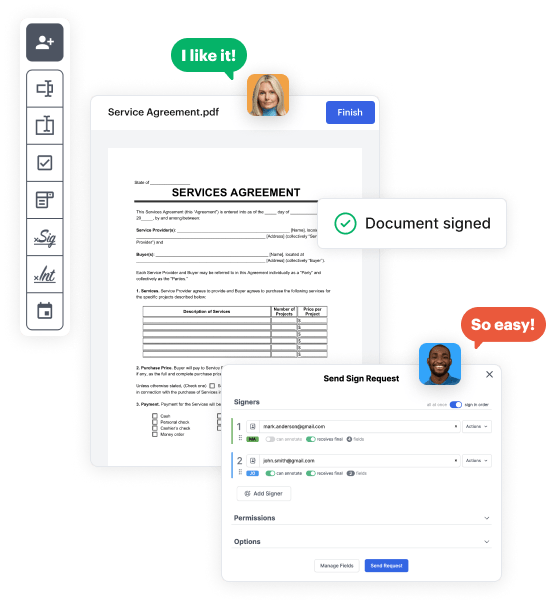
Use the top toolbar to insert fields like text and signature boxes, radio buttons, checkboxes, and more. Assign users to fields.
03. Distribute your form
Share your Property Rental Document in seconds via email or a link. You can also download it, export it, or print it out.

A detailed walkthrough of how to build your Property Rental Document online
Form edit decoration

Step 1: Start with DocHub's free trial.

Go to the DocHub website and register for the free trial. This provides access to every feature you’ll require to build your Property Rental Document without any upfront cost.

Step 2: Access your dashboard.

Log in to your DocHub account and go to the dashboard.

Step 3: Craft a new document.

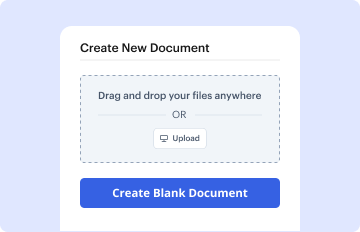
Hit New Document in your dashboard, and choose Create Blank Document to design your Property Rental Document from the ground up.

Step 4: Use editing tools.

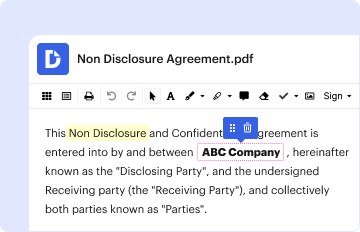
Insert different elements such as text boxes, radio buttons, icons, signatures, etc. Arrange these elements to match the layout of your document and assign them to recipients if needed.

Step 5: Modify the form layout.

Organize your document easily by adding, repositioning, removing, or merging pages with just a few clicks.

Step 6: Create the Property Rental Document template.

Convert your newly designed form into a template if you need to send many copies of the same document numerous times.

Step 7: Save, export, or share the form.

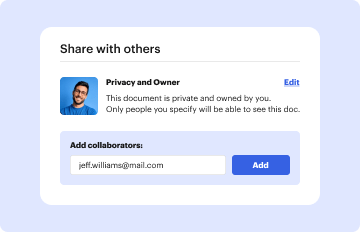
Send the form via email, share a public link, or even publish it online if you wish to collect responses from a broader audience.


be ready to get more

Build your Property Rental Document in minutes

Start creating now

Got questions?

We have answers to the most popular questions from our customers. If you can't find an answer to your question, please contact us.
Contact us
Tenants have rights during a tenancy, including their rights to dispute problems and their quiet enjoyment rights. Landlords cant physically remove tenants or lock them out of their rental units.
You can only end your fixed term tenancy early if your agreement says you can or by getting your landlord to agree to end your tenancy. If your agreement says you can end your fixed term tenancy early, this means you have a break clause. Your tenancy agreement will tell you when the break clause can apply.
What is included in a Residential Tenancy Agreement? Landlord and tenant details, including names and contact information. Property details, such as the address. Lease specifics, such as the term and start date. Rent payment details, such as the amount, frequency, due dates, late fees, and acceptable forms of payment.
Signing the agreement Remember that a tenancy agreement is legally binding on both parties, just like any other contract. Once youve signed it, youve committed to paying rent until the agreement ends. Take your time to ensure that you understand everything.
Typically, a contract is void when its incomplete, which means it misses an essential term or element. For example, this could be the amount of rent or a starting date for a lease. Its also common that contracts are void when they have many ambiguities that different people can interpret in different ways.
be ready to get more

Build your Property Rental Document in minutes

Start creating now

Related Q&A to Property Rental Document

Using a tenancy agreement The most common type is an assured shorthold tenancy or AST agreement. You can download an easy to edit template agreement from Net Lawman pre-customised to the type of property you are letting, such as one for a furnished flat.
If a term in the tenancy agreement gives either you or your landlord less than your statutory rights, that term cannot be enforced.
BdocHub of a material term A tenancy agreement may end when someone goes against one of its material terms Residential Tenancy Act: Section 45.3. If a landlord or tenant bdocHubes a material term and the other party wants to end the tenancy, they must send a written warning to the party who bdocHubed the term.

Additional resources on building your forms