
Get and handle Property Ownership Transfer... online

Speed up your file managing with the Property Ownership Transfer... online library with ready-made templates that suit your needs. Access the document, modify it, fill it, and share it with your contributors without breaking a sweat. Start working more effectively with your forms.

The best way to manage our Property Ownership Transfer...:

  1. Open our Property Ownership Transfer... and find the form you want.
  2. Preview your form to ensure it’s what you want, and click Get Form to start working on it.
  3. Edit, add new text, or highlight important information with DocHub tools.
  4. Prepare your form and save the adjustments.
  5. Download or share your form with other people.

Discover all of the possibilities for your online file administration with our Property Ownership Transfer.... Get your free free DocHub account right now!


Video Guide on Property Ownership Transfer... management

video background

Commonly Asked Questions about Property Ownership Transfer...

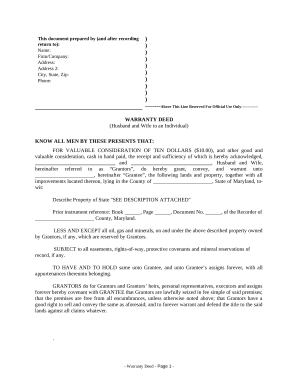
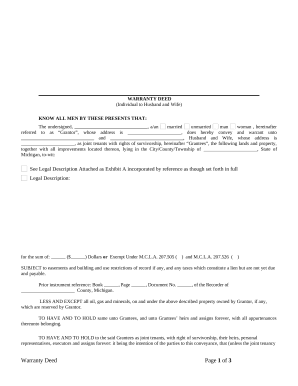
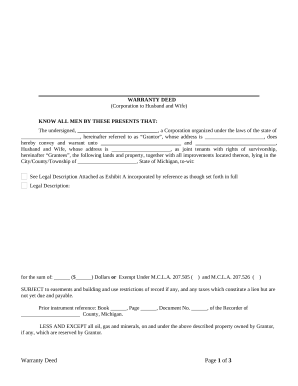
The most common way to transfer property is through a general warranty deed (sometimes called a grant deed). A general warranty deed guarantees good title from the beginning of time.
To change a deed in New York City, you will need a deed signed and docHubd by the grantor. The deed must also be filed and recorded with the Office of the City Register. Transfer documents identifying if any taxes are due must also be filed and recorded with the City Register.
To add or delete names from a deed you will need to complete and record a new deed. Forms are available from your attorney or from a legal stationery store.
Step 2: Obtain a No Objection Certificate (NOC) from the RTO if the vehicle is registered in another state. Step 3: Fill out Form 29 and Form 30 with the necessary details. Step 4: Get the required documents verified by the RTO. Step 5: Pay the applicable transfer fee as required by the RTO.
Today, Californians most often transfer title to real property by a simple written instrument, the grant deed. The word grant is expressly designated by statute as a word of conveyance. (Civil Code Section 1092) A second form of deed is the quitclaim deed.
The filing fee is generally $125 for residential and farm properties and $250 for all other properties. The county clerks office collects the RP-5217 filing fee. The county clerks office should be reviewing the RP-5217 forms for completeness, not for accuracy.
Both the buyer and seller must be party to the completion of the tax property transfer form, i.e. TP-584 and RP 5217, both must sign the deed of the property, and the property transfer must be filed with the county. At that point, the property change will be official.