

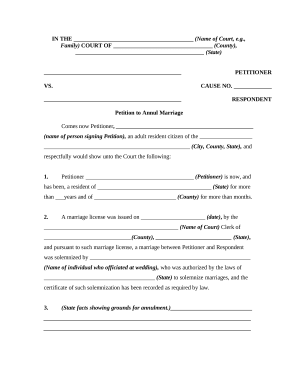
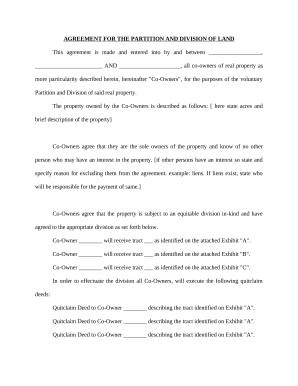
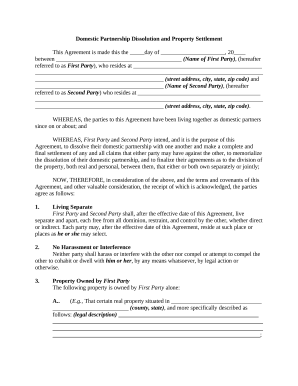
Increase your output with Property Division Legal Forms
Papers managing takes up to half of your business hours. With DocHub, it is simple to reclaim your time and effort and enhance your team's productivity. Get Property Division Legal Forms online library and investigate all templates relevant to your everyday workflows.
Easily use Property Division Legal Forms:
- Open Property Division Legal Forms and use Preview to find the appropriate form.
- Click Get Form to start working on it.
- Wait for your form to upload in our online editor and start editing it.
- Add new fillable fields, icons, and pictures, adjust pages, etc.
- Fill your document or set it for other contributors.
- Download or deliver the form by link, email attachment, or invite.
Accelerate your everyday document managing with the Property Division Legal Forms. Get your free DocHub profile right now to discover all forms.
Video Guide on Property Division Legal Forms management

Commonly Asked Questions about Property Division Legal Forms
What does it mean to divide property?
Division of property, also known as equitable distribution, is a judicial division of property rights and obligations between spouses during divorce. It may be done by agreement, through a property settlement, or by judicial decree.
What is the basic of division rule?
The formula to calculate the division of two numbers is: Dividend Divisor = Quotient + Remainder. The remainder is the leftover number in the division operation. If 46 is divided by 5, we get the quotient as 9 and the remainder 1.
What is the division property rule?
Partition of the property by mutual agreement can be done by Partition Deed or Family settlement. Partition Deed divides the property between the co-owners of the property. This deed is prepared in order to divide the property so that each person gets an absolute title over his own part of the property. Property Partition Laws in India - MyAdvo.in myadvo.in blog family-partition-a-legal- myadvo.in blog family-partition-a-legal-
What is an example of the division property of equality?
0:18 1:17 To get x equals three another way of stating the division property of equality is as follows if aMoreTo get x equals three another way of stating the division property of equality is as follows if a equals B. And C equals d. Then a divided by C equals B divided by D.
What is an example of property of division?
The properties of division are as follows: If a and b (where bb is not equal to zero) are the whole numbers, then ab (expressed as a/b) is not necessarily the whole number. If a is any whole number, then a1=a. This means any real number divided by the number 1 gives the quotient as the number itself.