

Create your Property Abandonment Legal Form from scratch

Start Building Now
Title decoration

Here's how it works

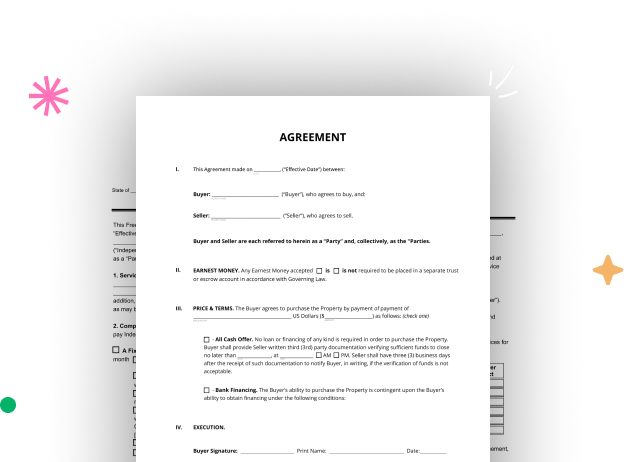
01. Start with a blank Property Abandonment Legal Form
Open the blank document in the editor, set the document view, and add extra pages if applicable.
02. Add and configure fillable fields
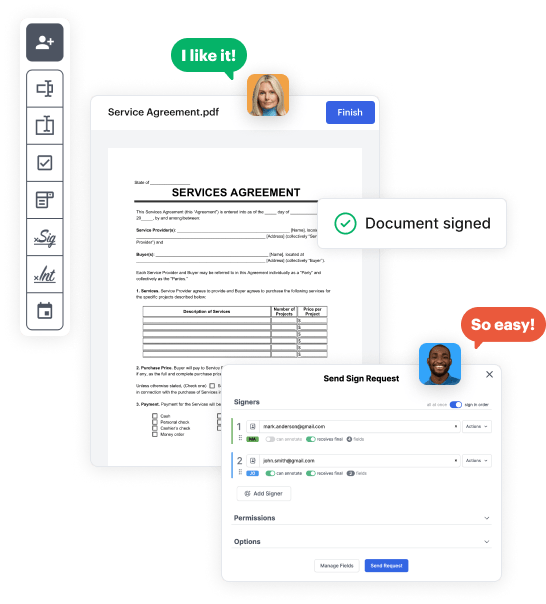
Use the top toolbar to insert fields like text and signature boxes, radio buttons, checkboxes, and more. Assign users to fields.
03. Distribute your form
Share your Property Abandonment Legal Form in seconds via email or a link. You can also download it, export it, or print it out.

A simple tutorial on how to create a professional-looking Property Abandonment Legal Form

Form edit decoration

Step 1: Sign in to DocHub to create your Property Abandonment Legal Form.

First, log in to your DocHub account. If you don't have one, you can simply sign up for free.

Step 2: Navigate to the dashboard.

Once logged in, go to your dashboard. This is your central hub for all document-related activities.

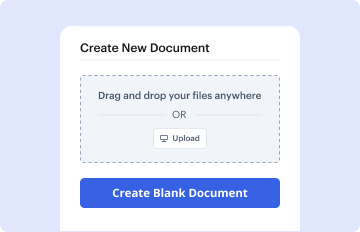
Step 3: Initiate new document creation.

In your dashboard, choose New Document in the upper left corner. Choose Create Blank Document to put together the Property Abandonment Legal Form from a blank slate.

Step 4: Insert form fillable areas.

Place numerous fields like text boxes, images, signature fields, and other options to your form and assign these fields to intended users as necessary.

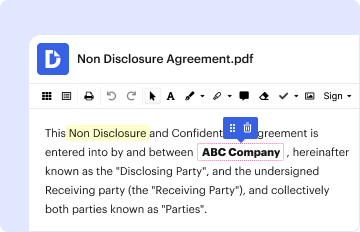
Step 5: Fine-tune your form.

Refine your form by adding directions or any other crucial information utilizing the text tool.

Step 6: Review and refine the content of the form.

Carefully check your created Property Abandonment Legal Form for any errors or necessary adjustments. Take advantage of DocHub's editing capabilities to fine-tune your form.

Step 7: Send out or export the form.

After completing, save your copy. You can choose to save it within DocHub, export it to various storage platforms, or forward it via a link or email.


be ready to get more

Build your Property Abandonment Legal Form in minutes

Start creating now

Got questions?

We have answers to the most popular questions from our customers. If you can't find an answer to your question, please contact us.
Contact us
Property is abandoned in ance with New Jersey law (i.e. State v. Johnson) where the owner knowingly and voluntarily relinquishes any possessory or ownership interest in the item and there is no other apparent or known owners of the property.
A Notice of Abandoned Personal Property typically includes information about what was abandoned, the time frame in which the tenant can still retrieve their items, as well as a legal disclaimer that the landlord may dispose of the property if its not claimed within the specified deadline.
State-by-State Holding Periods for Tenant Belongings StatePersonal Property Holding Period After EvictionState Law New Jersey 30 days after notice or 33 days after the landlord has mailed the notice N.J. Stat. Ann. 2A:18-72 to 2A:18-84 New Mexico 30 days after notice 47-8-36.1(A) and 48-3-5 New York Not specified 47 more rows Oct 18, 2023
In New Jersey, a law called the Abandoned Tenant Property Statute requires landlords to give written notice to former tenants if the landlord wants to dispose of property left by the tenants after they have moved out. The notice must state that the landlord considers the property left behind abandoned.
345.75 ABANDONED TANGIBLE PERSONAL PROPERTY. If property has not been removed within six months after it comes into the possession of a person, it is abandoned and shall become the property of the person in possession, after notice to the prior owner.
be ready to get more

Build your Property Abandonment Legal Form in minutes

Start creating now

Related Q&A to Property Abandonment Legal Form

If the tenant is absent from a rental unit without explanation for a period of 15 days after nonpayment of rent, the rental unit is considered abandoned.
When is Property Considered Abandoned? New Jersey property is generally presumed abandoned if it has remained unclaimed by the owner, or if there has been no activity other than automatic activity (interest posting on a bank account is considered automatic activity) for more than three years.
New Jersey Dormancy Periods Most property types in New Jersey have a dormancy period of three years.

Additional resources on building your forms


