


Create your Professional Roofing Contractor from scratch

Start Building Now
Title decoration

Here's how it works

01. Start with a blank Professional Roofing Contractor
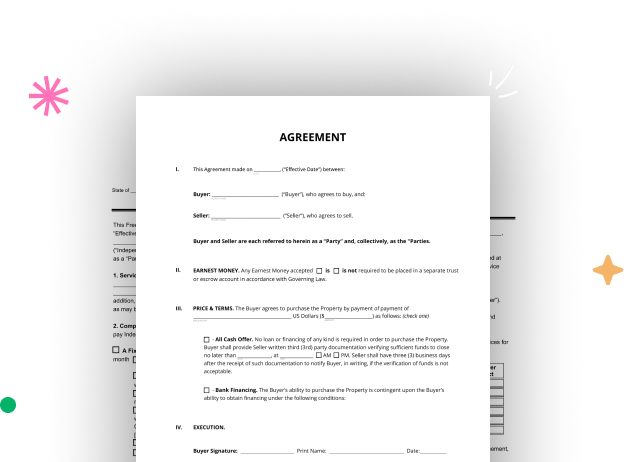
Open the blank document in the editor, set the document view, and add extra pages if applicable.
02. Add and configure fillable fields
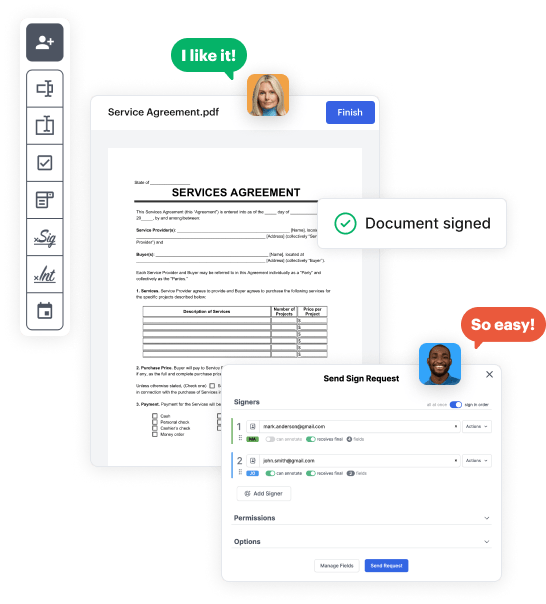
Use the top toolbar to insert fields like text and signature boxes, radio buttons, checkboxes, and more. Assign users to fields.
03. Distribute your form
Share your Professional Roofing Contractor in seconds via email or a link. You can also download it, export it, or print it out.

Design your Professional Roofing Contractor in a matter of minutes

Form edit decoration

Step 1: Access DocHub to set up your Professional Roofing Contractor.

Start signining into your DocHub account. Utilize the advanced DocHub functionality at no cost for 30 days.

Step 2: Go to the dashboard.

Once signed in, go to the DocHub dashboard. This is where you'll create your forms and handle your document workflow.

Step 3: Design the Professional Roofing Contractor.

Click on New Document and choose Create Blank Document to be taken to the form builder.

Step 4: Set up the form layout.

Use the DocHub tools to add and arrange form fields like text areas, signature boxes, images, and others to your form.

Step 5: Insert text and titles.

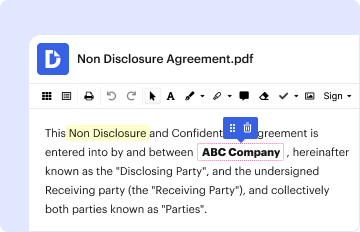
Add needed text, such as questions or instructions, using the text tool to lead the users in your form.

Step 6: Configure field settings.

Modify the properties of each field, such as making them mandatory or arranging them according to the data you plan to collect. Assign recipients if applicable.

Step 7: Review and save.

After you’ve managed to design the Professional Roofing Contractor, make a final review of your form. Then, save the form within DocHub, transfer it to your chosen location, or share it via a link or email.


be ready to get more

Build your Professional Roofing Contractor in minutes

Start creating now

Got questions?

We have answers to the most popular questions from our customers. If you can't find an answer to your question, please contact us.
Contact us
Roofing Contractor Requirements for New York City New York City may not be the state capital, but it certainly is the capital of business regulations! There, roofing contractors have to be licensed by the NYC Department of Consumer Affairs if the work will exceed $200.
ing to Roofing Contractor, the official publication for the International Roofing Expo, the average profit margin typically falls in the range of 20% to 40%. This range can vary depending on several factors, including location, competition, business size, and the specific services offered.
How much revenue does a roofing contractor make? Using the same source earlier, its safe to assume that the average turnover for a roofing contractor is around $710,000. Indeed, the U.S. roofing contractor industry is worth $56.2 billion, and there are about 79,000 roofing contractors across the U.S.
A roofer, roof mechanic, or roofing contractor is a tradesman who specializes in roof construction.
To be fair, overhead charges can vary from company to company. Some companies may charge 19%, 20%, up to 30% in overhead on every job, while others may only charge 3%, 4% or 5% of the gross amount collected. Occasionally, youll hear about a roofing company with a flat fee schedule.
be ready to get more

Build your Professional Roofing Contractor in minutes

Start creating now

Related Q&A to Professional Roofing Contractor

Theyre recession resilient, they often have an established clientele, and they provide a service that everybody needs. Roofing is a prime example of this type of business. Not only can it stand up to the pressure of recessions, but its also a business that isnt based on trends or market movements.
Typical roofing companies make between 20 percent and 40 percent gross profit in the roofing industry. The number for service-focused companies may be higher while the number for new construction and large commercial companies may be lower.
How to Grow a Roofing Business in 2024: 9 Tested Tips Create a Business Plan. Invest in People. Build a Strong Company Culture. Focus on Customer Experience. Create a Marketing Strategy. Build Partnerships. Monitor Your Businesss Performance. Create Processes.

Additional resources on building your forms


