
Create your Professional Construction Agreement from scratch

Start Building Now
Title decoration

Here's how it works

01. Start with a blank Professional Construction Agreement
Open the blank document in the editor, set the document view, and add extra pages if applicable.
02. Add and configure fillable fields
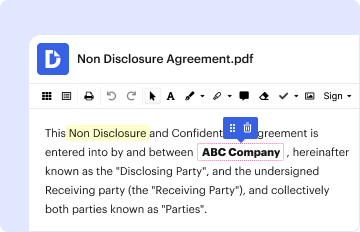
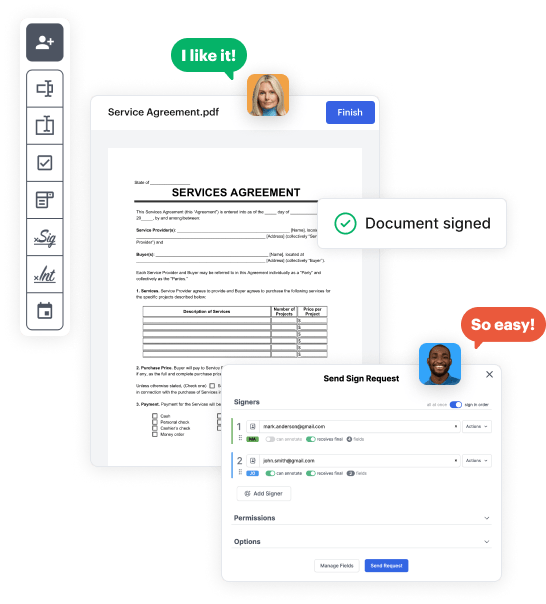
Use the top toolbar to insert fields like text and signature boxes, radio buttons, checkboxes, and more. Assign users to fields.
03. Distribute your form
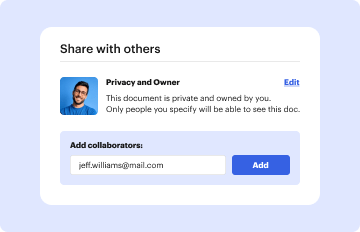
Share your Professional Construction Agreement in seconds via email or a link. You can also download it, export it, or print it out.

A detailed walkthrough of how to build your Professional Construction Agreement online

Form edit decoration

Step 1: Start with DocHub's free trial.

Go to the DocHub website and register for the free trial. This provides access to every feature you’ll require to build your Professional Construction Agreement without any upfront cost.

Step 2: Access your dashboard.

Sign in to your DocHub account and go to the dashboard.

Step 3: Craft a new document.

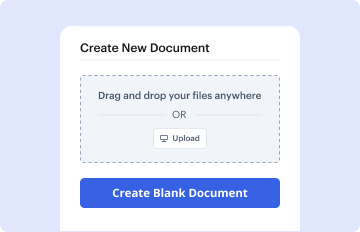
Hit New Document in your dashboard, and choose Create Blank Document to craft your Professional Construction Agreement from scratch.

Step 4: Utilize editing tools.

Place various fields such as text boxes, radio buttons, icons, signatures, etc. Organize these elements to suit the layout of your document and assign them to recipients if needed.

Step 5: Organize the form layout.

Rearrange your document quickly by adding, moving, removing, or combining pages with just a few clicks.

Step 6: Set up the Professional Construction Agreement template.

Convert your freshly crafted form into a template if you need to send multiple copies of the same document numerous times.

Step 7: Save, export, or distribute the form.

Send the form via email, distribute a public link, or even post it online if you want to collect responses from a broader audience.


be ready to get more

Build your Professional Construction Agreement in minutes

Start creating now

Got questions?

We have answers to the most popular questions from our customers. If you can't find an answer to your question, please contact us.
Contact us
To that end, before you sign anything and start working, make sure your contract has these 5 key elements. A Detailed Scope of Work. Project Cost and Payment Schedule. Construction Timeline. Change Order Process. Project Issues and Dispute Resolution.
What Should Be in a Construction Contract? Identifying/Contact Information. Title and Description of the Project. Projected Timeline and Completion Date. Cost Estimate and Payment Schedule. Stop-Work Clause and Stop-Payment Clause. Act of God Clause. Change Order Agreement. Warranty.
Following this step-by-step checklist will mean that you can write your contract with confidence: Know your parties. Agree on the terms. Set clear boundaries. Spell out the consequences. Specify how you will resolve disputes. Cover confidentiality. Check the legality of the contract. Open it up to negotiation.
How to draft a contract between two parties: A step-by-step checklist Know your parties. Agree on the terms. Set clear boundaries. Spell out the consequences. Specify how you will resolve disputes. Cover confidentiality. Check the legality of the contract. Open it up to negotiation.
Description of the services to be provided. How payment will be handled, whether hourly or on a per-project basis. Term of the agreement, typically with a definitive end date. Explanation of what the hiring party will provide or not provide, such as equipment, for the independent contractor to use.
be ready to get more

Build your Professional Construction Agreement in minutes

Start creating now

Related Q&A to Professional Construction Agreement

Here are what the Smith + Malek team has seen as the most common errors in construction contracts: Its not written down. Both parties havent signed the contract. Not all of the terms of the agreement are in writing and in the contract. The timeline is unclear. Particular terms arent defined.
Elements of a construction contract Name of contractor and contact information. Name of homeowner and contact information. Describe property in legal terms. List attachments to the contract. The cost. Failure of homeowner to obtain financing. Description of the work and the completion date. Right to stop the project.
A contractor agreement should describe the scope of work, contract terms, contract duration, and the confidentiality agreement. It should also include a section for the two parties to sign and make the agreement official. If the contract doesnt meet these requirements, it may be inadmissible in a court of law.


