

Create your Probate Court Legal Form from scratch

Start Building Now
Title decoration

Here's how it works

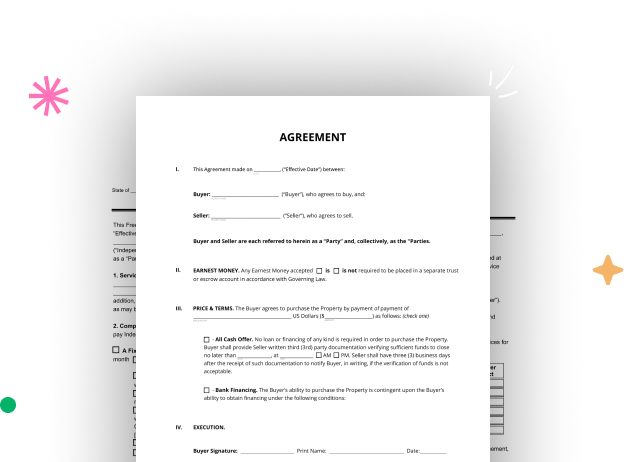
01. Start with a blank Probate Court Legal Form
Open the blank document in the editor, set the document view, and add extra pages if applicable.
02. Add and configure fillable fields
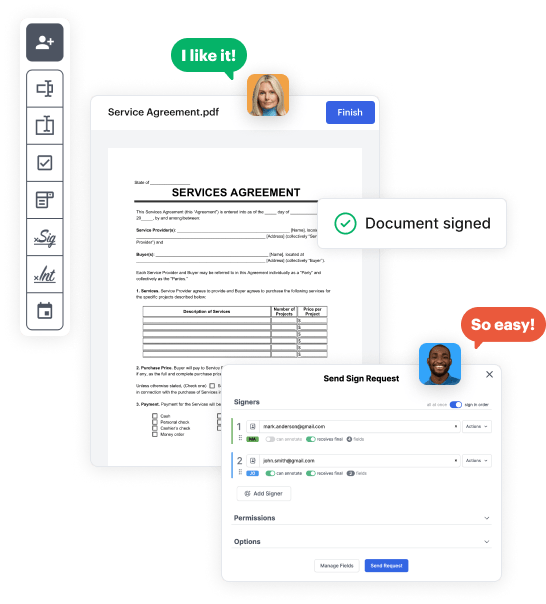
Use the top toolbar to insert fields like text and signature boxes, radio buttons, checkboxes, and more. Assign users to fields.
03. Distribute your form
Share your Probate Court Legal Form in seconds via email or a link. You can also download it, export it, or print it out.

Design your Probate Court Legal Form in a matter of minutes

Form edit decoration

Step 1: Access DocHub to build your Probate Court Legal Form.

Begin signining into your DocHub account. Utilize the advanced DocHub functionality at no cost for 30 days.

Step 2: Navigate to the dashboard.

Once signed in, go to the DocHub dashboard. This is where you'll create your forms and handle your document workflow.

Step 3: Design the Probate Court Legal Form.

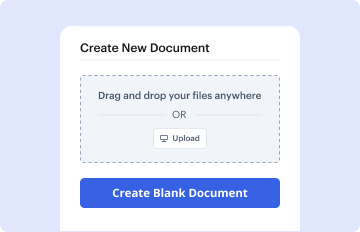
Hit New Document and choose Create Blank Document to be redirected to the form builder.

Step 4: Set up the form layout.

Use the DocHub tools to insert and arrange form fields like text areas, signature boxes, images, and others to your document.

Step 5: Insert text and titles.

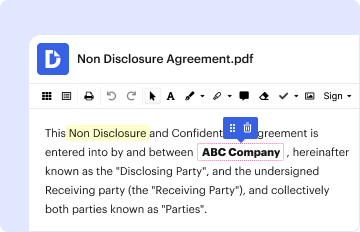
Add necessary text, such as questions or instructions, using the text field to assist the users in your form.

Step 6: Customize field properties.

Alter the properties of each field, such as making them mandatory or formatting them according to the data you plan to collect. Assign recipients if applicable.

Step 7: Review and save.

After you’ve managed to design the Probate Court Legal Form, make a final review of your document. Then, save the form within DocHub, transfer it to your preferred location, or distribute it via a link or email.


be ready to get more

Build your Probate Court Legal Form in minutes

Start creating now

Got questions?

We have answers to the most popular questions from our customers. If you can't find an answer to your question, please contact us.
Contact us
The Executor files the original Will and a certified death certificate, a document that has the date and location of a persons death, along with a form called a probate petition and other supporting documents in the Surrogates Court in the county where the person who died lived, and had their primary residence.
In New York state, a will only has to be submitted to probate if the decedents remaining assets are worth $30,000 or more. Such assets do not include any property or funds that transferred via pay on death accounts, in trust for (ITF) accounts, or joint ownership, as these automatically bypass the probate process.
DIY Forms are free and easy guided step by step computer programs that ask the litigant a series of questions then use the answers to prepare personalized court forms that are ready to serve and file. Some programs identify issues and produce information sheets.
Assuming that no one is contesting the will or challenging the appointment of the executor, and assuming all of the decedents next of kin (called distributees) can be found and will sign a waiver of process and consent to probate, you can expect to pay $3,000- $3,500 in legal fees to have the will admitted to probate.
While the threshold for probate in NY is $50,000, in reality, the probate process is influenced by many things, and the estates total value is just one of them. Whether or not your estate actually goes through probate will also depend on the type of assets held within the estate and how they were owned.
be ready to get more

Build your Probate Court Legal Form in minutes

Start creating now

Related Q&A to Probate Court Legal Form

While the probate process in New York typically takes between 9-18 months, it can take longer or shorter depending on a variety of factors.
Do it yourself Do it yourself / Full name
Filing the probate petition. The executor must file the original will and a certified copy of the death certificate with the probate petition and other supporting documents in the Surrogates Court of the county where the deceased person lived. There is a filing fee based on the size of the estate.

Additional resources on building your forms


