
Create your Personal Property Deed from scratch

Start Building Now
Title decoration

Here's how it works

01. Start with a blank Personal Property Deed
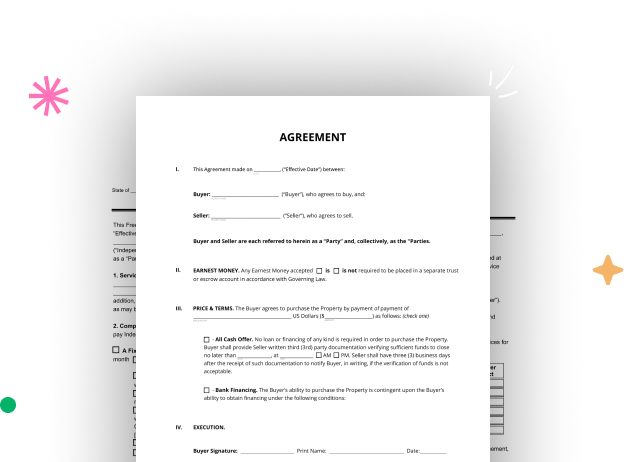
Open the blank document in the editor, set the document view, and add extra pages if applicable.
02. Add and configure fillable fields
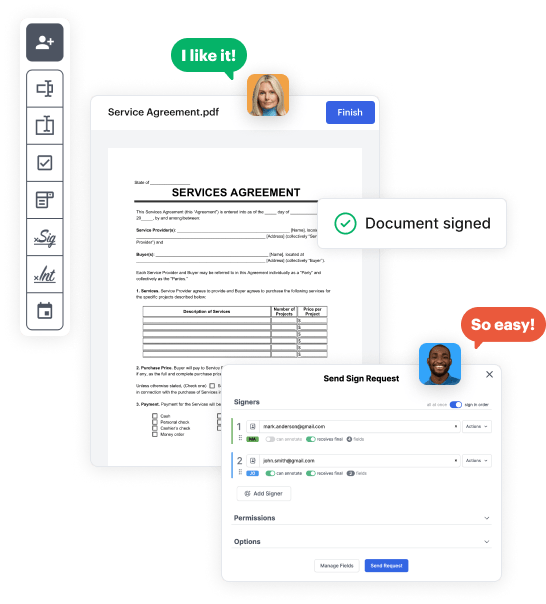
Use the top toolbar to insert fields like text and signature boxes, radio buttons, checkboxes, and more. Assign users to fields.
03. Distribute your form
Share your Personal Property Deed in seconds via email or a link. You can also download it, export it, or print it out.

A detailed walkthrough of how to design your Personal Property Deed online

Form edit decoration

Step 1: Start with DocHub's free trial.

Navigate to the DocHub website and register for the free trial. This gives you access to every feature you’ll need to create your Personal Property Deed with no upfront cost.

Step 2: Access your dashboard.

Sign in to your DocHub account and proceed to the dashboard.

Step 3: Craft a new document.

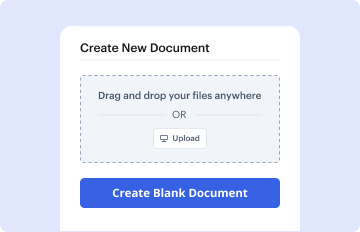
Click New Document in your dashboard, and select Create Blank Document to design your Personal Property Deed from scratch.

Step 4: Utilize editing tools.

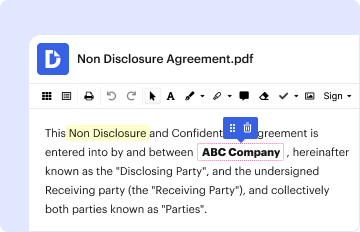
Place different elements such as text boxes, radio buttons, icons, signatures, etc. Arrange these fields to match the layout of your form and designate them to recipients if needed.

Step 5: Modify the form layout.

Rearrange your form in seconds by adding, repositioning, removing, or combining pages with just a few clicks.

Step 6: Set up the Personal Property Deed template.

Transform your newly crafted form into a template if you need to send multiple copies of the same document repeatedly.

Step 7: Save, export, or distribute the form.

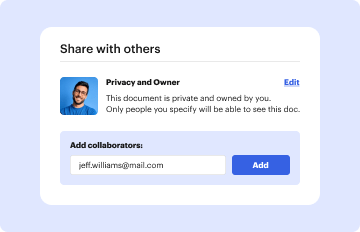
Send the form via email, distribute a public link, or even post it online if you wish to collect responses from more recipients.


be ready to get more

Build your Personal Property Deed in minutes

Start creating now

Got questions?

We have answers to the most popular questions from our customers. If you can't find an answer to your question, please contact us.
Contact us
Several easy-to-follow steps are required to create a Virginia deed: Locate the most recent deed to the property. Create the new deed. Sign and docHub the new deed. Record the deed in the land records of the clerks office of the circuit court in the jurisdiction where the property is located.
A deed must identify the current owner, new owner, and any other parties to the deed. The parties must be identified by name, mailing address, and telephone number. The identifying information must be on the first page below the 3-inch top margin. Property description or indexing information.
In Virginia, only attorneys or property owners can legally prepare a deed. To be legally recognized, a deed in Virginia has to satisfy several key state-specific requirements: It should be an original or a first-generation printout as per Va. Code Ann.
Legal Requirements in Virginia Writing and Signing: The deed must be written and signed by the donor. Witnesses and Notarization: While not always required, notarization adds legal validity. Recording: Recording the deed with the local countys land records office is advisable.
All deeds must be prepared by the owner of the property or by an attorney licensed to practice in Virginia. The requirements are listed below in the code section. Click here to read about e-Recording.
be ready to get more

Build your Personal Property Deed in minutes

Start creating now

Related Q&A to Personal Property Deed

What are the Disadvantages of a Quit Claim Deed? No Protections For The Transaction: Unlike warranty deeds, a quitclaim deeds does not offer protections for the new property owner. There is no way to guarantee that the property is owned free and clear, and that there are no easements or restrictions.
Requirements of a Virginia land deed Minimally, a deed must include: The identity of the parties to the conveyance. The consideration paid for the conveyance. Language granting the parcel to the grantee.
A general warranty deed is often considered the most common way to transfer real property. It is used when you are aware and confident that the title to your property is good and marketable. It is most commonly used for residential real estate transactions.

Additional resources on building your forms


