Improve your document managing with Personal Injury Discovery Documents

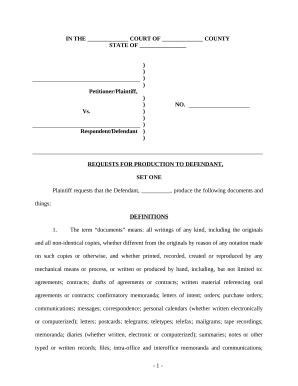
Your workflows always benefit when you are able to get all of the forms and files you may need on hand. DocHub delivers a a huge library of forms to relieve your everyday pains. Get hold of Personal Injury Discovery Documents category and quickly find your form.

Begin working with Personal Injury Discovery Documents in several clicks:

  1. Browse Personal Injury Discovery Documents and find the form you require.
  2. Click Get Form to open it in our online editor.
  3. Start modifying your document: add more fillable fields, highlight sentences, or blackout sensitive details.
  4. The application saves your modifications automatically, and once you are ready, you can download or distribute your form with other contributors.

Enjoy seamless form managing with DocHub. Discover our Personal Injury Discovery Documents online library and discover your form today!


Commonly Asked Questions about Personal Injury Discovery Documents

Steps in a Trial It s designed to prevent trial by ambush, where one side doesn t learn of the other side s evidence or witnesses until the trial, when there s no time to obtain answering evidence. One of the most common methods of discovery is to take depositions.
The three primary types of discoveryinterrogatories, requests for production of documents, and depositionsplay pivotal roles in uncovering facts, clarifying issues, and preparing for trial. Moreover, each method offers unique avenues for gathering evidence and insights essential for building a robust legal strategy.
Disclosure is accomplished through a methodical process called discovery. Discovery takes three basic forms: written discovery, document production, and depositions.
The discovery process is the exchange of information between the plaintiff and the defendant. This process is a vital step in your claim because it ensures that both parties have access to the facts surrounding their dispute, and gives them the information they need to make informed decisions during the proceedings.
The Six types of Discovery in Civil Litigation Cases: Written depositions, Interrogatories, Requests for production or permit inspection, Physical or mental examinations, and.
Here are some of the things lawyers often ask for in discovery: anything a witness or party saw, heard, or did in connection with the dispute. anything anyone said at a particular time and place (for example, in a business meeting related to the dispute or after a car accident that turned into a lawsuit)
Discovery may be carried out by directly asking a person questions (oral depositions), by sending a person written questions (interrogatories and depositions on written questions), and by requesting that the person provide documents (motions for production, subpoenas duces tecum).
A discovery is recognizing something that already exists for the first time, that nobody has found before, e.g. how Christopher Columbus discovered the Americas.