

Create your Parenting Plan Legal Form from scratch

Start Building Now
Title decoration

Here's how it works

01. Start with a blank Parenting Plan Legal Form
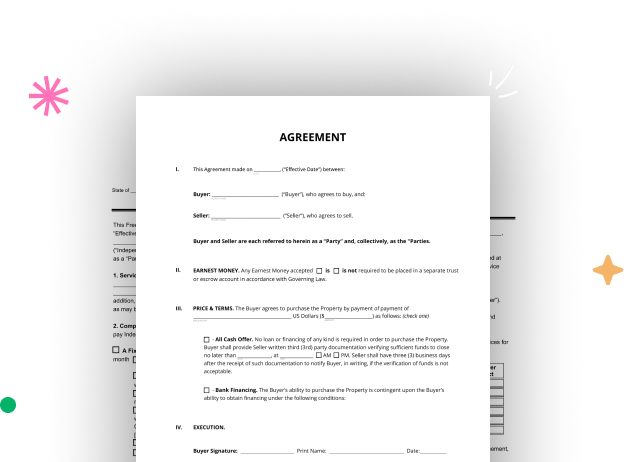
Open the blank document in the editor, set the document view, and add extra pages if applicable.
02. Add and configure fillable fields
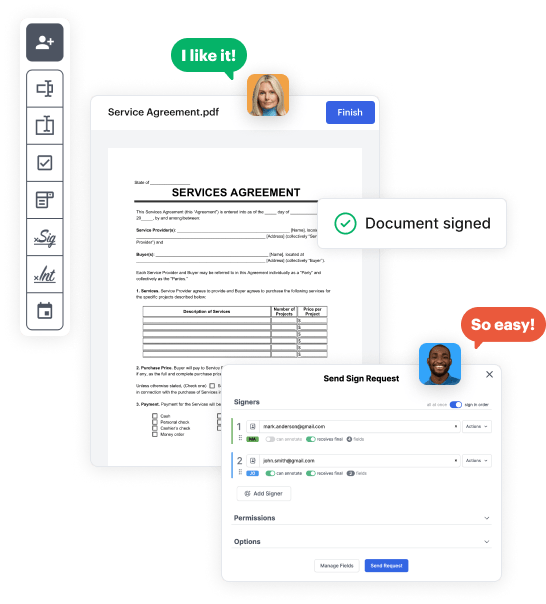
Use the top toolbar to insert fields like text and signature boxes, radio buttons, checkboxes, and more. Assign users to fields.
03. Distribute your form
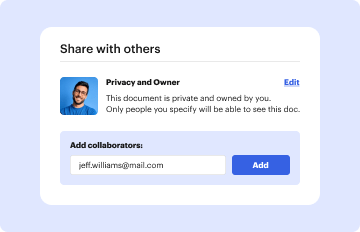
Share your Parenting Plan Legal Form in seconds via email or a link. You can also download it, export it, or print it out.

Craft Parenting Plan Legal Form from the ground up with these step-by-step instructions

Form edit decoration

Step 1: Start off by launching DocHub.

Start by signing up for a free DocHub account using any available sign-up method. Simply log in if you already have one.

Step 2: Sign up for a 30-day free trial.

Try out the complete set of DocHub's pro tools by registering for a free 30-day trial of the Pro plan and proceed to craft your Parenting Plan Legal Form.

Step 3: Add a new blank document.

In your dashboard, click the New Document button > scroll down and choose to Create Blank Document. You will be redirected to the editor.

Step 4: Arrange the view of the document.

Use the Page Controls icon marked by the arrow to toggle between two page views and layouts for more flexibility.

Step 5: Begin by inserting fields to design the dynamic Parenting Plan Legal Form.

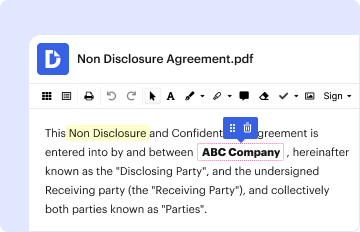
Use the top toolbar to place document fields. Insert and format text boxes, the signature block (if applicable), embed images, etc.

Step 6: Prepare and customize the added fields.

Organize the fields you added per your desired layout. Adjust each field's size, font, and alignment to ensure the form is straightforward and neat-looking.

Step 7: Finalize and share your document.

Save the finalized copy in DocHub or in platforms like Google Drive or Dropbox, or create a new Parenting Plan Legal Form. Send out your form via email or get a public link to engage with more people.


be ready to get more

Build your Parenting Plan Legal Form in minutes

Start creating now

Got questions?

We have answers to the most popular questions from our customers. If you can't find an answer to your question, please contact us.
Contact us
At What Age Can Teenagers or Other Children Refuse Visitation? Children who are considered legal adults (age 18 in most states) may always refuse to spend time with a parent. Technically, any child who is not yet a legal adult isnt allowed to refuse visitation.
A guardian may be appointed to represent the childs interests. A strong case supported by evidence and witness testimony is critical in successfully fighting for custody. Mothers seeking custody should focus on demonstrating that its in the childs interest to reside primarily with them.
New York requires a docHubd parenting plan if you settle your case with the other parent. Although a plan is not required if you choose to go to trial, presenting one can show your commitment and present your desired arrangement in a positive light.
If a child refuses to visit the other parent, the custodial parent should encourage the child to spend time with the other parent. When children get older, the court may give the older child more discretion in deciding whether or not to visit the non-custodial parent.
New York, like most states, sets the age of majority at 18. However, New Yorks Parental Responsibility Law also says a child must be over the age of 10 for parents to be held responsible for their childs actions.
be ready to get more

Build your Parenting Plan Legal Form in minutes

Start creating now

Related Q&A to Parenting Plan Legal Form

Parents are obligated to follow a custody orders terms until a child docHubes 18 or is emancipated. A custodial parent can face legal consequences for preventing visits between a child and the noncustodial parent. A child who refuses visitation puts a parent in a perilous situation.
Who can get visitation in New York? Either parent, siblings and half-siblings, and grandparents can ask for visitation. The court will determine whether visitation is in the childs best interest. A parent is entitled to frequent and meaningful visitation, unless it is shown that it would be harmful to the child.
To put it simply, yes, parents can potentially modify their custody arrangement without going to court in California. If the parties can agree upon the child custody and visitation modifications, they are free to enter into a stipulation which is then signed by a family court judge.
A New York court can make orders about the childs custody only until the child is 18 years old. The Court gives custody based on what is best for the child, this is called the best interest of the child. If there is no court order, then both parents have equal rights to physical and legal custody of the child.
To begin the process of changing your custody order, you will need to fill out the forms for a Petition for Modification of an Order of Custody/Visitation. You can get the forms in the courthouse or you can file a custody or visitation modification petition online through the NY Courts website.

Additional resources on building your forms


