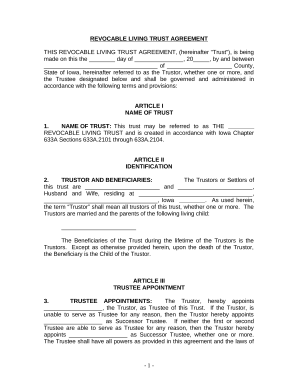
Get and manage Parent-Child Trusts online

Improve your document managing using our Parent-Child Trusts collection with ready-made document templates that meet your needs. Access your document template, change it, complete it, and share it with your contributors without breaking a sweat. Begin working more effectively with the documents.

How to use our Parent-Child Trusts:

  1. Open our Parent-Child Trusts and search for the form you need.
  2. Preview your document to ensure it’s what you want, and click on Get Form to start working on it.
  3. Edit, include new text, or highlight important information with DocHub tools.
  4. Prepare your form and save the adjustments.
  5. Download or share your form with other recipients.

Discover all of the possibilities for your online document administration with our Parent-Child Trusts. Get your free free DocHub profile right now!


Video Guide on Parent-Child Trusts management

video background

Commonly Asked Questions about Parent-Child Trusts

Setting up a trust has several benefits, including reducing taxes on procured assets, eliminating probate costs, and protecting against scams. There are several types of trusts to consider, such as revocable, irrevocable, living, testamentary, and special-needs trusts.
A childrens trust can be a useful estate planning tool for families with small children. It allows parents to leave assets to children while controlling the age at which they have access to them.
The most common type of trust for children under 18 years of age is a custodial account. Custodial accounts are governed under the Uniform Gift to Minors Act (UMGA) or the Uniform Transfer to Minors Act (UTMA). UGMA lets minors own securities while UTMA lets minors own other kinds of property including real estate.
The 4 Biggest Mistakes Parents Make When Setting Up a Trust Fund Not choosing the right Trustee. Choosing the wrong Trustee is a common mistake parents make. Not being clear about the goals of the Trust. Not including asset protection provisions. Not reviewing the Trust annually.
Probably one of the most important reasons to create a trust for your child is to avoid probate when they need to access assets after your passing. Trusts also allow kids to avoid mismanagement of funds thanks to the trustees tasked with ensuring the trust remains viable until the child needs it.
A trust fund is usually established so the child has a source of income and assets sufficient to survive if their parents are no longer around to provide for them.
For a parent and child, trust is a foundation that benefits both people: For kids and teens, knowing their parents trust them can deepen their sense of safety in the world, support their self-esteem and confidence as they try new things, and assure them they have someone to go to when things dont go ing to plan.
Trust Funds can be set up for a number of purposes like providing college funds, as a way to hand down real estate, or as a tool to pass down other inheritances and assets. Trust Funds are also great ways to set up financial security for a loved one with special needs.