

Create your Ohio Landlord Tenant Law from scratch

Start Building Now
Title decoration

Here's how it works

01. Start with a blank Ohio Landlord Tenant Law
Open the blank document in the editor, set the document view, and add extra pages if applicable.
02. Add and configure fillable fields
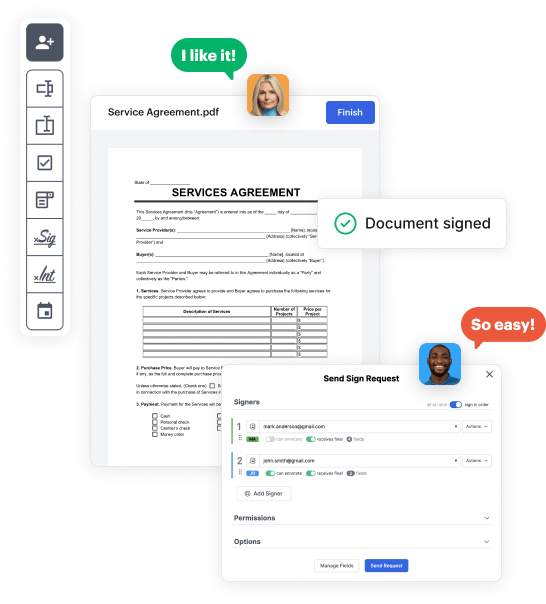
Use the top toolbar to insert fields like text and signature boxes, radio buttons, checkboxes, and more. Assign users to fields.
03. Distribute your form
Share your Ohio Landlord Tenant Law in seconds via email or a link. You can also download it, export it, or print it out.

A brief tutorial on how to create a polished Ohio Landlord Tenant Law

Form edit decoration

Step 1: Sign in to DocHub to begin creating your Ohio Landlord Tenant Law.

First, sign in to your DocHub account. If you don't have one, you can easily register for free.

Step 2: Navigate to the dashboard.

Once you’re in, head to your dashboard. This is your central hub for all document-related tasks.

Step 3: Launch new document creation.

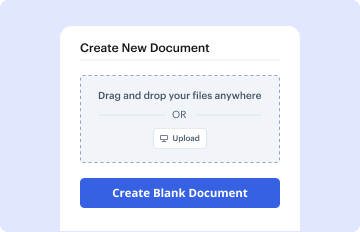
In your dashboard, click on New Document in the upper left corner. Select Create Blank Document to create the Ohio Landlord Tenant Law from a blank slate.

Step 4: Incorporate template fillable areas.

Add numerous elements like text boxes, photos, signature fields, and other elements to your template and designate these fields to intended recipients as required.

Step 5: Fine-tune your document.

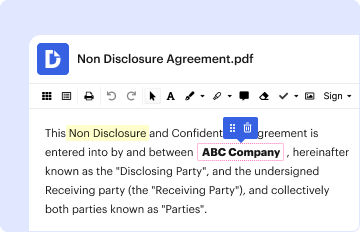
Customize your form by inserting walkthroughs or any other vital information leveraging the text tool.

Step 6: Double-check and modify the form.

Attentively examine your created Ohio Landlord Tenant Law for any discrepancies or necessary adjustments. Take advantage of DocHub's editing tools to enhance your document.

Step 7: Share or export the document.

After completing, save your file. You may select to save it within DocHub, export it to various storage services, or send it via a link or email.


be ready to get more

Build your Ohio Landlord Tenant Law in minutes

Start creating now

Got questions?

We have answers to the most popular questions from our customers. If you can't find an answer to your question, please contact us.
Contact us
Tenants, bound by a formal rental agreement, enjoy specific rights and bear defined responsibilities, including the obligation to pay rent to the rental owner. Occupants, on the other hand, may live on the property with limited legal protections and without direct obligations under the rental contract.
The most fundamental is the right to a habitable rental unit that meets all building, housing, and health codes. Your landlord must make any necessary repairs to keep the property livable and safe. You also have the right to privacy, with your landlord providing proper notice before entering except in emergencies.
Whats the difference between a guest and a tenant? Generally, the difference between a guest and a tenant is that the latter is contractually obligated to pay rent. Guests are not listed on the lease agreement, meaning they have no responsibility to uphold it.
The landlord must hand a written copy of the notice to the tenant in person, or leave the notice at the tenants residence. In most other cases, except those dealing with drugs, the landlord must give the tenant 30 days notice of termination, prior to giving the 3 day notice.
As used in this chapter: (A) Tenant means a person entitled under a rental agreement to the use and occupancy of residential premises to the exclusion of others.
be ready to get more

Build your Ohio Landlord Tenant Law in minutes

Start creating now

Related Q&A to Ohio Landlord Tenant Law

Without a written lease, the landlord or the tenant may end a week-to-week tenancy by giving the other party at least seven days notice before the termination date. Either party may end a month-to-month tenancy by notifying the other party of the intent not to renew the tenancy.
A real estate license is requiredyou are a person who, for another and for a fee, operates, manages, rents, offers, or attempts to operate, manage, or rent, other than as a custodian, care- taker, or janitor, any building or options of build- ings to the public as tenants.