
Create your North Carolina Landlord Tenant Law from scratch

Start Building Now
Title decoration

Here's how it works

01. Start with a blank North Carolina Landlord Tenant Law
Open the blank document in the editor, set the document view, and add extra pages if applicable.
02. Add and configure fillable fields
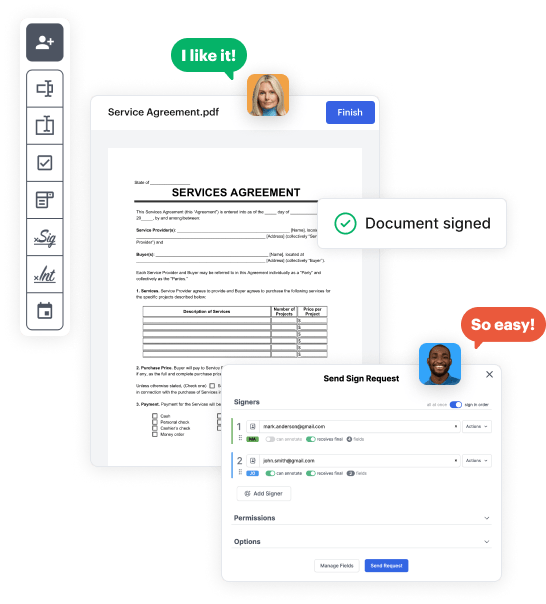
Use the top toolbar to insert fields like text and signature boxes, radio buttons, checkboxes, and more. Assign users to fields.
03. Distribute your form
Share your North Carolina Landlord Tenant Law in seconds via email or a link. You can also download it, export it, or print it out.

A detailed walkthrough of how to craft your North Carolina Landlord Tenant Law online

Form edit decoration

Step 1: Start with DocHub's free trial.

Navigate to the DocHub website and register for the free trial. This gives you access to every feature you’ll require to build your North Carolina Landlord Tenant Law without any upfront cost.

Step 2: Navigate to your dashboard.

Sign in to your DocHub account and proceed to the dashboard.

Step 3: Craft a new document.

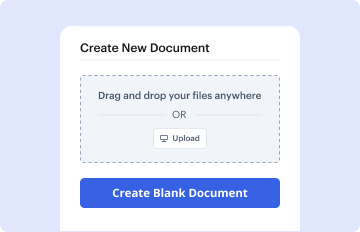
Hit New Document in your dashboard, and choose Create Blank Document to craft your North Carolina Landlord Tenant Law from scratch.

Step 4: Utilize editing tools.

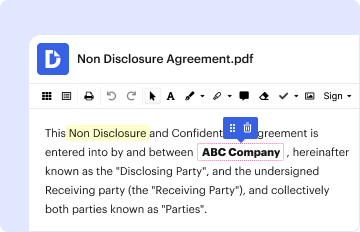
Insert various fields such as text boxes, radio buttons, icons, signatures, etc. Organize these elements to suit the layout of your document and assign them to recipients if needed.

Step 5: Modify the form layout.

Organize your document effortlessly by adding, moving, deleting, or merging pages with just a few clicks.

Step 6: Craft the North Carolina Landlord Tenant Law template.

Convert your newly crafted form into a template if you need to send many copies of the same document repeatedly.

Step 7: Save, export, or distribute the form.

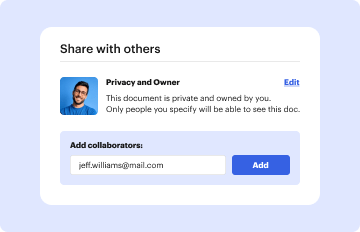
Send the form via email, distribute a public link, or even post it online if you want to collect responses from more recipients.


be ready to get more

Build your North Carolina Landlord Tenant Law in minutes

Start creating now

Got questions?

We have answers to the most popular questions from our customers. If you can't find an answer to your question, please contact us.
Contact us
For month-to-month leases, there must be seven days of notice. For year-to-year leases or those with other definite terms, landlords must notify the tenant, or vice versa, within a month of the end of the lease. On leases lasting between one week and one month, notice must be given at least two days in advance.
Tenants Right to Safe and Habitable Housing This includes having running water, proper heating and cooling systems, safe electrical systems, and no infestations of pests or rodents. If the property falls below these standards, a tenant has the right to withhold rent until necessary repairs are made.
Quick Facts. North Carolina law requires landlords to provide tenants with fit and safe housing by making repairs and maintaining rental property in compliance with codes. Your landlord is also required to maintain and repair appliances that the landlord has provided.
42-14. A tenancy from year to year may be terminated by a notice to quit given one month or more before the end of the current year of the tenancy; a tenancy from month to month by a like notice of seven days; a tenancy from week to week, of two days.
If there is no written lease, or if the lease does not contain a notice provision, then North Carolina law allows you to terminate a year-to-year tenancy by giving notice to the landlord at least one month before the end of the year; a month-to-month tenancy by giving notice at least seven days before the end of the
be ready to get more

Build your North Carolina Landlord Tenant Law in minutes

Start creating now

Related Q&A to North Carolina Landlord Tenant Law

If they do not, however, guests become tenants after seven consecutive days at the property. New York: Guests become tenants after occupying a property for 30 days. North Carolina: Guests become tenants after occupying a property for 14 days. Ohio: Guests become tenants after occupying a property for 30 days.
The first step you want to take to evict someone with no lease in NC is to provide the tenant with notice. The amount of notice required will depend on the terms of your prior lease. Unlike the 10 day notice for eviction for non-payment, you will have a different notice requirement for this type of ejectment.
In broad terms, North Carolina is considered a landlord-friendly state, but that doesnt mean tenants dont have legal rights and protections, too. Understanding landlord-tenant rights is essential whether youre a landlord, property manager, or tenant.

Additional resources on building your forms


