
Create your No-Debt Divorce Agreement from scratch

Start Building Now
Title decoration

Here's how it works

01. Start with a blank No-Debt Divorce Agreement
Open the blank document in the editor, set the document view, and add extra pages if applicable.
02. Add and configure fillable fields
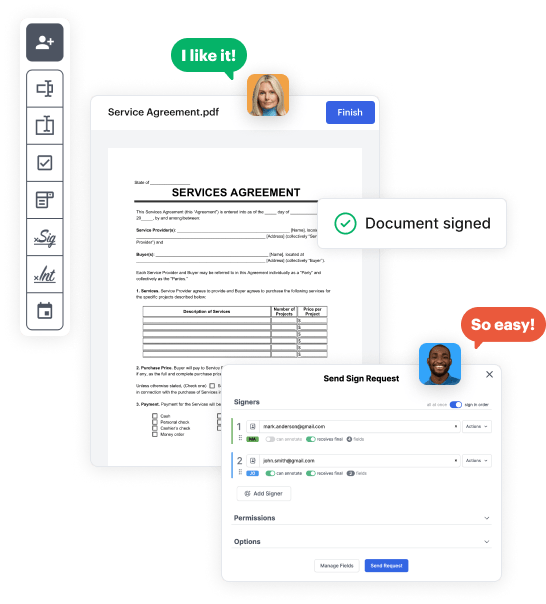
Use the top toolbar to insert fields like text and signature boxes, radio buttons, checkboxes, and more. Assign users to fields.
03. Distribute your form
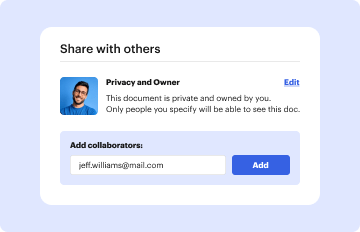
Share your No-Debt Divorce Agreement in seconds via email or a link. You can also download it, export it, or print it out.

A detailed walkthrough of how to design your No-Debt Divorce Agreement online

Form edit decoration

Step 1: Start with DocHub's free trial.

Go to the DocHub website and sign up for the free trial. This provides access to every feature you’ll need to build your No-Debt Divorce Agreement with no upfront cost.

Step 2: Navigate to your dashboard.

Sign in to your DocHub account and go to the dashboard.

Step 3: Craft a new document.

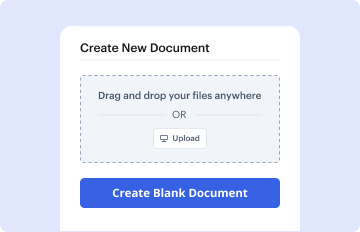
Hit New Document in your dashboard, and select Create Blank Document to craft your No-Debt Divorce Agreement from scratch.

Step 4: Use editing tools.

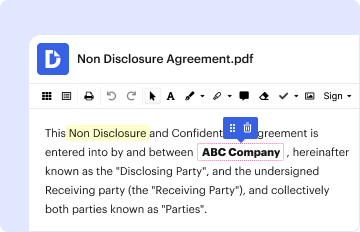
Add various elements such as text boxes, radio buttons, icons, signatures, etc. Arrange these elements to suit the layout of your document and assign them to recipients if needed.

Step 5: Modify the form layout.

Organize your document effortlessly by adding, moving, deleting, or merging pages with just a few clicks.

Step 6: Craft the No-Debt Divorce Agreement template.

Turn your freshly designed form into a template if you need to send multiple copies of the same document multiple times.

Step 7: Save, export, or distribute the form.

Send the form via email, distribute a public link, or even publish it online if you aim to collect responses from a broader audience.


be ready to get more

Build your No-Debt Divorce Agreement in minutes

Start creating now

Got questions?

We have answers to the most popular questions from our customers. If you can't find an answer to your question, please contact us.
Contact us
After divorce, each of the former spouses is responsible for his or her own debt. However, it is important to be sure that any joint accounts are closed. If your ex uses a joint credit card or takes out a loan in your name, you could still be held responsible for payments.
A Divorce Agreement must contain the following information for it to be legally valid: Date of the agreement. Full name of both spouses. Marriage date and location. Date of marriage end. Child support and custody arrangements. Spousal support terms and conditions. Life and health insurance.
In most states, you are responsible for all credit card debt incurred in your name in a divorce. You will not be responsible for your spouses credit card debt if it is in their name only. In community property states, if the card originated during the marriage, you are responsible for 50% of the debt.
Most commonly, spouses have to go from supporting one household to two and this is usually all you have to explain. Sometimes, there are additional costs for one of the parties resulting from the divorce (like child support or family law attorneys fees) that can be mentioned as part of the financial hardship.
In general, youre not responsible for repaying the debts of a deceased spouse. But there are some exceptions for example, you must continue paying any joint debts. And you could be responsible if youre listed as the executor of your deceased loved ones estate.
be ready to get more

Build your No-Debt Divorce Agreement in minutes

Start creating now

Related Q&A to No-Debt Divorce Agreement

Separate accounts as quickly as possible Since you both could be on the hook for one persons spending, Muscadin suggests closing out all joint accounts rather than splitting up who is responsible for which ones.
Any debts either spouse had before marriage remain their own responsibility, with one notable exception. If you cosign a loan for your docHub other or open a joint account on a credit card before you officially tie the knot, youre both responsible for the debt after your marriage date.
If debt is incurred in the course of the marriage, it could be considered a community debt for the benefit of the marriage for which you would be held liable too. However, if you are separated from your spouse and they then proceed to rack up debt, you wouldnt necessarily be held responsible for such debt.

Additional resources on building your forms


