
Create your New York Estate Planning from scratch

Start Building Now
Title decoration

Here's how it works

01. Start with a blank New York Estate Planning
Open the blank document in the editor, set the document view, and add extra pages if applicable.
02. Add and configure fillable fields
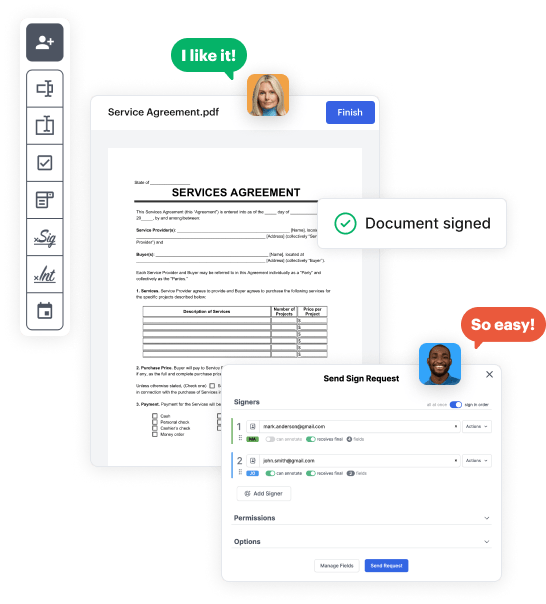
Use the top toolbar to insert fields like text and signature boxes, radio buttons, checkboxes, and more. Assign users to fields.
03. Distribute your form
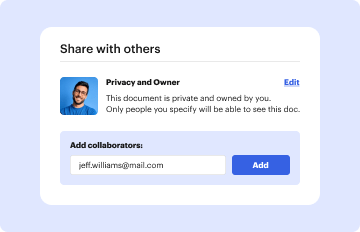
Share your New York Estate Planning in seconds via email or a link. You can also download it, export it, or print it out.

A simple tutorial on how to build a professional-looking New York Estate Planning

Form edit decoration

Step 1: Sign in to DocHub to create your New York Estate Planning.

First, log in to your DocHub account. If you don't have one, you can easily register for free.

Step 2: Head to the dashboard.

Once signed in, head to your dashboard. This is your main hub for all document-related tasks.

Step 3: Launch new document creation.

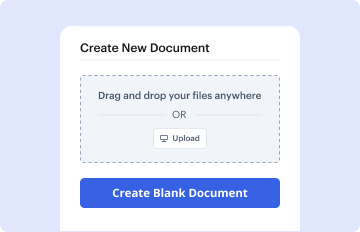
In your dashboard, choose New Document in the upper left corner. Pick Create Blank Document to craft the New York Estate Planning from the ground up.

Step 4: Add form elements.

Add various elements like text boxes, images, signature fields, and other options to your form and assign these fields to certain recipients as necessary.

Step 5: Personalize your template.

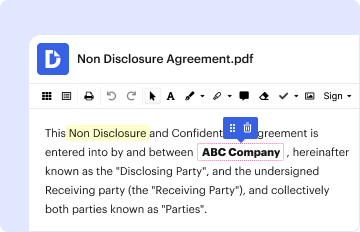
Customize your document by incorporating directions or any other necessary information leveraging the text option.

Step 6: Go over and correct the document.

Thoroughly go over your created New York Estate Planning for any inaccuracies or essential adjustments. Take advantage of DocHub's editing tools to perfect your template.

Step 7: Share or export the template.

After completing, save your work. You can opt to retain it within DocHub, transfer it to various storage services, or forward it via a link or email.


be ready to get more

Build your New York Estate Planning in minutes

Start creating now

Got questions?

We have answers to the most popular questions from our customers. If you can't find an answer to your question, please contact us.
Contact us
No requirement for notarization New York does not require you to docHub wills for them to be legal. But, if you want to make your will self-proving, both you and your witnesses can visit a notary. A court can accept a self-proving will without docHubing out to the witnesses, speeding up the probate process.
No, in New York, you do not need to docHub your will to make it legal. However, New York allows you to make your will self-proving and youll need to go to a notary if you want to do that. A self-proving will speeds up probate because the court can accept the will without contacting the witnesses who signed it.
You may decide that you feel more confident if a lawyer prepares your WILL, especially if your estate is complicated. However, an attorney is not absolutely necessary. If you choose to do your own WILL, though, you must be sure to follow New York State required procedures for signatures and witnesses.
Please note that fees can range between $1000 to $3000 for just a regular plan, and the regular plan includes will planning, using the power of attorney, and anything to do with health care benefits.
New York allows you to make your own will. If you know what property you have, and know who your beneficiaries are, you can make a will. You do not necessarily need an attorney to draft the document. One advantage of making your own will with an online resource is that it is easy to update as your life changes.
be ready to get more

Build your New York Estate Planning in minutes

Start creating now

Related Q&A to New York Estate Planning

But not all states recognize handwritten wills as valid. New York, for example, does not, except for very limited circumstances. Only certain people are permitted to make holographic wills in New York, and only in certain circumstances.
The will must be in writing and signed by you, the testator, at the end of the will. You must sign your will in the presence of at least two witnesses, who do not receive anything under your will. At the time you are signing your will you are to state to the witnesses that you are signing your will.
Since the assets in a trust do not have to go through probate, it can be a much quicker and easier way to transfer wealth to your heirs. Also, some trusts (known as irrevocable trusts) can help reduce your tax burden because they take taxable assets out of your name and transfer them into the trust.

Additional resources on building your forms


