

Create your New Jersey Construction Lien from scratch

Start Building Now
Title decoration

Here's how it works

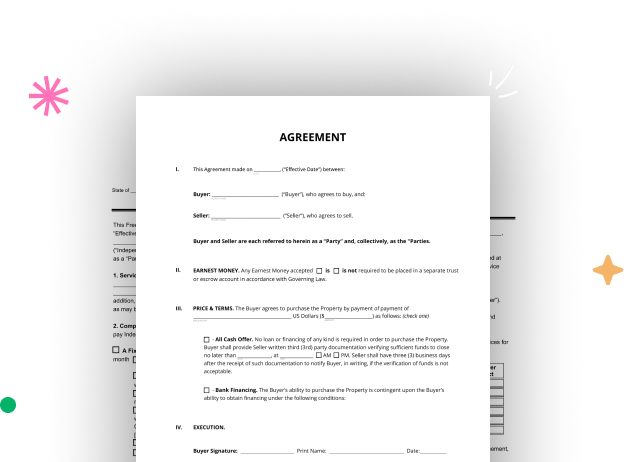
01. Start with a blank New Jersey Construction Lien
Open the blank document in the editor, set the document view, and add extra pages if applicable.
02. Add and configure fillable fields
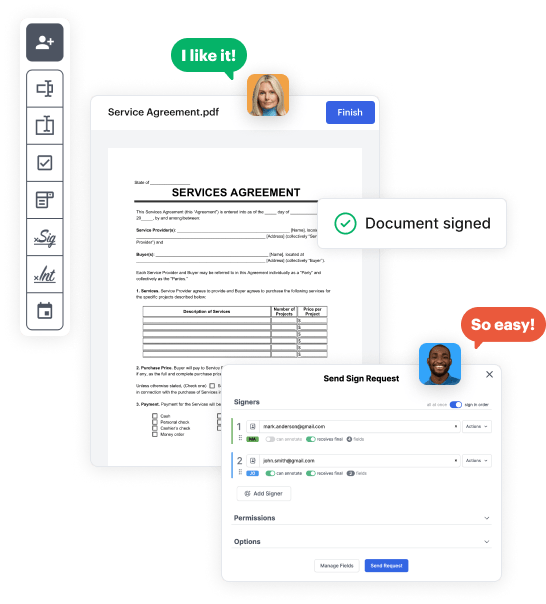
Use the top toolbar to insert fields like text and signature boxes, radio buttons, checkboxes, and more. Assign users to fields.
03. Distribute your form
Share your New Jersey Construction Lien in seconds via email or a link. You can also download it, export it, or print it out.

A quick tutorial on how to build a professional-looking New Jersey Construction Lien

Form edit decoration

Step 1: Sign in to DocHub to begin creating your New Jersey Construction Lien.

First, sign in to your DocHub account. If you don't have one, you can easily sign up for free.

Step 2: Go to the dashboard.

Once you’re in, go to your dashboard. This is your primary hub for all document-centric tasks.

Step 3: Kick off new document creation.

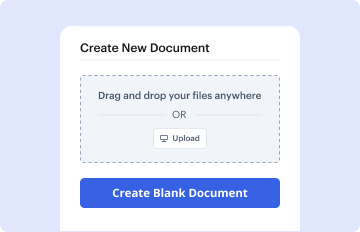
In your dashboard, click on New Document in the upper left corner. Opt for Create Blank Document to design the New Jersey Construction Lien from scratch.

Step 4: Add form elements.

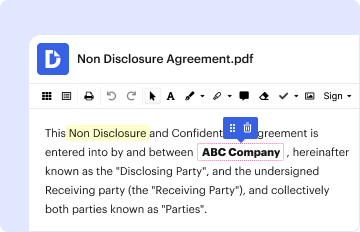
Add various items like text boxes, images, signature fields, and other elements to your form and designate these fields to intended individuals as necessary.

Step 5: Customize your document.

Personalize your form by including directions or any other necessary tips using the text feature.

Step 6: Review and modify the document.

Attentively check your created New Jersey Construction Lien for any discrepancies or required adjustments. Take advantage of DocHub's editing features to polish your document.

Step 7: Share or export the document.

After completing, save your copy. You may opt to save it within DocHub, transfer it to various storage services, or send it via a link or email.


be ready to get more

Build your New Jersey Construction Lien in minutes

Start creating now

Got questions?

We have answers to the most popular questions from our customers. If you can't find an answer to your question, please contact us.
Contact us
Follow these steps to file a construction lien in New Jersey: Fill out the New Jersey mechanics lien form. Prepare your mechanics lien form, ensuring that you are using a form that meets New Jerseys strict legal requirements. File your construction lien with the county clerk. Notify the property owner.
It depends what state you are in: in New Jersey, the owner; in New York, the contractor. In New Jersey, everyone- general contractors, subcontractors, and suppliers- must have a written contract in order to have the right to later file a construction lien.
After you file Mechanics liens are valid for 1 (one) year after last furnishing in New Jersey unless the lien is extended. If the owner files a notice to commence an action, you may only have 30 days to enforce your lien claim. Failure to meet these deadlines means your lien expires and its invalid.
Note: A Construction Lien Claim may also be discharged by Court Order or by posting of Surety Bond or depositing 110% of the amount of the Lien Claim with the Clerk of the Superior Court of New Jersey. A $15 flat fee plus $10 for each notation and $2 for each copy marked True Copy and returned.
Judgments in New Jersey remain in effect for 20 years and may be renewed for an additional 20 years by filing a motion in the Superior Court, Law Division, Civil Part and/or in the Special Civil Part if the Special Civil Part case was assigned a DJ or J docket number.
be ready to get more

Build your New Jersey Construction Lien in minutes

Start creating now

Related Q&A to New Jersey Construction Lien

How long does a judgment lien last in New Jersey? A judgment lien in New Jersey will remain attached to the debtors property (even if the property changes hands) for 20 years.
ing to New Jersey law, specifically N.J.S.A. 2A:16-1, to form a lien with this judgment, the creditor must record the judgment with the county clerk or the registrar of deeds in any New Jersey county where the debtor owns property now or may own property in the future.


