
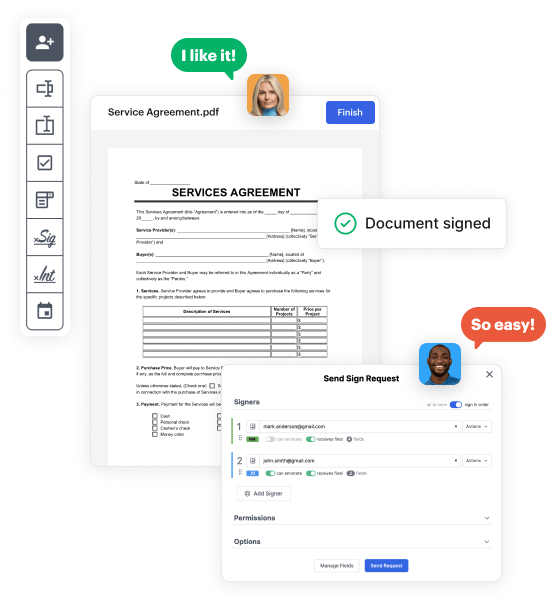
Create your Nevada Legal Document from scratch

Start Building Now
Title decoration

Here's how it works

01. Start with a blank Nevada Legal Document
Open the blank document in the editor, set the document view, and add extra pages if applicable.
02. Add and configure fillable fields
Use the top toolbar to insert fields like text and signature boxes, radio buttons, checkboxes, and more. Assign users to fields.
03. Distribute your form
Share your Nevada Legal Document in seconds via email or a link. You can also download it, export it, or print it out.

Build Nevada Legal Document from the ground up by following these comprehensive guidelines

Form edit decoration

Step 1: Get started with DocHub.

Begin by setting up a free DocHub account using any offered sign-up method. Simply log in if you already have one.

Step 2: Sign up for a free 30-day trial.

Try out the complete suite of DocHub's pro tools by signing up for a free 30-day trial of the Pro plan and proceed to build your Nevada Legal Document.

Step 3: Add a new blank doc.

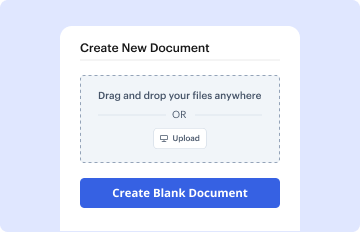
In your dashboard, hit the New Document button > scroll down and choose to Create Blank Document. You’ll be taken to the editor.

Step 4: Arrange the view of the document.

Use the Page Controls icon marked by the arrow to toggle between two page views and layouts for more flexibility.

Step 5: Begin by adding fields to create the dynamic Nevada Legal Document.

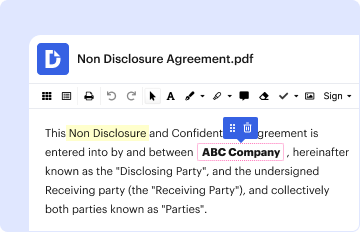
Use the top toolbar to place document fields. Insert and format text boxes, the signature block (if applicable), add photos, and other elements.

Step 6: Prepare and configure the added fields.

Organize the fillable areas you added per your desired layout. Adjust each field's size, font, and alignment to make sure the form is straightforward and neat-looking.

Step 7: Finalize and share your template.

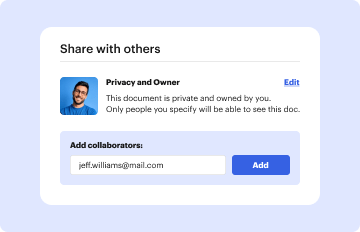
Save the ready-to-go copy in DocHub or in platforms like Google Drive or Dropbox, or craft a new Nevada Legal Document. Distribute your form via email or utilize a public link to reach more people.


be ready to get more

Build your Nevada Legal Document in minutes

Start creating now

Got questions?

We have answers to the most popular questions from our customers. If you can't find an answer to your question, please contact us.
Contact us
Five Helpful Legal Editing Tips Avoid using the first person when possible. I, you, our, we, my are all examples of first person language. Avoid using contractions. Contractions can make your writing appear sloppy rather than formal. Avoid unnecessary words. Spell out numbers. Check all spelling.
How to Format a Legal Document in Word Resize Your Document. Pick Your Fonts. Set the Line Spacing. Format Your Columns. Set Up Your Table of Contents. Create Your Table of Authorities. Automating Your Formatting. Creating a Style. Setting Up Autoformatting as You Type. A Note on Different Documents. Pleadings. Briefs. Manuscripts.
Legal forms address substantive matters, such as forms for contracts, wills, and leases. Pleading and practice forms provide language used in pleadings and motions filed with a court in litigation. These supply language for complaints, answers, motions to dismiss, and other motions.
Important points to include in a legal document. Party details. List the names, numbers, addresses (email or physical), and any other relevant information of all parties involved. Background information. Motion. Roles and responsibilities. BdocHubes or contingencies. Dates and signatures.
Legally binding contracts can be done both in writing or orally. However, when it comes to business transactions, its best to have the majority of your contracts in writing. There is no law requiring contracts to be written by a lawyer. There are no laws that indicate any specific form or font they should be in.
be ready to get more

Build your Nevada Legal Document in minutes

Start creating now

Related Q&A to Nevada Legal Document

Although a document must be signed by each party to be considered legally binding, the mere presence of signatures does not guarantee that an agreement is enforceable in court. To be considered a legally binding contract or document, three critical elements must also be present: Subject, Consideration, and Capacity.
To be considered legally valid, a contract must meet certain criteria, such as mutual assent, consideration, capacity, and a legal purpose. However, it is possible to create a legal contract without hiring a lawyer. Seeking lawyers is customary but not necessary.
Heres how to write a legal document in 10 simple steps: Plan Out the Document Before You Begin. Write with Clear and Concise Language. Ensure the Correct Use of Grammar. Be as Accurate as Possible. Make Information Accessible. Ensure All Necessary Information Is Included. Always Use an Active Voice.

Additional resources on building your forms