
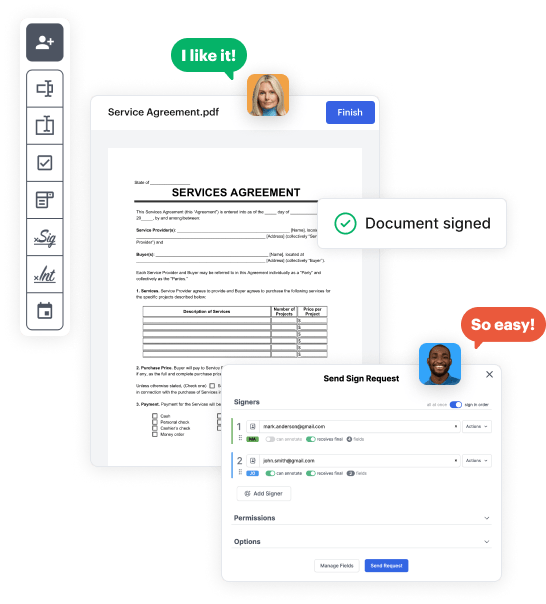
Create your Mortgage Release Legal Form from scratch

Start Building Now
Title decoration

Here's how it works

01. Start with a blank Mortgage Release Legal Form
Open the blank document in the editor, set the document view, and add extra pages if applicable.
02. Add and configure fillable fields
Use the top toolbar to insert fields like text and signature boxes, radio buttons, checkboxes, and more. Assign users to fields.
03. Distribute your form
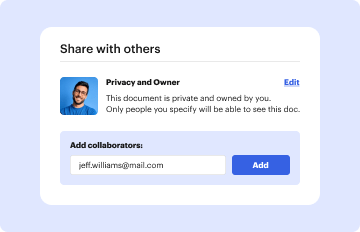
Share your Mortgage Release Legal Form in seconds via email or a link. You can also download it, export it, or print it out.

Craft Mortgage Release Legal Form from the ground up by following these step-by-step instructions

Form edit decoration

Step 1: Open DocHub and get going.

Begin by creating a free DocHub account using any available sign-up method. Just log in if you already have one.

Step 2: Sign up for a 30-day free trial.

Try out the entire set of DocHub's advanced features by signing up for a free 30-day trial of the Pro plan and proceed to craft your Mortgage Release Legal Form.

Step 3: Start with a new empty document.

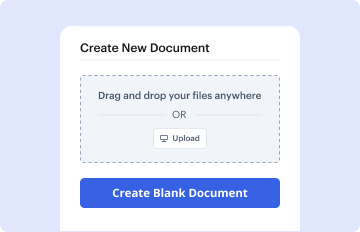
In your dashboard, hit the New Document button > scroll down and choose to Create Blank Document. You’ll be redirected to the editor.

Step 4: Organize the document’s view.

Utilize the Page Controls icon indicated by the arrow to toggle between different page views and layouts for more flexibility.

Step 5: Begin by inserting fields to create the dynamic Mortgage Release Legal Form.

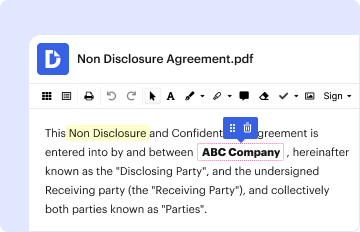
Use the top toolbar to place document fields. Insert and arrange text boxes, the signature block (if applicable), add photos, and other elements.

Step 6: Prepare and configure the incorporated fields.

Arrange the fillable areas you incorporated based on your chosen layout. Modify each field's size, font, and alignment to ensure the form is user-friendly and neat-looking.

Step 7: Finalize and share your template.

Save the ready-to-go copy in DocHub or in platforms like Google Drive or Dropbox, or craft a new Mortgage Release Legal Form. Send out your form via email or use a public link to engage with more people.


be ready to get more

Build your Mortgage Release Legal Form in minutes

Start creating now

Got questions?

We have answers to the most popular questions from our customers. If you can't find an answer to your question, please contact us.
Contact us
A release of mortgage, commonly known as a discharge of mortgage, is a legal document issued by the lender acknowledging that the mortgage debt is settled.
Either the seller or the buyer can prepare a purchase agreement. Like any contract, it can be a standard document that one party uses in the normal course of business or it can be the end result of back-and-forth negotiations.
The discharge, on the other hand, is an official act used to officially remove the mortgage on a property. After the borrower has repaid his or her loan and received a mortgage discharge, the financial institution must then issue a release to indicate that the property is free of any encumbrance or mortgage.
Unlike a joint mortgage, you wont have the benefit of an extra income. So youll need to be able to prove you can afford the repayments by yourself. Saving for a deposit might also take a bit longer. But its definitely possible to get a mortgage on your own.
If you own a computer and have a sheet of paper, you can create your own mortgage to finance the purchase of real estate.
be ready to get more

Build your Mortgage Release Legal Form in minutes

Start creating now

Related Q&A to Mortgage Release Legal Form

You should have received your deed at the closing upon purchasing the property. Unlike a car title, a new deed is not generated when you pay off your mortgage. The lender will record a Release/Satisfaction of Mortgage with our office to prove the mortgage has been paid.
Mortgage contract: key sections and procedures Loan amount and duration. Down payment amount. Interest rate and type of interest (fixed, variable, etc.) including terms. Payment amounts and due dates. Specifics on where to make payments. Penalties if terms arent met (e.g. late fees or foreclosure)
However, the do-it-yourself approach is perfectly acceptable and just as legally enforceable. Once you have both agreed on the terms, you may want to have the personal loan contract docHubd or ask a third party to act as a witness during the signing.

Additional resources on building your forms


